
BSc(Hons) Radiotherapy and Oncology
This course is open for applications
Accreditations and partnerships:

92% of Radiography graduates were in graduate-level employment or further study 15 months after graduating. The Sunday Times Good University Guide 2026
This course is approved by the Health and Care Professions Council (HCPC) so you will be eligible to apply for registration with them when you graduate.
About
Why study radiotherapy and oncology?
Radiotherapy provides the skills to safely use ionising radiation to cure cancer or give relief from symptoms.
Therapeutic radiographers provide vital services and support to millions of people, using x-rays and other types of radiation.
The ability to make a positive difference to people's lives is hugely rewarding and your ability to provide safe, effective and compassionate care will put you in a strong position for building a successful career.
A £5,000 per year training grant is available for home students along with an additional £1,000 per year grant because therapeutic radiographers are in demand in the UK and worldwide. Further information is available on the NHS Business Services website.
Why UWE Bristol?
BSc(Hons) Radiotherapy and Oncology is accredited by the Health and Care Professions Council (HCPC), which means you can register with them when you graduate.
The course has a strong practical focus. We use evidence-based learning, simulations and highly specialised equipment, such as the Virtual Linear Accelerator (VERT) and Eclipse radiotherapy planning system to deepen your understanding and skills.
Learn the theory of good professional practice. Study the science that underpins it. Develop strong inter-professional and interpersonal skills.
Spend about half the course on placements in NHS radiotherapy departments, in a variety of environments.
Engage with patients, practising radiographers and other healthcare professionals on placements, in class and online.
With work-based training built-in, specialist facilities and the support of inspirational staff with a depth of experience in radiotherapy, our students are high achievers.
A high proportion of UWE Bristol students graduate with first-class honours and several have been awarded Student Radiographer of the Year by the Society and College of Radiographers.
Where can it take me?
Therapeutic radiographers are in demand across the UK, so there are lots of interesting career options.
You could work in NHS or private radiotherapy departments, as well as specialist oncology centres.
Past students have received funding through the Society of Radiographers' Work the World programme, working and travelling in countries including Ghana, Tanzania, Nepal, Sri Lanka and Argentina.
Some students choose to continue their studies by doing a postgraduate course.
Find out where a career in allied health professions can take you.
Entry
Typical offers
You will need to meet the following Level 2 requirements:
- GCSE: Grade C/4 in English and Mathematics, or equivalent.
In addition to the above Level 2 qualifications, you'll need to achieve the published tariff points from your Level 3 studies prior to entry. Below is an indicative list of the main qualification types. However, we will consider any Level 3 qualifications towards meeting our entry requirements.
- Tariff points: 112
- Contextual tariff: See our contextual offers page.
- English Language Requirement:
International and EU applicants are required to have a minimum overall IELTS (Academic) score of 7.0 with 6.5 in each component (or approved equivalent*).
*The University accepts a large number of UK and International Qualifications in place of IELTS. You can find details of acceptable tests and the required grades you will need on our English Language requirements page.
- A-level subjects: Grade C in a Science or Social Science subject.
- Relevant subjects: Biology, Applied Biology, Human Biology, Chemistry, Health and Social Care, Mathematics, Physical Education, Physics, Psychology, Applied Science, Science (Biology route), Science (Chemistry route), Science (Physics route), Science in Society, Sociology, Sport and Physical Education, Sports Studies.
- EDEXCEL (BTEC) Diploma: You'll need a minimum of five units in a Science or Social Science Subject. You may be asked to do more based on the size of your units. Please list the units you are studying in your application. For further advice on acceptable units, please email us.
For information on required Guided Learning Hours please see our minimum entry requirements page.
- Access: 15 Level 3 credits at Merit in a Science or Social Science subject.
- Baccalaureate IB: A minimum Grade 5 in a Higher Level Science or Social Science subject. We accept the IB Career-related Programme in conjunction with other Level 3 qualifications.
- Irish Highers: H2 in a Science or Social Science subject.
- Welsh Baccalaureate: We accept tariff points achieved from the Advanced Skills Baccalaureate Wales in conjunction with other Level 3 qualifications. This qualification cannot be used to satisfy any subject specific entry requirements.
- Cambridge Technical: You'll need a minimum of five units in a Science or Social Science Subject. You may be asked to do more based on the size of your units. Please list the units you are studying in your application. For further advice on acceptable units, please email us.
For information on required Guided Learning Hours please see our minimum entry requirements page.
- T Levels: Science, Healthcare Science and Health.
If you partially achieve your T Level, you can meet our subject requirements if you have at least a D in your Core Section. For further advice on acceptable subjects please email us.
Selection process
Shortlisted applicants will be invited to an online interview. For more details on the process, please visit our selection page.
Entry requirements
Please note that due to early clinical contact on this course applicants must turn 18 before the start of placement. Applicants who do not turn 18 by the commencement of the placement will be advised to defer or reapply as appropriate. Please see our admissions policy for further information.
If you don't meet the entry requirements of this course, you may be eligible for the Health Professions Foundation Year.
Additional requirements
Before you start your course, you'll be required to complete:
- an enhanced Disclosure and Barring Service (DBS) check
- a Health Check.
Read more about Professional Checks.
International applicants
If you're applying to UWE Bristol from another country or region, visit the international study pages for tailored application information. If you're an international student and don't meet the academic requirements to study this course, you can qualify by completing preparatory study at our International College.
If you're applying to study at UWE Bristol and require additional support to meet our English language requirements, you may be able to attend one of our pre-sessional English courses. Read more about our Pre-Sessional English Programme.
Deferred entry
We don't accept deferred entry applications for this course.
Read more about entry requirements.
How to apply
If you've not received a decision on your application within a week of the interview, this means that the University is still considering your application. We appreciate your patience during this time and would like to remind you that if you applied through UCAS and have received offers from any other Universities, you'll not lose these offers before your UCAS Reply Deadline.
Read more about undergraduate applications.
Read more about international applications and key international deadline dates.
For further information
- Email:
UK applicants
Admissions@uwe.ac.ukInternational/EU applicants
International@uwe.ac.uk - Telephone:
UK applicants
+44 (0)117 32 83333International/EU applicants
+44 (0)117 32 86644
Structure
Content
Year one
You'll study:
- Fundamentals of Human Anatomy and Physiology (Radiotherapy and Oncology)
- Physical Sciences and Imaging Technology 1
- Introduction to Oncology and Radiotherapy
- Clinical Context and Applications to Radiotherapy 1
- Patient Care and Clinical Radiotherapy Practice.
Year two
You'll study:
- Professional Behaviour and Health Psychology
- Clinical Context and Applications to Radiotherapy 2
- Intermediate Oncology and Radiotherapy Studies
- Principles of Radiotherapy Planning and Simulation
- Professional Development and Radiotherapy Clinical Practice
- Informing Practice Through Research and Inquiry (Radiotherapy and Oncology).
Final year
You'll study:
- Clinical Radiotherapy Practice 3
- Healthy Futures
- Research and Evidence in Practice (Radiotherapy and Oncology)
- Progression to Autonomous Radiotherapy Practice
- Communication Skills in Radiotherapy and Cancer Care.
The University continually enhances our offer by responding to feedback from our students and other stakeholders, ensuring the curriculum is kept up to date and our graduates are equipped with the knowledge and skills they need for the real world. This may result in changes to the course. If changes to your course are approved, we'll inform you.
"The structure of my placements allowed me to immerse myself in different oncology centres, developing my clinical skills, adaptability and confidence. This experience led to me finding a graduate job in the Oncology Centre in Royal Devon and Exeter Hospital." Inooraq, Radiotherapy and Oncology graduate.
Learning and Teaching
We use lectures, practical sessions, Virtual Linear Accelerator (VERT) and Eclipse radiotherapy planning system training, experiments, student-led seminars, e-learning, guided self-study and problem-based learning using scenarios and case studies, to develop your understanding and skills.
Develop the knowledge and decision-making skills to operate highly specialised equipment and provide comprehensive patient care.
Build a solid foundation in science, and apply that knowledge to new technologies and procedures.
Learn about oncology practice, the psychosocial aspects of healthcare, and the care and support needs of patients undergoing cancer treatment.
Learn alongside other professional groups to develop your inter-professional relationships and collaboration skills.
Go on clinical placements, to build your experience and get ready for practice.
Research is integral to the course and will help with your future professional development as a therapeutic radiographer.
You'll be allocated one of the radiography lecturers as your personal tutor.
See our full glossary of learning and teaching terms.
Go further
Put yourself forward for the Student Radiographer of the Year award, presented by the Society and College of Radiographers. This has been won by UWE Bristol students many times in the last ten years.
Assessment
We'll assess you using examinations, assignments, case studies, academic poster presentation, appraisals of clinical skills, student-led presentations, clinical portfolio, research study, Objective Structural Clincal Examinations (OSCE) and wikis.
Learn more about assessments.
Fees
Full time course
Indicative Additional Costs
Supplementary fee information
Additional costs are for items you could need during your studies that aren't covered by the standard tuition fee. These could be materials, textbooks, travel, clothing, software or printing.
A £5,000 per year training grant is available for home students along with an additional £1,000 per year grant because therapeutic radiographers are in demand in the UK and worldwide. Further information is available on the NHS Business Services website.
Features
Professional accreditation
This course is approved by the Health and Care Professions Council (HCPC), which means you'll be eligible to apply for registration with them when you graduate.
The course is also approved by the College of Radiographers (COR) from May 2022 to May 2027.
Placements
UWE Bristol's geographical area for placement provision covers the whole of the South, South West and West of England. Placements across this region help support and provide a wealth of clinical experience across many areas within the NHS healthcare service and the Private Voluntary and Independent sector. These placements are vital to meet the professional regulatory body standards in practice for our affiliated health and social care courses.
To access this variety of opportunities within the health and social care courses, there's an expectation that all students at times will have to travel across large areas. In some cases this can be more than 50 miles away and may be outside of normal working hours due to the nature of shift work on some courses.
When considering your application to these courses, you must ensure you have means to travel to your placement location at unsociable hours, and/or funds available to secure short-term accommodation options to participate in your placement, if required.
Clinical placements will give you a variety of work experiences, helping you make informed career choices and putting you in a strong position for employment.
With a work placement block each year, you'll spend nearly half the course applying your knowledge and building professional skills in the workplace.
We have excellent links with leading oncology centres in hospitals throughout the South West, including those in Cheltenham, Bristol, Bath, Taunton, Exeter, Torbay, Plymouth, Truro and Poole.
At each clinical site, practice educators will advise, assess, support and give you feedback on your progress.
Study facilities
Use our highly specialised technology to learn how to deliver radiotherapy in practice, including our revolutionary Virtual Linear Accelerator (VERT).
Visit a local radiotherapy centre to reinforce your learning and experience a work environment before going on placement.
Use our Varian Eclipse Radiotherapy Planning System to deepen your skills. We're the first university to offer full remote access to this innovative software.
Our healthcare library offers a huge selection of books, audio-visual materials, and specialist health and social care software, to support you in your studies.
Learn more about UWE Bristol's facilities and resources.
Take a personalised virtual tour of the Health Professions facilities and experience what a typical day could look like here for you.
Personalised virtual tour
There's no need to visit us in person to explore our facilities and campuses. Take a personalised virtual tour and discover it all for yourself from wherever you are.
Take a virtual tourCareers
Careers / Further study
The course provides you with the necessary theoretical and practical skills to become a Therapeutic Radiographer (subject to registration with the Health and Care Professions Council (HCPC), in an NHS radiotherapy department or within the private sector.
Further career opportunities exist in areas such as:
- Dosimetry
- Education and training
- Quality assurance
- Research and development
- Advanced Specialist Practice
- Management
- Medical equipment sales and support
- Cancer information, support and counselling.
This is a rewarding and specialised profession which provides plenty of opportunities for an exciting career, in the UK or internationally. The College of Radiographers (CoR) has more examples of where this career could take you.
Get inspired
Our award-winning careers service will develop your employment potential through career coaching and find you graduate jobs, placements and global opportunities.
We can also help find local volunteering and community opportunities, provide support for entrepreneurial activity and get you access to employer events.
Visit our employability pages to learn more about careers, employers and what our students are doing six months after graduating.
Read about a day in the life of a therapeutic radiographer.
See also:
- The Society of Radiographers provides information for prospective students as well as qualified radiographers.
- See the Difference provides information and advice about a career in Therpautic Radiography.
- The WoW Show has guides on a number of different careers including Therapeutic Radiography.
- Find out more about becoming a radiographer in the NHS at NHS Careers.
Life
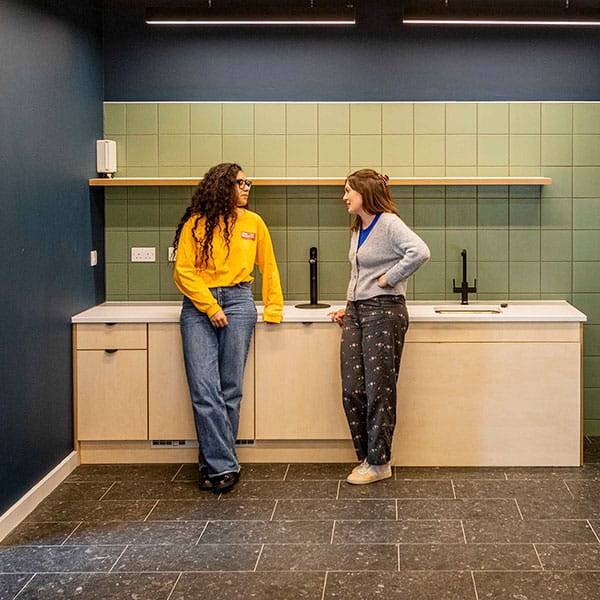
Accommodation
An excellent range of options for all of the Bristol campuses and the city centre.
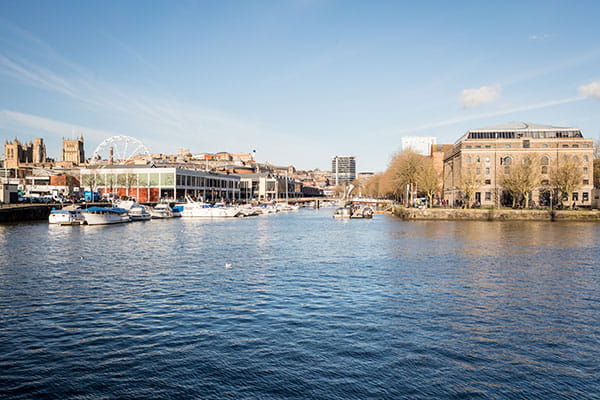
Bristol
A stunning city for student living with all the qualities to make you want to stay.

Sports, societies and activities
There is more to your experience here than study. Choose to make the most of it and try new things.

Health and Wellbeing
We provide support in the way you need it.

Campus and facilities
Discover our campuses and the wealth of facilities provided for our students.