MSc Sustainable Development in Practice
This course is open for applications
Accreditations and partnerships:

100% of Sustainable Development in Practice students are satisfied with the quality of their course overall.Postgraduate Taught Experience Survey 2025
100% of MSc Sustainable Development in Practice students are in graduate-level employment 15 months after graduating. Graduate Outcomes Survey 2023/24, published 2026.
A highly-topical course that focuses on the urgent challenges organisations, communities and government face in bringing about sustainable change in individual behaviour, business practice and wider society - all studied in the European Green Capital 2015.
About
Businesses, governments and communities are taking on the practical challenges that come with creating a sustainable future. Innovation is a big part of overcoming these challenges thinking differently, and finding new ways to reconcile the needs of people and businesses with those of our planet.
Sustainable development is now a mainstream agenda, with implications for every area of society:
- Businesses and organisations ensuring sustainability informs every aspect of their operations, from the environmental and social impacts of product design, logistics, manufacturing and waste management, to communicating with shareholders, the workforce and consumers.
- Governments, policy makers and NGOs to create the frameworks of innovation that will ensure pro-sustainability changes.
- Individuals making better choices about things like food sourcing and waste, to energy use, transport and buying goods and services.
Employer Enhancing Skills
You'll get to work on live briefs and real world projects, and have invaluable access to the organisations and case studies we offer through UWE Bristol's research activities, and its thriving network of sustainability partners. You will learn to apply your skills and knowledge to enhance your employability.
You'll also benefit from the expertise and experience our multi-disciplinary team brings from consultancy, policy and practice.
"The course's focus on transforming individual behaviour, business practice and wider society will be absolutely crucial to effect change."
Lynne Ceeney, Director of Corporate Sustainability EuMENA, Parsons Brinckerhoff
European Green Capital
You'll be studying in a pro-sustainability setting as Bristol is European Green Capital 2015, and is home to the largest number of environmental organisations outside London. These organisations include sustainability consultancies, sustainable businesses and leading NGOs such as Sustrans, The Soil Association, Forum for the Future and the Centre for Sustainable Energy.
You can find out more about MSc Sustainable Development in Practice by following us on Facebook and Twitter.
Watch: Welcome to the School of Architecture and Environment at UWE Bristol
Entry
Entry requirements
We normally require an honours degree of 2.2 or above.
If you do not meet the above grade requirements but have at least 12 months relevant professional experience and/ or equivalent qualifications, we will consider you on an individual basis.
Personal Statement
You are required to complete a personal statement for this course. Please read the personal statement guidance carefully and make sure that you answer the questions on the postgraduate application form within the personal statement tabs, keeping to the advised word count.
UWE Bristol's International College
International students who do not meet the academic or English language requirements to study this course can qualify by completing preparatory study at our International College.
English language support
If you meet the academic requirements but require additional support to take your language skills to the required level, you may be able to attend one of our pre-sessional English courses. Students who successfully complete the pre-sessional course can progress onto their chosen degree course without retaking an IELTS or equivalent.
Read more about our Pre-Sessional English Programme.
English Language Requirement
International and EU applicants are required to have a minimum overall IELTS (Academic) score of 6.5 with 5.5 in each component (or approved equivalent*).
*The University accepts a large number of UK and international qualifications in place of IELTS. You can find details of acceptable tests and the required grades you will need in our English language section.
How to apply
Read more about postgraduate applications.
Read more about international applications and key international deadline dates.
For further information
- Email: admissions@uwe.ac.uk
- Telephone: +44 (0)117 32 83333
Structure
Content
The optional modules listed are those that are most likely to be available, but they may be subject to change.
You'll study:
- Sustainable Business and Consultancy
- Communications Campaigns: Creative Approaches and Tools
- Creating Systems and Behaviour Change for Sustainable Development
- Masters Project
- Sustainable Development: Principles and Practice
- Professional Practice.
Plus
- Optional modules to the value of 30 credits, as advised by the Programme Leader, from the CATE Optional Module Portfolio.*
*Possible examples include: exploring the application of sustainability in a context different to that explored in core modules (for example, engineering), further developing skills in affecting sustainability change (for example, activism and the media or advanced feature writing), specialising in one or more aspect of sustainability (for example, modules relating to air quality, etc.) or exploring sustainability at a wider scope than the community/city/organisational level covered by the core learning on the course (for example, national and international law).
This structure is for full-time students only. Part-time students study the same modules but the delivery pattern will be different.
The University continually enhances our offer by responding to feedback from our students and other stakeholders, ensuring the curriculum is kept up to date and our graduates are equipped with the knowledge and skills they need for the real world. This may result in changes to the course. If changes to your course are approved we will inform you.
Learning and Teaching
We use a variety of learning methods to teach this course, including:
- Taught sessions on campus, from an interdisciplinary team with expertise in areas such as sustainable development, behaviour change, business management, health and well-being, and media and communications.
- Guided learning, through lectures, tutorials, seminars, workshops, visiting speakers, online resources and case studies. A lot of this is collaborative, through group projects, peer assessment and virtual communities including blogs, online discussions and peer-assisted learning.
- Independent study, so you acquire the knowledge to challenge existing perspectives and apply creative thinking and knowledge.
- Work-based learning, involving a six-week professional project. This allows you to apply your sustainability knowledge and skills to a project based with one of our professional partners or in your own workplace.
See our full glossary of assessment terms.
Study time
Part-time students start the project dissertation during Year two, and complete it in Year three if necessary, with the taught part of the course covering two or three years.
Academic support
Each course has a dedicated course leader. They will support you with any academic issues, and be your contact on any other University matters.
The social side of things
The postgraduate society at UWE Bristol actively promotes and supports a social network for postgraduate students, which shows them what Bristol and the surrounding areas have to offer.
Assessment
This course is assessed via a combination of coursework and presentations. You'll take a project-based assessment that focuses on real-world challenges, which will help you build a valuable portfolio of work in pro-sustainability change.
See our full glossary of learning and teaching terms.
Fees
Full time course
Part time course
Supplementary fee information
For information about funding for postgraduate courses see our funding pages.
Features
Professional accreditation
This course is accredited by Institute of Sustainability and Environmental Professionals (ISEP).
Study facilities
As one of the UK's most advanced and responsive universities, we make sure you have the resources and support you need to help you gain your qualification.
For this programme, you will have access to:
- Frenchay Library, 24 hours a day and all our other specialist libraries
- an extensive range of computer suites, some open 24 hours a day
- resources for photography, digital imaging, filming and sound recording
- specialist computing workshops and labs
- remote study options, online discussions and resources via Blackboard, our e-learning tool.
Learn more about UWE Bristol's facilities and resources.
Take a personalised virtual tour of the Geography and Environmental Management facilities and experience what a typical day could look like here for you.
Careers
Careers / Further study
This course offers the blend of skills, knowledge and thinking to develop your career in a wide range of private and public sector businesses and organisations.
You might choose to lead change in multi-national corporations, international organisations, national, regional and local governments, or to plan and implement sustainable development with organisations in specialist sectors, such as business, environmental or project management, or in planning, transport, construction, waste or energy.
You could get involved in campaigning, development or aid work, or as an advisor in bodies such as the UN, EU or the Organisation for Economic Co-operation and Development. Or you might want to help develop government policy, set up your own consultancy, go on to a PhD, or go into teaching.
"I find myself using the knowledge I acquired, on this course, around behaviour change theory, sustainability frameworks and communications evaluation in my day-to-day workings where the different elements cross over everything I do. The learning around visioning and innovation has changed the way I initiate and manage projects." Matt, Senior Fund Assembly Officer, Sustrans
Life

Postgraduate support
Our support includes access to fantastic facilities, study tools and career consultants, plus practical help to access everything from funding to childcare.
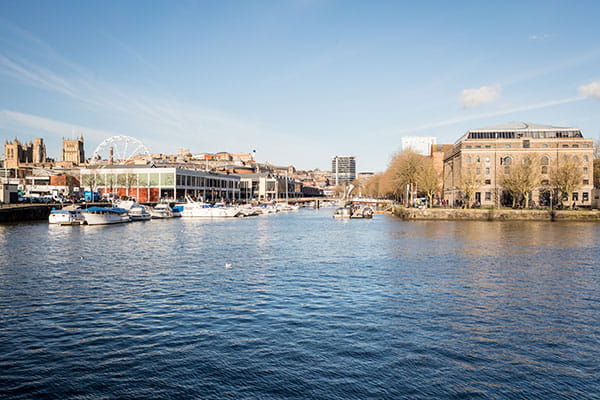
Bristol
A stunning city for student living with all the qualities to make you want to stay.

Sports, societies and activities
There is more to your experience here than study. Choose to make the most of it and try new things.

Health and Wellbeing
We provide support in the way you need it.
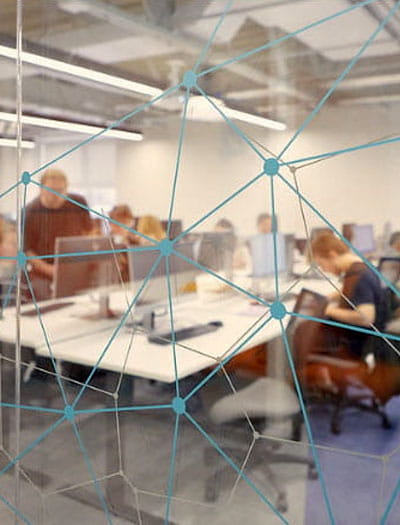
Campus and facilities
Discover our campuses and the wealth of facilities provided for our students.
