
MEng. Aerospace Engineering
This course is open for applications
Accreditations and partnerships:

Study in the UK's aerospace hub on a course developed with aerospace partners.
About
Why study aerospace engineering ?
Engineering is where creative thinkers become world changers. An aerospace engineering degree will challenge you to ask questions, take risks and explore new perspectives.
You'll turn ideas into reality as you apply the principles of science and technology to the research, design, manufacture and certification of current and future aerospace vehicles.
If you're fascinated by the history, technology and progress of aircraft and spacecraft, we'll take your passion and transform it into career-shaping skill and experience.
Why UWE Bristol?
Our new inclusive, problem-based curriculum will broaden our engineering audience, enabling students from a wider range of backgrounds to pursue a career in engineering. To date, we're the first university in the UK to transform our curriculum alongside constructing a new engineering building.
You'll be taught in our new state-of-the-art School of Engineering designed to revolutionise the way engineering is taught. Featuring engine test cells, dedicated collaborative learning spaces and all of the latest high-tech equipment, it's purpose-built to support a wide range of engineering disciplines.
The course has been accredited by the Royal Aeronautical Society (RAeS) on behalf of the Engineering Council, up to and including the 2025 intake. Intake year 2025 is accredited as meeting the EngC CEng academic requirement in full.
Re-accreditation is currently being sought for the intakes from 2026 onwards.
Our MEng(Hons) Aerospace Engineering has been designed with input from our regional aerospace partners. You'll gain the practical skills needed to become future technical specialists and leaders within the aerospace industry.
Where can it take me?
As a student engineer, you'll start your professional journey towards becoming an incorporated or chartered engineer from day one. You'll learn by doing, applying and revisiting your early skills through embedded project weeks and development of digital and physical prototypes, as you would in practice.
As a graduate with advanced engineering knowledge, you'll be set for a career in the aerospace industry. You'll have exciting career prospects, from working on the design and manufacture of civil and military aircraft, to working with helicopters and jet engines.
Watch: Welcome to the School of Engineering at UWE Bristol
Entry
Typical offers
You will need to meet the following Level 2 requirements:
- GCSE: Grade C/4 in English and Mathematics, or equivalent.
In addition to the above Level 2 qualifications, you'll need to achieve the published tariff points from your Level 3 studies prior to entry. Below is an indicative list of the main qualification types. However, we will consider any Level 3 qualifications towards meeting our entry requirements.
- Tariff points: 120
- Contextual tariff: See our contextual offers page.
- English Language Requirement:
International and EU applicants are required to have a minimum overall IELTS (Academic) score of 6.0 with 5.5 in each component (or approved equivalent*).
*The university accepts a large number of UK and International Qualifications in place of IELTS. You can find details of acceptable tests and the required grades you'll need in English Language requirements. - A-level subjects: Grade C in Mathematics, plus a pass in one of the following: Biology, Chemistry, Computing/Computer Science, Design and Technology, Electronics, Engineering, ICT, Further Maths, Music Technology, Physics, Statistics.
- Relevant subjects: Biology; Chemistry, Computing/Computer Science, Design and Technology, Electronics, Engineering, ICT, Further Maths, Mathematics, Music Technology, Physics, Statistics.
- EDEXCEL (BTEC) Diploma: You must be studying one of the following: Aeronautical Engineering, Construction and the Built Environment, Electrical/Electronic Engineering, Engineering, Land-based Technology, Manufacturing Engineering, Mechanical Engineering, or Operations and Maintenance Engineering.
To include Merit in one of the following units: Further Engineering Mathematics, Further Mathematics for Construction or Calculus to Solve Engineering. Please list the units you are taking in your application. For further advice on acceptable units please email us.
For information on required Guided Learning Hours please see our minimum entry requirements page.
- Access: 15 Level 3 credits at Merit in Mathematics and 15 credits in another science or technology subject.
- Baccalaureate IB: A minimum grade of 5 in Higher Level Mathematics and a pass in one of the following at Higher Level: Biology, Chemistry, Computer Science, Design Technology, Physics, Environmental Systems and Societies. We accept the IB Career-related Programme in conjunction with other Level 3 qualifications.
- Irish Highers: H2 in Mathematics plus a pass in one of the following subjects: Biology, Chemistry, Engineering, Physics, Technology.
- Welsh Baccalaureate: We accept tariff points achieved from the Advanced Skills Baccalaureate Wales in conjunction with other Level 3 qualifications. This qualification cannot be used to satisfy any subject specific entry requirements.
- Cambridge Technical: You must be studying one of the following: Mechanical, Electrical and Electronic Systems Design and Engineering, Engineering Automation Control and Manufacturing Processes, Electrical and Electronic Engineering, Mechanical Engineering and Design, Automation, Systems and Control, Manufacturing
To include Merit in the following unit: Applied Mathematics for Engineering. - T Levels: Grade C in A-Level Mathematics, in addition to your T Level qualification.
If you have or are looking to partially complete your T-Level, you are still required to have the equivalent to 2 full A-Levels as part of our minimum entry requirements. As a result, if you are applying with only the core or occupational specialism, this may be insufficient as a stand-alone qualification.
Entry requirements
If you don't meet the entry requirements you may be eligible for BEng(Hons) Aerospace Engineering or BEng(Hons) Aerospace Engineering (with Foundation Year).
International applicants
If you're applying to UWE Bristol from another country or region, visit the international study pages for tailored application information. If you're an international student and don't meet the academic requirements to study this course, you can qualify by completing preparatory study at our International College.
If you're applying to study at UWE Bristol and require additional support to meet our English language requirements, you may be able to attend one of our pre-sessional English courses. Read more about our Pre-Sessional English Programme.
Advanced Entry
If you have HNC, HND or FdSc qualifications in closely related subjects, you may be credited with individual modules, which will shorten the course for you.
Please note that applicants are required to achieve all Merits in the Final year of the HND/HNC. If you don't have all Merits in the Final year or have studied a different but closely related subject, we'll consider your application and if we cannot give you Advanced Entry we may be able to credit you with certain modules.
In your application form, please list all the HNC, HND and Foundation Degree units that you have or are taking.
Read more about entry requirements.
How to apply
Read more about undergraduate applications.
Read more about international applications and key international deadline dates.
For further information
- Email:
UK applicants
Admissions@uwe.ac.ukInternational/EU applicants
International@uwe.ac.uk - Telephone:
UK applicants
+44 (0)117 32 83333International/EU applicants
+44 (0)117 32 86644
Structure
Content
The optional modules listed are those that are most likely to be available, but they may be subject to change.
Year one
You'll study:
- Design, Build, Fly
- Professional Skills for Engineers
- Aerospace Engineering Maths
- Introduction To Aerospace Engineering
- Aerospace Thermofluids
- Solid Mechanics, Materials and Manufacturing.
Year two
You'll study:
- Flight Dynamics and Control
- Project Management for Engineers
- Aerospace Systems Design
- Flight Mechanics
- Fundamental Aero-Propulsion
- Fundamental Aerodynamics
- Structural Mechanics.
Placement year (if applicable)
If you study on the four year sandwich course, you'll spend a year away from the University on a work placement after Year two.
You'll complete a placement learning module.
See the Placements and Fees sections for more information.
Year three (Final year for BEng)
You'll study:
- Engineering in Society*
- Aerospace Group Design Project
- Engineering Project.
*This module is not available to study if you complete the placement year.
Plus, optional modules (the amount depending on credit requirement) from:
- Rotorcraft Theory
- Further Aerodynamics
- Aero Structures
- Avionics
- Integrated Electro-Mechanical Systems
- Space Engineering
- Composite Engineering
- Digital Manufacturing in Aerospace
- Further Aero-Propulsion
- Spaceflight
- Airline Operations.**
**Only available to students transferring to this course from our MEng or BEng(Hons) Aerospace Engineering with Pilot Studies. Due to its credit value, students who study this module can only choose two further optional modules from this list.
Year four (Final year for MEng)
You'll study:
- Masters Group Capstone Project.
Plus, four optional modules from:
- Advanced Mechatronics
- Advanced Aerodynamics
- Advanced Manufacturing
- Aero-Acoustics
- Aero-Elasticity
- Principles of Flight Test
- Principles of Lean Engineering
- Space Systems Design.
The University continually enhances our offer by responding to feedback from our students and other stakeholders, ensuring the curriculum is kept up to date and our graduates are equipped with the knowledge and skills they need for the real world. This may result in changes to the course. If changes to your course are approved, we'll inform you.
"My course and placement with Airbus gave me a broad range of knowledge in design, manufacturing, systems and project management. I'm now able to integrate these skills to solve aerospace problems in my role as a Manufacturing Engineer at Alten." Mohan, Aerospace Engineering graduate
Learning and Teaching
Learn through lectures, tutorials and seminars with a programme of laboratory, practical and project work.
You'll design, develop and optimise a model aircraft in the first year Introduction to Aeronautics module. You'll have the opportunity to undertake a flight test course in a real aircraft in your third year and you'll also work in group projects to such as the ImechE Umnanned Aerial System (UAS) Challenge.
See our full glossary of learning and teaching terms.
Assessment
You can expect to be assessed through a mix of assignments, exams, continuous assessment and group work depending on the module. In your final year, a project report and presentation will form part of the assessment.
We encourage you to exhibit your final year work at our annual degree show, where you can discuss your work and celebrate your achievements with family, friends and potential employers.
Learn more about assessments.
Fees
Full time, sandwich course
Indicative Additional Costs
Supplementary fee information
Please note, the above tuition fees for home students are charged in the first academic year of study but may increase in subsequent years for both new and continuing students. This increase will track the tuition fee cap which is determined by government and is expected to increase in line with inflation. UWE will likely maintain its fees for new and returning home students at the maximum permitted level for each year of study.
The placement year fee will also increase when the fee cap changes so please use the above placement year fee for indication purposes only.
Your overall entitlement to funding is based on how long the course is that you're registered on. Standard funding is allocated based on the standard number of years that your course lasts, plus one additional year.
You'll apply for funding each year that you study and Student Finance will take into account how long the course is in each year that you apply. So if you register for the five year course and then transfer to the four year course, the number of years you can apply for funding will change. Student Finance will reassess your funding based on how many years you have been in study, not just those years for which you received student finance.
Always seek advice before taking any action that may have implications for your funding.
Additional costs
Additional costs are for items you could need during your studies that aren't covered by the standard tuition fee. These could be materials, textbooks, travel, clothing, software or printing.
Features
Professional accreditation
The course has been accredited by the Royal Aeronautical Society (RAeS) on behalf of the Engineering Council, up to and including the 2025 intake. Intake year 2025 is accredited as meeting the EngC CEng academic requirement in full.
Re-accreditation is currently being sought for the intakes from 2026 onwards.
Placements
Students who get work experience tend to graduate with better degrees. Experience also hones your skills, industry knowledge and professional network, making you a sought after graduate.
If you choose the five year (sandwich) course, you'll spend a year away from the University on a work placement after Year two.
We work in partnership with Bristol employers like Airbus, Rolls Royce, GE Aviation and Leonardo Helicopters. We also have strong relationships with smaller companies across the UK.
They provide work placements and graduate employment opportunities for our students. Past students have worked with Airbus, GE Aviation, E-Stress, Rolls Royce, Qinetic and Lockeed Martin.
Get help to find your placement and support throughout from staff within the School and our award-winning careers service.
Fieldwork
Throughout the course, you'll see aerospace engineering in action at a range of facilities.
This includes visits to Airbus, GKN and the National Composites Centre and museums such as the Fleet Air Arm Museum in Yeovil.
In your first year, you'll design and build a model glider aircraft's wings, then race it against the competition.
Study facilities
Our new engineering building is designed to inspire the engineers of the future. Built for hands-on investigation, with engine test cells, wind tunnels and collaborative learning spaces. An ideal environment for encouraging you to explore, take risks and discover ways to change the world for the better.
Apply what you've learnt and develop vital professional skills in our state-of-the-art facilities.
- Design and draw new concepts using CAD, simulation and planning software on our extensive PC network.
- Test aerodynamics in our subsonic and supersonic wind tunnels.
- Develop and test materials using our composite manufacturing facilities, and stress and materials laboratories.
- Test designs using our state-of-the-art flight simulator, which you can update with model data to test the flight mechanics and aerodynamics of design concepts.
Learn more about UWE Bristol's facilities and resources.
Take a personalised virtual tour of the Engineering facilities and experience what a typical day could look like here for you.
Personalised virtual tour
There's no need to visit us in person to explore our facilities and campuses. Take a personalised virtual tour and discover it all for yourself from wherever you are.
Take a virtual tourCareers
Careers / Further study
Our MEng Aerospace Engineering degree will equip you with industry knowledge and an in-depth understanding of the aerospace design and build process. Study materials and manufacturing, stress and dynamics, energy and thermodynamics to gain a solid grounding in aerospace engineering principles.
Graduate ready to take up your place within the exciting, fast-paced aerospace industry. You'll develop core skills that you'll take with you through your career, such as innovation, teamwork and creativity.
By the end of the course, you'll be prepared for employment in leading aerospace companies such as Airbus UK, BAE Systems, Rolls-Royce, Leonardo, MBDA, Boeing and GE Systems.
There's an increasing demand for qualified aerospace engineers in the industry, so you'll have strong employability prospects. Past graduates have gone into careers in the design and manufacture of civil and military aircraft, helicopters and jet engines.
In your second year, you'll have the chance to specialise through the Systems, Design and Manufacturing pathways, allowing you to follow your career aspirations.
Throughout your course, you'll benefit from a range of professional opportunities. Get an inside track on the industry through regular factory tours and professional briefings from leading aerospace organisations and work on placements to build up valuable experience and professional skills.
Get inspired
Our award-winning careers service will develop your employment potential through career coaching and find you graduate jobs, placements and global opportunities.
We can also help find local volunteering and community opportunities, provide support for entrepreneurial activity and get you access to employer events.
Visit our employability pages to learn more about careers, employers and what our students are doing six months after graduating.
See also:
Take a look at the Engineering building
Step inside our new School of Engineering building at UWE Bristol.
Life
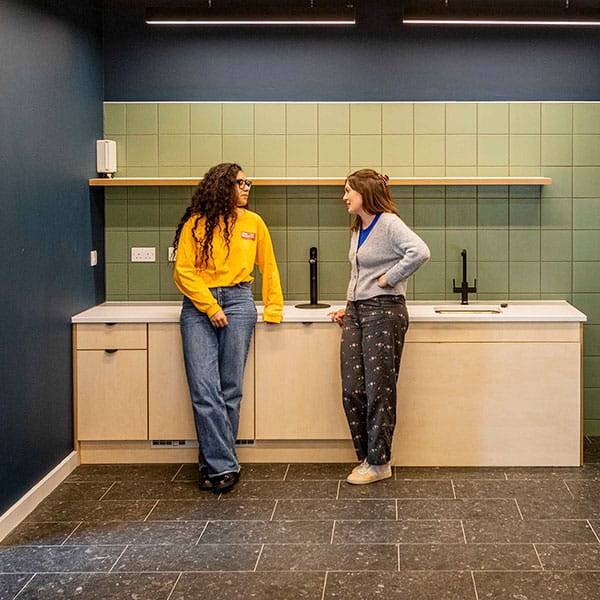
Accommodation
An excellent range of options for all of the Bristol campuses and the city centre.
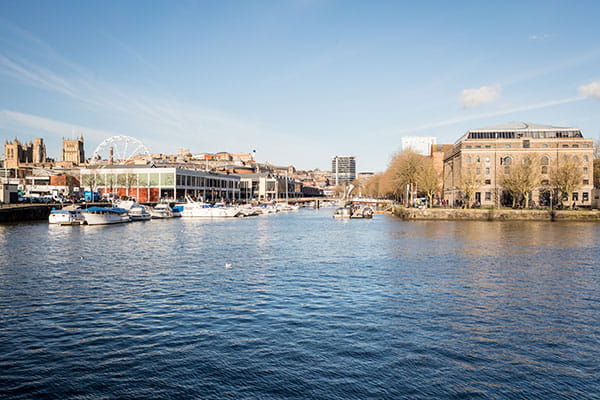
Bristol
A stunning city for student living with all the qualities to make you want to stay.

Sports, societies and activities
There is more to your experience here than study. Choose to make the most of it and try new things.

Health and Wellbeing
We provide support in the way you need it.

Campus and facilities
Discover our campuses and the wealth of facilities provided for our students.