
BSc(Hons) Building Surveying
This course is open for applications
Accreditations and partnerships:



93% of Building graduates were in graduate-level employment or further study 15 months after graduating. The Sunday Times Good University Guide 2026
8th university in the UK for Building courses.The Sunday Times Good University Guide 2026
Get your career off to the best possible start with accreditation from the Chartered Institute of Building (CIOB) and the Royal Institution of Chartered Surveyors (RICS). We're also currently seeking re-accreditation from the Chartered Association of Building Engineers (CABE).
About
Why study building surveying?
As we create new buildings, we also need to manage existing ones better.
Building surveyors provide a portfolio of professional services to a range of professionals and clients in the property and construction industry.
These include the development of property and project management, legal and technical advice, building surveys and reports, defect diagnosis and conservation, as well as design solutions for new build and refurbishment schemes.
It's a varied and exciting career, with plenty of demand in the market for talented graduates.
Why UWE Bristol?
BSc(Hons) Building Surveying is accredited by the Chartered Institute of Building (CIOB), the Royal Institution of Chartered Surveyors (RICS) and we're also currently seeking re-accreditation from the Chartered Association of Building Engineers (CABE).
Covering aspects of design, construction and project management though 'real life' scenarios for residential and commercial buildings, the course is designed to give you the balance of academic and vocational knowledge employers seek.
Stay up to date on the latest developments, such as advancements in Building Information Modelling (BIM) and its importance in a changing industry.
Be at the forefront of the drive for a sustainable future by learning how to develop property and adapt, convert and reinvigorate existing buildings of residential, commercial and historic interest.
Get an insight into the surveyor's role within the construction and property industries. Learn through site visits, guest speakers and hands-on activities. Take a year's placement to enhance your employment prospects.
Our tutors come from both academia and practice. They provide real-life examples and show you how to put theory into context. They're also dedicated to helping you become a highly skilled graduate that employers will value.
Where can it take me?
Our graduates have consistently high employment rates. We see them going into careers at every stage of the building lifecycle.
They find jobs in the private and public sectors; with housing associations, property developers, construction companies, local authorities and heritage locations.
Listen to how graduate Henry Thomas's degree led to a job with Kendall Kingscott.
Watch: Welcome to the School of Architecture and Environment at UWE Bristol
Entry
Typical offers
You will need to meet the following Level 2 requirements:
- GCSE: Grade C/4 in English and Mathematics, or equivalent.
In addition to the above Level 2 qualifications, you'll need to achieve the published tariff points from your Level 3 studies prior to entry. Below is an indicative list of the main qualification types. However, we will consider any Level 3 qualifications towards meeting our entry requirements.
- Tariff points: 112
- Contextual tariff: See our contextual offers page.
- English Language Requirement:
International and EU applicants are required to have a minimum overall IELTS (Academic) score of 6.0 with 5.5 in each component (or approved equivalent*).
*The University accepts a large number of UK and International Qualifications in place of IELTS. You can find details of acceptable tests and the required grades you will need in our English language requirements section.
- A-level subjects: No specific subjects required.
- EDEXCEL (BTEC) Diploma: No specific subjects required.
For information on required Guided Learning Hours please see our minimum entry requirements page.
- Access: No specific subjects required.
- Baccalaureate IB: No specific subjects required. We accept the IB Career-related Programme in conjunction with other Level 3 qualifications.
- Irish Highers: No specific subjects required.
- Welsh Baccalaureate: We accept tariff points achieved from the Advanced Skills Baccalaureate Wales in conjunction with other Level 3 qualifications.
- Cambridge Technical: No specific subjects required.
- T Levels: No specific subjects required.
Entry requirements
International
If you're applying to UWE Bristol from another country or region, visit the international study pages for tailored application information. If you're an international student and don't meet the academic requirements to study this course, you can qualify by completing preparatory study at our International College.
If you're applying to study at UWE Bristol and require additional support to meet our English language requirements, you may be able to attend one of our pre-sessional English courses. Read more about our pre-sessional English Programme.
Direct entry
If you have a Higher National Certificate (HNC), Higher National Diploma (HND) or Foundation Degree in a closely related subject, we may be able to credit you with some of the modules in our course. In particular, if you have an HNC Construction with all Merits in your second year units, you would normally be able to join the second year of the full-time course, or the third year of the part-time course. In your application, please give full details of all your qualifications (including modules and units).
Read more about entry requirements.
How to apply
Read more about undergraduate applications.
Read more about international applications and key international deadline dates.
For further information
- Email:
UK applicants
Admissions@uwe.ac.ukInternational/EU applicants
International@uwe.ac.uk - Telephone:
UK applicants
+44 (0)117 32 83333International/EU applicants
+44 (0)117 32 86644
Structure
Content
The optional modules listed are those that are most likely to be available, but they may be subject to change.
Year one
You'll study:
- Law, Economics and Management
- Materials and Environmental Physics
- Construction Technology and Building Services 1
- Principles of Sustainable Design.
Year two
You'll study:
- Residential Retrofit Project Management
- Commercial Development
- Professional Practice for the Built Environment
- Professional Consultancy and Contract Administration
- Building Pathology.
Placement year (if applicable)
If you study on the four year (sandwich) course, you'll spend a year away from the University on a work placement after Year two. You'll complete a placement learning module during this time.
See the Placements and Fees sections for more information.
Final year
You'll study:
- Interdisciplinary Professional Practice*
- Commercial Refurbishment
- Conserving Buildings and Places
- Dissertation A
- Sustainable Strategies for Property Management.
*You won't study this module if you complete the sandwich placement year.
This structure is for full-time students only. Part-time students study the same modules but the delivery pattern will be different.
The University continually enhances our offer by responding to feedback from our students and other stakeholders, ensuring the curriculum is kept up to date and our graduates are equipped with the knowledge and skills they need for the real world. This may result in changes to the course. If changes to your course are approved, we'll inform you.
"The project-focused assignments helped me develop a portfolio of work that I was able to take to graduate interviews. After my course, I was employed as a Graduate Building Surveyor at Portsmouth City Council, where I'm now working as a Development Manager." Patrick, Building Surveying graduate.
Learning and Teaching
The team provide a friendly, collaborative environment for learning. Teaching methods vary according to modules but you'll mostly learn through lectures and tutorials. These include lab sessions for developing your computer-aided design (CAD) skills.
Get hands-on experience gathering survey information and using the results to draw up proposals.
Attend guest lectures from industry professionals who cover topics like surveying techniques using the latest IT techniques, heritage issues, asbestos and component manufacture.
Learn the basic principles and foundation knowledge of building surveying. Apply the knowledge and skills you learn to real-life scenarios and situations.
Test your learning through a work-based research project on your placement, or through studying the Collaborative Practice module that brings together students of multiple disciplines.
Showcase your work
In your final year, showcase your work to prospective employers and the public at the annual degree show.
See our full glossary of learning and teaching terms.
Assessment
You should expect mix of coursework and exams, which assess what you know and can do and help you develop the confidence and skills that employers value.
Coursework may include essays, reports, skills portfolios, lab reports, presentations and projects. In Final year you'll complete a dissertation.
While most coursework involves individual submissions, some modules require teamwork.
Fees
Full-time; Sandwich course
Part-time course
Indicative Additional Costs
Supplementary fee information
Your overall entitlement to funding is based on how long the course is that you're registered on. Standard funding is allocated based on the standard number of years that your course lasts, plus one additional year.
You'll apply for funding each year that you study and Student Finance will take into account how long the course is in each year that you apply. So if you register for the four year course and then transfer to the three year course, the number of years you can apply for funding will change. Student Finance will reassess your funding based on how many years you have been in study, not just those years for which you received student finance.
Always seek advice before taking any action that may have implications for your funding.
The honours degree is 360 credits in total. Part-time students generally study between 60 (15 credits x 4) and 90 (15 credits x 6) each year and will pay annually for credits taken in that year. As a part-time UK or EU student you may be entitled to a fees loan from the Government.
Learn more about part-time funding.
Additional costs
This refers to items you could need during your studies that aren't covered by the standard tuition fee. These could be materials, textbooks, travel, clothing, software or printing.
Features
Professional accreditation
This course is accredited by the Royal Institution of Chartered Surveyors (RICS) and we're currently seeking re-accreditation from the Chartered Association of Building Engineers (CABE).
UWE Bristol also holds Chartered Institute of Building (CIOB) Accredited Centre Status during the period 2022-2027 and this course is CIOB Accredited during the period 2022-2027, having been judged to meet the CIOB Education Framework. Prospective members holding these qualifications have full academic exemption and once they have gained three to five years' relevant work experience may enter CIOB membership as an applicant to progress towards Chartered Membership without the requirement for an Individual Assessment.
When you graduate, you'll need at least two years of work experience and a pass in the Assessment of Professional Competence (APC) to get chartered building surveyor status. If you've done a work placement year, this could count as a year of your APC. You'll follow a similar pathway to become a chartered building engineer, chartered builder or construction manager.
Placements
Students who get work experience tend to graduate with better degrees. Experience also hones your skills, industry knowledge and professional network, making you a sought after graduate.
Our students secure placements and sponsorships from a variety of organisations, including our construction partner employers. Many are offered jobs when they complete their studies.
Placement students have worked on conservation and renovation projects in Buckingham Palace and large scale refurbishment projects for commercial and residential properties.
Our partners also run a final year Job Bootcamp, helping you develop your CV and improve your presentation and interview skills.
You'll get help to find your placement and support throughout from College staff and our award-winning careers service.
Fieldwork
Field trips enhance your knowledge and allow you to see concepts put into practice.
Site visits increase your familiarity with environments you could come across in your future career.
Past visits include:
- site and foundation examinations for luxury residential developments in Kensington
- the ss Great Britain and Chepstow Castle to highlight conservation issues
- tours of new build residential sites by leading UK homebuilders
- non-traditional housing association refurbishment projects
- commercial office refurbishment projects.
Study facilities
Learn in modern, well-equipped School facilities, including award-winning design studios.
Access specialist equipment that illustrate the essential components of a domestic building. Test bricks and concrete in specialist laboratories for environmental physics, earth sciences and surveying technology.
Develop skills in computer-aided design (CAD), project management and building information modelling (BIM) on industry standard software.
Study and collaborate with classmates in our dedicated lounge and open computing area. Access industry leading resources, specialist journals and publications through UWE Bristol's online portal.
This mix of traditional and highly creative learning environments enables you to learn essential knowledge and real-world skills, standing you in good stead for your professional career.
Learn more about UWE Bristol's facilities and resources.
Take a Virtual Tour of the Construction, Property and Surveying facilities and see what's on offer here for you.
Personalised virtual tour
There's no need to visit us in person to explore our facilities and campuses. Take a personalised virtual tour and discover it all for yourself from wherever you are.
Take a virtual tourCareers
Careers / Further study
Our links with key employers such as Atkins, Kendall Kingscott and WSP mean that you'll graduate with a clear understanding of what employers want and what opportunities exist.
This course sets you up for a variety of roles in a range of careers at each stage of the building lifecycle.
At the planning and construction stages, you might work as a project manager, building surveying consultant or contract admin.
At the building management stage, opportunities include conservation officer and facilities manager.
Potential employers range from property developers, construction companies and private practices, to housing associations, local authorities and heritage locations.
Get inspired
Our award-winning careers service will develop your employment potential through career coaching and find you graduate jobs, placements and global opportunities.
We can also help find local volunteering and community opportunities, provide support for entrepreneurial activity and get you access to employer events.
Visit our employability pages to learn more about careers, employers and what our students are doing six months after graduating.
Useful links
Life

Accommodation
An excellent range of options for all of the Bristol campuses and the city centre.
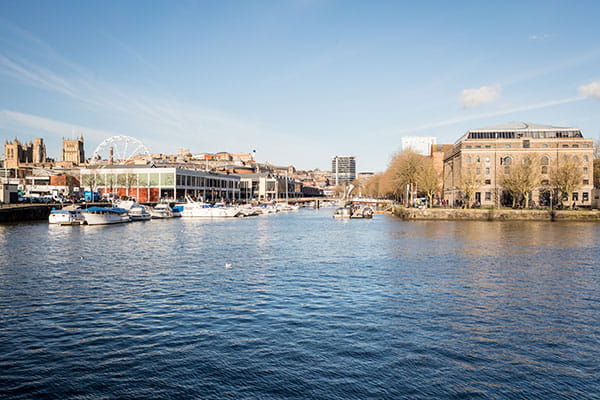
Bristol
A stunning city for student living with all the qualities to make you want to stay.

Sports, societies and activities
There is more to your experience here than study. Choose to make the most of it and try new things.

Health and Wellbeing
We provide support in the way you need it.

Campus and facilities
Discover our campuses and the wealth of facilities provided for our students.