
BSc(Hons) Construction Project Management
This course is open for applications
Accreditations and partnerships:


8th university in the UK for Building courses.The Sunday Times Good University Guide 2026
93% of Building graduates were in graduate-level employment or further study 15 months after graduating. The Sunday Times Good University Guide 2026
Study either full-time or part-time towards Chartered Builder or Chartered Construction Manager status and develop valuable industry skills on collaborative projects.
About
Why study construction project management?
The urgent need to support economic development in the South West and across the UK is driving an increase in large-scale construction and infrastructure projects.
This is creating strong demand for professionals who not only understand construction technology and project management, but also the business and digital tools that underpin successful delivery.
Why UWE Bristol?
Accredited by the Chartered Institute of Building (CIOB) and the Royal Institution of Chartered Surveyors (RICS), our BSc(Hons) Construction Project Management is available for both fulltime and parttime study. This means you can work towards Chartered Builder or Chartered Construction Manager status if you're already working in the industry.
Learn to manage construction projects effectively, balancing client needs with external constraints such as regulations, budgets, and sustainability goals. Study the principles of economics, business operations, law, Building Information Modelling (BIM), building design and science, construction technology, safety and management.
Apply your knowledge and skills to real-life scenarios in a work-based research project or dissertation on a specific topic of interest. Engage in collaborative learning with peers from different disciplines, which mirrors industry practice and helps build your professional network. Benefit from strong industry links, including input from construction employers who provide insights, mentoring, and career advice.
Gain exposure to contemporary construction practices through site visits and field trips, enriching their understanding of real-world project environments. Test your skills on a placement, which may qualify as part of the professional development required to achieve chartered status.
Where can it take me?
After graduation, you could work for UK or global construction organisations that manage, develop and construct buildings and other infrastructure.
You'll have opportunities to work in project management, quantity surveying, property development, facilities and asset management.
Watch: Welcome to the School of Architecture and Environment at UWE Bristol
Entry
Typical offers
You will need to meet the following Level 2 requirements:
- GCSE: Grade C/4 in English and Mathematics, or equivalent.
In addition to the above Level 2 qualifications, you'll need to achieve the published tariff points from your Level 3 studies prior to entry. Below is an indicative list of the main qualification types. However, we will consider any Level 3 qualifications towards meeting our entry requirements.
- Tariff points: 104
- Contextual tariff: See our contextual offers page.
- English Language Requirement:
International and EU applicants are required to have a minimum overall IELTS (Academic) score of 6.0 with 5.5 in each component (or approved equivalent*).
*The University accepts a large number of UK and International Qualifications in place of IELTS. You can find details of acceptable tests and the required grades you will need in our English language section. Please visit our English language requirements page.
- A-level subjects: No specific subjects required.
- BTEC: No specific subjects required. For information on required Guided Learning Hours please see our minimum entry requirements page.
- Access:
No specific subjects required.
- Baccalaureate IB:
No specific subjects required. We accept the IB Career-related Programme in conjunction with other Level 3 qualifications.
- Irish Highers: No specific subjects required.
- Welsh Baccalaureate: We accept tariff points achieved from the Advanced Skills Baccalaureate Wales in conjunction with other Level 3 qualifications.
- Cambridge Technical: No specific subjects required.
- T Levels: No specific subjects required.
Entry requirements
International applicants
If you're applying to UWE Bristol from another country or region, visit the international study pages for tailored application information. If you're an international student and don't meet the academic requirements to study this course, you can qualify by completing preparatory study at our International College.
If you're applying to study at UWE Bristol and require additional support to meet our English language requirements, you may be able to attend one of our pre-sessional English courses. Read more about our pre-sessional English Programme.
Direct Entry
Full-time students entering year two, and part-time students, would normally have a Foundation Degree, Higher National Diploma or Certificate in a closely related subject. You may be able to join the course in year two (full-time) or year three (part-time) or be credited with certain modules. With an HNC, you should aim for Merits in all your H2 (generally year two) units, where a Distinction can cancel a Pass.
Read more about entry requirements.
How to apply
Read more about undergraduate applications.
Read more about international applications and key international deadline dates.
For further information
- Email:
UK applicants
Admissions@uwe.ac.ukInternational/EU applicants
International@uwe.ac.uk - Telephone:
UK applicants
+44 (0)117 32 83333International/EU applicants
+44 (0)117 32 86644
Structure
Content
You'll study:
Materials and Environmental Physics
Through lectures, tutorials and practical experiments, this module will explore construction materials and the physics of internal building environments. You'll investigate the properties and uses of timber, masonry, steel, concrete, glass, plastics and emerging materials. Experimental work will examine light and lighting, noise and acoustics, air quality and ventilation, thermal comfort and heat flow. By connecting material science with environmental performance, you'll develop an understanding of how design choices influence comfort, health, energy use, climate change, and both operational and embodied carbon in buildings.
Construction Technology and Building Services 1
This module will introduce domestic construction from foundations to roof, including finishes and building services. Topics are likely to include, but will not be limited to, structural behaviour and load distribution, construction techniques, services integration, and technical drawing and communication. You'll compare traditional, contemporary and emerging practices while considering regulation, sustainability, health and safety, ethics and professional standards. Further study may cover feasibility, circular economy principles and passive or environmental design, helping you understand how materials, systems and services combine within domestic buildings.
Principles of Sustainable Design
This module will introduce the process of recording, designing and specifying buildings while developing fundamental drawing and measurement skills. Topics are likely to include, but will not be limited to, architectural context, design theory, function, form and style, user requirements, briefing and design methodology. You'll consider structural and environmental appraisal, urban and housing design, accessibility, load paths, sustainability and professional ethics. Practical work will introduce sketching, computer-aided design, building information modelling, detailing of simple buildings, planning applications, and design and access statements.
Law, Economics and Management
This module will introduce legal, economic and management principles relevant to the built environment. You'll develop an understanding of the frameworks within which property and construction activities take place, considering how legal responsibilities, economic influences and management decisions affect professional practice. Through applied examples, you'll learn to interpret information, recognise the interests of different parties and make reasoned judgements about practical situations. The module will strengthen your analytical, communication and decision-making skills while providing a foundation for later study of contracts, organisations, markets and project delivery.
You'll study:
Construction Technology and Building Services 2
This module will develop your ability to justify construction and building services solutions for non-domestic buildings. You'll investigate substructures, framed systems, envelopes, internal components, fire strategies and modern methods such as modular and off-site construction. Digital tools, including BIM, will support data-informed decisions. Building services topics are likely to include HVAC, lighting, energy and water, alongside whole-life assessment, BREEAM, Passivhaus, net zero and circular economy principles. You'll evaluate solutions against regulation, performance, safety, accessibility, cost, time and stakeholder requirements.
Site Management
This module will introduce the operational and managerial practices needed to coordinate construction sites effectively. You'll explore systems thinking, site layout, logistics, supply chains and the integration of on-site and off-site activity. Topics are likely to include health and safety, method statements, risk assessments, quality systems, labour, materials, plant, scheduling, cost control, critical paths and resource levelling. You'll also examine environmental management, waste reduction, performance indicators and digital technologies, developing practical decision-making skills for safe, efficient and sustainable site production.
Project Management Tools and Techniques
In this module, you'll develop a thorough understanding of project management tools and techniques aligned with the Association for Project Management Body of Knowledge and the CIOB Educational Framework. You'll explore project context, people, delivery and interfaces, including governance and project environments. Topics may include communication, conflict, delegation, leadership, negotiation and teamwork, alongside business cases, planning, monitoring, stakeholder management, benefits, change and configuration control. You'll also consider schedules, costs, investment appraisal, risk, quality, resources, health and safety, law, security and sustainability.
Professional Practice for the Built Environment
This module will help you develop the professional, academic and reflective skills needed to succeed within the built environment sector. You'll engage with employers, professional bodies and university support services while exploring career opportunities and future directions in a rapidly evolving and increasingly digital industry. Topics may include professional ethics, career planning, job applications, business and data skills, critical writing, literature reviews and the use of feedback. By reflecting on your development, you'll strengthen your professional identity and prepare for future employment or placement opportunities.
Procurement and Contract Practice
This module will introduce the procurement and contractual processes that support construction projects from conception to completion. You'll explore legislation, contract forms, tendering procedures, risk management and the rights and responsibilities of project stakeholders. Topics may include planning law, environmental considerations, health and safety, collaborative working, payment procedures, delays, variations and supply-chain management. Using practice-based scenarios, you'll learn how contractual and procurement decisions influence project delivery and develop the skills needed to apply professional knowledge within real-world construction contexts.
Optional modules:
Placement year (if applicable)
If you study on the four year sandwich course, you'll spend a year away from the University on a work placement after Year two.
You'll complete a placement learning module.
If you complete the Placement year, you won't study the Final year module Interdisciplinary Professional Practice.
See the placements and fees sections for more information.
You'll study:
Interdisciplinary Professional Practice
This module will develop your ability to work collaboratively across built environment disciplines. Taking on a professional role within a development project, you'll consider financial, socio-economic, political, environmental, legal and technical factors at different stages of the process. Topics are likely to include procurement, contracts, planning, building regulations, health and safety, development appraisal, finance and asset management. You'll explore team roles, barriers and enablers to collaboration, stakeholder and community engagement, professionalism and ethical responsibility while strengthening communication, teamwork and informed decision-making.
Strategic and Operational Management
This module will examine how organisations translate strategic objectives into effective operational management. You'll explore the relationship between long-term direction and day-to-day delivery, considering how resources, people, performance and change are managed. The module will help you analyse internal and external influences on organisational decisions, evaluate alternative approaches and understand how leadership and management support implementation. Through relevant contexts and evidence, you'll develop strategic thinking, problem-solving and decision-making skills while learning to communicate recommendations that connect organisational priorities with practical action.
Dissertation A
This module will support you to complete an independent dissertation on an agreed topic relevant to your programme. You'll define a focused question, critically review appropriate literature and select methods suited to your enquiry. With academic supervision, you'll manage an extended research process, address ethical considerations, analyse evidence and develop a coherent argument. The dissertation will strengthen your independence, critical judgement, project management and written communication while allowing you to investigate a subject in depth and demonstrate how your findings contribute to academic or professional understanding.
Technological Innovation and Life Cycles
This module will examine how technological innovation influences buildings and assets across their lifecycles. You'll explore the adoption, application and management of new technologies from design and construction through operation, maintenance, adaptation and end of life. The module will consider how innovation can affect performance, value, sustainability and user experience, alongside risks, constraints and organisational change. By comparing options and evidence, you'll develop your ability to evaluate technological choices, understand lifecycle consequences and support informed decisions within built environment practice.
People and Financial Management
This module will develop your understanding of the financial and people-management factors that influence construction projects and business performance. You'll explore project evaluation, cashflow appraisal, cost planning, budgeting and investment decisions, alongside forecasting, productivity and resource management. Human resource management, motivation, communication, quality and performance will also be examined in the context of project delivery. Through practical exercises and case-study activities, you'll learn how financial, operational and personnel considerations interact, helping you make informed decisions about project planning, resourcing and management within construction organisations.
If you complete the Placement year, you won't study the Final year module Interdisciplinary Professional Practice.
This structure is for full-time students only. Part-time students study the same modules but the delivery pattern will be different.
The University continually enhances our offer by responding to feedback from our students and other stakeholders, ensuring the curriculum is kept up to date and our graduates are equipped with the knowledge and skills they need for the real world. This may result in changes to the course. If changes to your course are approved, we'll inform you.
"While attending a UWE Bristol careers fair, I gained industry contacts from Mott MacDonald, which enabled me to start networking with them directly. This opportunity helped me to achieve my first role there as a Graduate Project Manager." Jessica, Construction Project Management graduate.
Learning and Teaching
Our staff provide a friendly, encouraging learning environment. They actively engage in research or professional practice to ensure that you learn directly from the latest academic and business developments.
Teaching methods include lectures, seminars, workshops and lab sessions designed to encourage active engagement between you and your tutors.
Your knowledge and understanding are consolidated through directed reading, site visits, field trips and formative tasks that encourage reflection and application of theory to practice. Digital tools and software are integrated into the curriculum to support technical calculations, project planning, and management.
See our full glossary of learning and teaching terms.
Best practice
We have strong relationships with local practitioners and professional organisations such as the CIOB and Constructing Excellence South West and Bristol.
Students have free access events and workshops promoting best practice.
We also arrange regular presentations from visiting professionals, academics and past students so you can learn about industry challenges and developments.
Showcase your work
Final year students regularly showcase their design projects and case studies to local employers and the public at UWE Bristol's annual degree show.
Study time
Lectures, workshops/seminars, group project work, and tutoring account for 12 hours of contact time each week.
We also expect you to spend at least 24 hours studying independently.
Part-time students
This course is available to study on a part-time day release basis. Modules are structured to allow you to attend lectures and tutorial sessions one day each week to minimise the time spent away from the workplace.
A large proportion of our part-time students are supported by their employer. A benefit of studying part-time is that you can put your learning directly into practice and use work-related problems in projects.
Assessment
You'll be assessed through a mix of coursework, presentations and exams.
These will test your knowledge and skills and help you develop graduate attributes valued by employers including communication and presentation skills; IT and numeracy skills; and team work, project and time management skills.
You'll also build intellectual skills required for problem solving, critical thinking, analysis and evaluation, creativity and innovation.
Exams are held in either January or May/June. Coursework consists of essays, reports, surveys, design projects, teamwork and progress tests.
Learn more about assessments.
Fees
Full-time; Sandwich course
Part-time course
Supplementary fee information
Please note, the above tuition fees for home students are charged in the first academic year of study but may increase in subsequent years for both new and continuing students. This increase will track the tuition fee cap which is determined by government and is expected to increase in line with inflation. UWE will likely maintain its fees for new and returning home students at the maximum permitted level for each year of study.
The placement year fee will also increase when the fee cap changes so please use the above placement year fee for indication purposes only.
Your overall entitlement to funding is based on how long the course is that you're registered on. Standard funding is allocated based on the standard number of years that your course lasts, plus one additional year.
You'll apply for funding each year that you study and Student Finance will take into account how long the course is in each year that you apply. So if you register for the four year course and then transfer to the three year course, the number of years you can apply for funding will change. Student Finance will reassess your funding based on how many years you have been in study, not just those years for which you received student finance.
Always seek advice before taking any action that may have implications for your funding.
Additional costs
This refers to items you could need during your studies that aren't covered by the standard tuition fee. These could be materials, textbooks, travel, clothing, software or printing.
Features
Professional accreditation
UWE Bristol holds Chartered Institute of Building (CIOB) Accredited Centre Status during the period 2022-2027 and this course is CIOB Accredited during the period 2022-2027, having been judged to meet the CIOB Education Framework. Prospective members holding these qualifications have full academic exemption and once they have gained three to five years' relevant work experience may enter CIOB membership as an applicant to progress towards Chartered Membership without the requirement for an Individual Assessment. Our BSc(Hons) Construction Project Management course is also accredited by the Royal Institution of Chartered Surveyors (RICS).
Placements
Students who do a placement are more likely to graduate with a better degree and get higher quality work on graduation. As well as helping hone your professional skills, industry knowledge and network, a work placement will make you highly employable on graduation.
Our full-time students secure placements in a wide range of organisations.
Students in previous years have worked with national and regional contractors, specialist contractors, client organisations' project managers and multi-disciplinary organisations. The majority have been offered a position with their employer on graduation.
If you choose to study part-time and have HNCs/HNDs in a relevant subject, you can gain advance entry and apply learning on work-based learning modules throughout your course.
Fieldwork
We arrange site visits and field trips throughout the course to support your learning.
You'll attend one or two site visits each academic year. In year one and year two they are likely to be in and around Bristol.
During final year, you can attend an optional European study trip. Aimed at giving you an insight into European construction techniques and project management processes, this involves observing and speaking to construction professionals some of whom are UWE Bristol graduates. Previous destinations have included Germany, Spain and Portugal.
Study facilities
Study in dedicated laboratories for concrete and environmental services, environmental physics, earth sciences, and surveying technology, using specialist equipment for surveying and assessing buildings. Develop skills in computer aided design (CAD), project management and building information modelling (BIM) on industry standard software.
Access leading resources, specialist journals and publications through our online portal. Plus, study and collaborate with classmates in our new 'Hive' lounge and open computing area.
Learn more about UWE Bristol's facilities and resources.
Take a personalised virtual tour of the Construction, Property and Surveying facilities and experience what a typical day could look like here for you.
Personalised virtual tour
There's no need to visit us in person to explore our facilities and campuses. Take a personalised virtual tour and discover it all for yourself from wherever you are.
Take a virtual tourCareers
Careers / Further study
The demand for our graduates means you'll have a good choice of employment. The combination of design, technology, building, law and management subjects will also prepare you for industry or postgraduate study.
Recent graduates have gone into positions as construction managers, planning managers, site engineers or project managers with firms such as Balfour Beatty, Gleeds, Sisk Group, Turner & Townsend, JLL and Kier Group. Some have set up successful businesses.
Others have branched out into fields such as personnel management, marketing and financial management.
Get inspired
Our award-winning careers service will develop your employment potential through career coaching and find you graduate jobs, placements and global opportunities.
We can also help find local volunteering and community opportunities, provide support for entrepreneurial activity and get you access to employer events.
Visit our employability pages to learn more about careers, employers and what our students are doing six months after graduating.
See also:
Life
Accommodation
An excellent range of options for all of the Bristol campuses and the city centre.
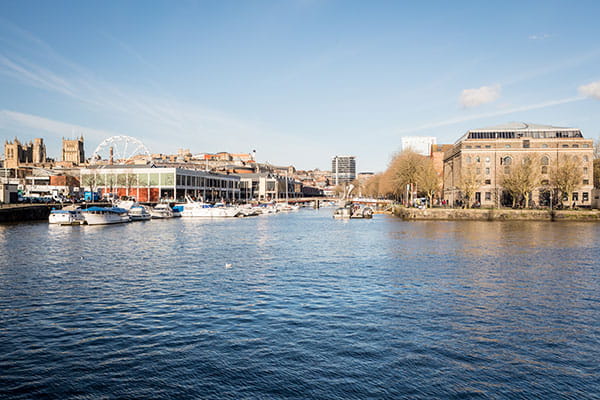
Bristol
A stunning city for student living with all the qualities to make you want to stay.

Sports, societies and activities
There is more to your experience here than study. Choose to make the most of it and try new things.

Health and Wellbeing
We provide support in the way you need it.

Campus and facilities
Discover our campuses and the wealth of facilities provided for our students.