BEng(Hons) Architecture and Environmental Engineering
This course is open for applications
Accreditations and partnerships:

92% of Architecture students are satisfied with the teaching of their course overall.Guardian University Guide 2026
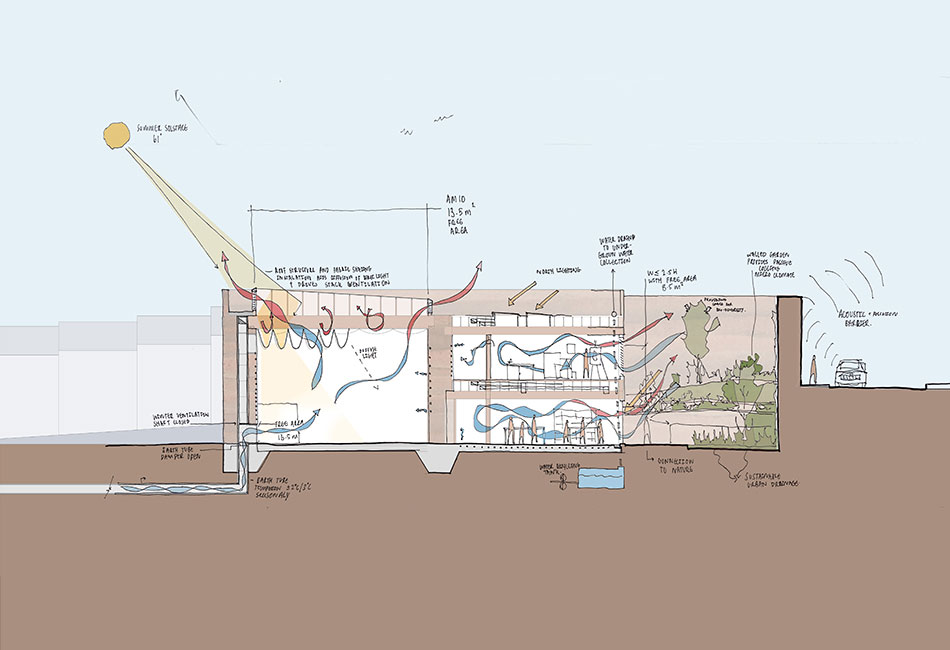
Redefining architectural education. Our dual-accredited (RIBA Part 1 and CIBSE) four-year degree offers a strong focus on sustainable, high performing buildings. Graduates have a wide choice of career options including architecture, environmental services engineering, or sustainability consultancy.
About
Why study architecture and environmental engineering?
As the world's resources become scarce, there's a growing need to create buildings that are environmentally responsible. This calls for design professionals with the creative and analytical skills ofbotharchitects and engineers - an unusual mix of skills that is highly sought after by employers. It's these future designers who will achieve design excellence, pursuing imaginative strategies for using resources efficiently.
BEng (Hons) Architecture and Environmental Engineering is a multi-disciplinary course, producing in demand, versatile graduates with specialist knowledge and the skillset to create exciting buildings.
This joint degree enables you to work towards professional status in both engineering and architecture, developing your cultural, artistic and technological interests in parallel.
Why UWE Bristol?
On our Architecture and Environmental Engineering degree, you'll gain a rare mix of knowledge and skills that'll prepare you for this expanding sector of design.
Explore architecture, passive design, environmental physics, environmental systems in buildings and the effective use of energy and materials.
It's in the overlap between function, aesthetics and physics that true inventiveness can flourish. Each way of thinking stimulates the others, giving you innovative solutions to problems.
Learn from industry-experienced tutors and practising professionals who bring up-to-the-minute ideas from their active projects.
Develop your professional portfolio with a stream of practical design projects from real clients in the Bristol area.
Go on site visits and residential field trips in the UK and overseas to make sure your design thinking is linked to the world beyond your studies.
Where can it take me?
With a dual degree, you'll be ready for a variety of careers in architecture, environmental engineering and sustainability consultancy.
Opportunities are available anywhere from small private practices up to large multinationals like Foster & Partners, Arup and Atkins.
Many students choose to pursue further study, including our Master of Architecture, MSc Façade Engineering or MSc Building Information Modelling courses.
Watch: Welcome to the School of Architecture and Environment at UWE Bristol
Entry
Typical offers
You will need to meet the following Level 2 requirements:
- GCSE: Grade C/4 in English and Mathematics, or equivalent.
In addition to the above Level 2 qualifications, you'll need to achieve the published tariff points from your Level 3 studies prior to entry. Below is an indicative list of the main qualification types. However, we will consider any Level 3 qualifications towards meeting our entry requirements.
- Tariff points: 120
- Contextual tariff: See our contextual offers page.
- English Language Requirement:
International and EU applicants are required to have a minimum overall IELTS (Academic) score of 6.5 with 6.0 in each component (or approved equivalent*).
*The university accepts a large number of UK and International Qualifications in place of IELTS. You can find details of acceptable tests and the required grades you'll need in our English Language section.
- A-level subjects: Grade C in Mathematics, or grade A in Use of Mathematics, or grade C in Physics.
- EDEXCEL (BTEC) Diploma: A merit in one of the following; Further Engineering Mathematics, Further Mathematics for Construction, Mathematics for Engineering or Physics. Please list the units you are taking in your application. For further advice on acceptable units please email us.
For information on required Guided Learning Hours please see our minimum entry requirements page.
- Access: 15 Level 3 credits at Merit in Mathematics or Physics.
- Baccalaureate IB: You must have a minimum grade of 5 in Higher Level Mathematics or Physics. We accept the IB Career-related Programme in conjunction with other Level 3 qualifications.
- Irish Highers: H2 in Mathematics or Physics.
- Welsh Baccalaureate: We accept tariff points achieved from the Advanced Skills Baccalaureate Wales in conjunction with other Level 3 qualifications. This qualification cannot be used to satisfy any subject specific entry requirements.
- Cambridge Technical: You must be studying one of the following: Mechanical, Electrical and Electronic Systems Design and Engineering; Engineering Automation Control and Manufacturing Processes; Electrical and Electronic Engineering; Mechanical Engineering and Design; Automation, Systems and Control; Manufacturing
To include Merit in the following (optional) unit: Applied Mathematics for Engineering. - T Levels: Grade C in A-Level Mathematics or Physics, in addition to your T Level qualification. If you have or are looking to partially complete your T-Level, you are still required to have the equivalent to 2 full A-Levels as part of our minimum entry requirements. As a result, if you are applying with only the core or occupational specialism, this may be insufficient as a stand-alone qualification.
Entry requirements
If you don't meet the entry requirements, you may be eligible for BEng(Hons) Architecture and Environmental Engineering (with Foundation Year).
International applicants
If you're applying to UWE Bristol from another country or region, visit the international study pages for tailored application information. If you're an international student and don't meet the academic requirements to study this course, you can qualify by completing preparatory study at our International College.
If you're applying to study at UWE Bristol and require additional support to meet our English language requirements, you may be able to attend one of our pre-sessional English courses. Read more about our pre-sessional English Programme.
Read more about entry requirements.
How to apply
Read more about undergraduate applications.
Read more about international applications and key international deadline dates.
For further information
- Email:
UK applicants
Admissions@uwe.ac.ukInternational/EU applicants
International@uwe.ac.uk - Telephone:
UK applicants
+44 (0)117 32 83333International/EU applicants
+44 (0)117 32 86644
Structure
Content
Year one
You'll study:
- Contexts of Architecture 1 - Cities and Society
- Studio 1.2 - People and Environment
- Studio 1.1 - Form and Context
- Professional Principles and Digital Practice
- Materials and Environmental Physics.
Year two
You'll study:
- Passive Design Studio
- Studio 2.1 - Living
- Architectural Acoustics
- Building Services Applications
- Collaboration and Coordination
- Contexts of Architecture 2 - Histories and Theories.
Year three
You'll study:
- AEE Studio 3.2
- AEE Studio 3.1
- Energy Performance and Retrofit
- Critical Contexts
- Zero Carbon Buildings.
Final year
You'll study:
- AEE Studio 4
- Building Services Innovations
- Interactive Systems and Comfort Controls
- Employability, Ethics, and Enterprise.
The University continually enhances our offer by responding to feedback from our students and other stakeholders, ensuring the curriculum is kept up to date and our graduates are equipped with the knowledge and skills they need for the real world. This may result in changes to the course. If changes to your course are approved, we'll inform you.
Learning and Teaching
Our experienced teaching staff are active in research and professional practice, ensuring you learn about the latest ideas and trends in the industry.
You'll spend 12-16 hours a week engaging in face-to-face activities, including studio work, lectures, seminars and field visits, supplemented by independent learning.
Through this mix of scheduled teaching and self-guided study, you'll explore themes like sustainability, urban design, and building technology. With an emphasis on hands-on learning and real-world application, the course blends studio-based teaching, technical workshops and labs and live design projects, allowing you to apply theory to practical contexts.
Your fieldwork offers exposure to diverse built environments, enriching your understanding of architecture and engineering. You'll also gain practical experience through site visits, internships, and community-based collaborations with local employers.
See our full glossary of learning and teaching terms.
Assessment
Our assessment strategy combines architectural creativity with engineering precision, focusing on real-world application and critical thinking.
You'll create portfolios showcasing your creative, technical, and analytical work using industry-standard software like CAD, BIM, and energy modelling tools.
Assessments include interdisciplinary projects, technical and laboratory reports, oral presentations, and poster sessions. You'll engage in live projects and case studies, working directly with community and industry stakeholders.
Through group work and collaborative assessments, you'll hone your group work and project management skills.
Exams and computer-based tests evaluate your foundational knowledge of architectural theory, engineering principles, and maths skills.
Your final-year capstone design studio project will combine your accumulated learning, requiring you to deliver a comprehensive architectural and engineering solution to a real-world practical challenge.
Learn more about assessments.
Fees
Full time course
Indicative Additional Costs
Supplementary fee information
Additional costs
Additional costs are for items you could need during your studies that aren't covered by the standard tuition fee. These could be materials, textbooks, travel, clothing, software or printing.
Features
Professional accreditation
Our BEng(Hons) Architecture and Environmental Engineering degree offers you accreditation, meeting the Royal Institute of British Architects (RIBA) Part 1 requirements for architecture and the Chartered Institute of Building Services Engineers (CIBSE) standards for Incorporated Engineer status. The course is also accredited by the Board of Architects Malaysia.
Placements
There's no compulsory work placement on this Architecture and Environmental Engineering degree, but we strongly encourage you to gather experience through work or internships during vacations.
Experience also hones your skills, industry knowledge, and professional network - making you a more attractive graduate - and we're here to support you throughout that journey.
Fieldwork
We arrange day trips so you can visit study locations and meet people that can inform your work. We also arrange residential field trips locally, nationally and internationally.
Stonewater design project trip
A group of our Year two students had an exciting opportunity to showcase their dwelling projects to Stonewater Housing Association. The project brief asked students to design collective housing for Black, Asian, or Minority Ethnic groups in Bristol. Students were asked to take a progressive approach in their design, demonstrating an understanding of how different cultures live. Eight finalist students presented to staff at Stonewater and the winning student, Leandro, was offered 2-weeks' paid work experience as a prize. Due to the success of this partnership, we're working with Stonewater and hope to collaborate with them on an ongoing basis.
Study facilities
Learn in modern facilities, including design studios and dedicated project rooms.
From day one, you'll get hands on with immersive technologies in labs dedicated to low carbon design and construction materials.
Develop CAD, model-making, design, and drawing skills in integrated studios. Create architectural models using laser cutters, computerised routers, and wind tunnels, or in wood, metal, and concrete workshops.
Conduct spatial enquiries and analyse data with industry-standard GIS and statistical software.
Learn more about UWE Bristol's facilities and resources.
Take a personalised virtual tour of the Architecture facilities and experience what a typical day could look like here for you.
Personalised virtual tour
There's no need to visit us in person to explore our facilities and campuses. Take a personalised virtual tour and discover it all for yourself from wherever you are.
Take a virtual tourCareers
Careers / Further study
Graduates of our BEng(Hons) Architecture and Environmental Engineering are well-prepared for a broad range of careers. You'll gain professional qualifications, meeting the requirements for RIBA Part 1 and CIBSE standards for Incorporated Engineer status, which as well as accreditation by the Board of Architects Malaysia, will set you on the path to becoming a registered architect or building services engineer.
Studying sustainability, inclusivity, and innovation will make you an asset to employers who are addressing global challenges like climate change and urban resilience. You'll develop design skills that you'll be able to apply to broader environmental, social, and economic contexts, enabling you to think critically and creatively.
Hands-on learning through studio work, live projects, and community collaborations ensures you graduate with practical experience and professional readiness. You'll engage with real-world issues, working directly with planning agencies, industry stakeholders, and local communities to develop critical professional skills.
Whether you choose to specialise in architecture, engineering, or a combination of both, you'll have the foundation to pursue an impactful career. Our course prepares you to address the needs of society, clients, users, and the environment, drawing on the interdisciplinary strengths of our School of Architecture and Environment.
Our graduates are known for their ability to integrate architecture and engineering seamlessly, creating context-sensitive solutions. You'll be prepared to design inclusive, healthy, and sustainable places for future societies, making meaningful contributions to the built environment.
As an architect, you could go on to work in private practices, design firms, or government agencies, creating innovative and sustainable buildings. Your engineering skills will open doors to roles in building services, environmental consultancy, and renewable energy sectors, where you'll design systems that enhance building performance and sustainability.
Get inspired
Our award-winning careers service will develop your employment potential through career coaching and help you to find graduate jobs, summer placements and global opportunities.
We can also help you to find local volunteering and community opportunities, provide support for entrepreneurial activity and get you access to employer events.
Visit our employability pages to learn more about careers, employers and what our students are doing six months after graduating.
Start your dream career at UWE Bristol
Life
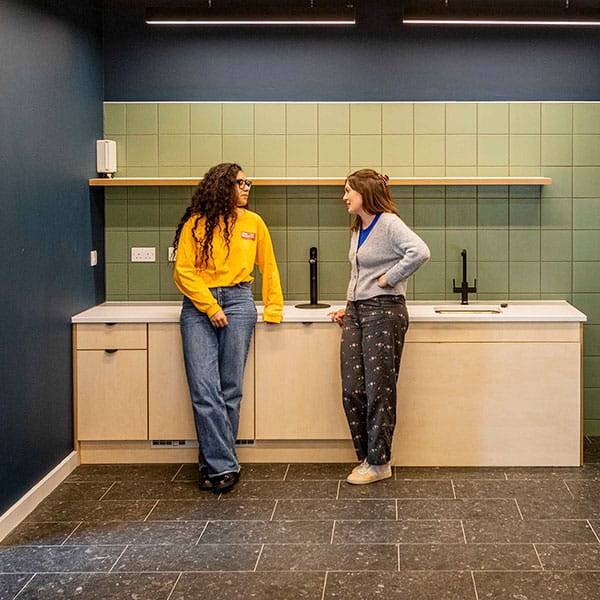
Accommodation
An excellent range of options for all of the Bristol campuses and the city centre.
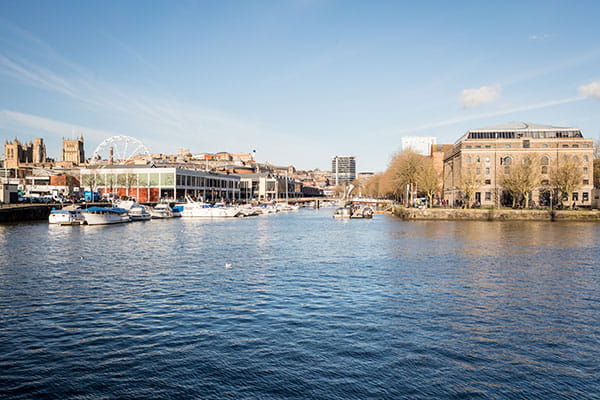
Bristol
A stunning city for student living with all the qualities to make you want to stay.

Sports, societies and activities
There is more to your experience here than study. Choose to make the most of it and try new things.

Health and Wellbeing
We provide support in the way you need it.

Campus and facilities
Discover our campuses and the wealth of facilities provided for our students.