BA(Hons) Politics and International Relations
This course is open for applications.
Accreditations and partnerships:

BA(Hons) Politics and International Relations at UWE Bristol is an applied, future-focused course, which emphasises the importance of theory, policy, and practice in political and global affairs.
About
Why study politics and international relations?
Politics and International Relations at UWE Bristol doesn't just prepare you for the world as it is; it empowers you to imagine what it could be. You'll have space for critical thinking, reflection, and real-world problem-solving, helping you engage with the changes you want to see and how you can help make them happen.
You'll gain a unique set of skills on this course, which can lead you to confidently pursue exciting career opportunities, both inside and outside the political world.
Why UWE Bristol?
Our teaching is inclusive by design, creating a welcoming and supportive community where everyone feels safe and respected. Our team of active researchers and experts provides a dynamic curriculum that covers various perspectives, helping us become informed and active citizens ready to tackle future political and social challenges.
You'll study a variety of modules which cover important subject areas such as human rights, gender and sexuality, ethics, race, religion, global governance, foreign policy, international security, and public policy. The modules emphasise applying theoretical knowledge to practical solutions for local, national, and global challenges. One module is accredited by the Institute of Leadership and Management (ILM).
Our passionate teaching team uses lectures, workshops, and hands-on activities like role plays, debates, and policy analysis, supported by modern technology. Classes are designed to enhance your academic, writing, and presentation skills, fostering independent and critical thinking.
We're proud to offer the prestigious Parliamentary Studies optional module, approved by the Houses of Parliament and co-taught by university tutors and Parliament officials. This module provides detailed knowledge of Parliament's workings and includes visits to Westminster.
Where can it take me?
Politics and International Relations graduates are in demand across a wide range of professions and many of our graduates have secured employment in government, the civil service, non-governmental organisations (NGOs), accountancy, human resources, media and journalism.
Many of our graduates also choose to deepen their skills and knowledge and get involved in research or education, or specialise further with postgraduate study.
Watch: Politics and International Relations at UWE Bristol
Entry
Typical offers
You will need to meet the following Level 2 requirements:
- GCSE: Grade C/4 in English, or equivalent.
In addition to the above Level 2 qualifications, you'll need to achieve the published tariff points from your Level 3 studies prior to entry. Below is an indicative list of the main qualification types. However, we will consider any Level 3 qualifications towards meeting our entry requirements.
- Tariff points: 112
- Contextual tariff: See our contextual offers page.
- English Language Requirement:
International and EU applicants are required to have a minimum overall IELTS (Academic) score of 6.0, with 5.5 in each component (or approved equivalent*).
*The University accepts a large number of UK and international qualifications in place of IELTS. You can find details of acceptable tests and the required grades you'll need at English Language requirements.
- A-level subjects: No specific subjects required.
- EDEXCEL (BTEC) Diploma: No specific subjects required. For information on required Guided Learning Hours please see our minimum entry requirements page.
- Access: No specific subjects required.
- Baccalaureate IB: No specific subjects required. We accept the IB Career-related Programme in conjunction with other Level 3 qualifications.
- Irish Highers: No specific subjects required.
- Welsh Baccalaureate: We accept tariff points achieved from the Advanced Skills Baccalaureate Wales in conjunction with other Level 3 qualifications.
- Cambridge Technical: No specific subjects required.
- T Levels: No specific subjects required.
Entry requirements
If you don't meet the entry requirements, you may be eligible for BA(Hons) Politics and International Relations (with Foundation Year).
International applicants
If you're applying to UWE Bristol from another country or region, visit international study for tailored application information. If you're an international student and don't meet the academic requirements to study this course, you can qualify by completing preparatory study at our International College.
If you're applying to study at UWE Bristol and require additional support to meet our English language requirements, you may be able to attend one of our pre-sessional English courses. Read more about our pre-sessional English Programme.
Read more about entry requirements.
How to apply
Read more about undergraduate applications.
Read more about international applications and key international deadline dates.
For further information
- Email:
UK applicants
Admissions@uwe.ac.ukInternational/EU applicants
International@uwe.ac.uk - Telephone:
UK applicants
+44 (0)117 32 83333International/EU applicants
+44 (0)117 32 86644
Structure
Content
The optional modules listed are those that are most likely to be available, but they may be subject to change.
Year one
You'll study:
- Critical Thinking and Political Theory
- International Relations
- Politics of Crisis and Change
- Politics, States and Resistance.
Year two
You'll study:
- Governing Society
- Interrogating the International
- Political Innovation, Leadership and Communication.*
*This module is accredited by the Institute of Leadership and Management (ILM).
Plus two optional modules from:
- Atrocities in Global Politics
- Foreign Policy
- Gender in Politics
- Global Political Economy.
At the discretion of the Programme Leader, a set of optional Independent Study modules may be made available to facilitate participation in, and completion of, study abroad exchange schemes.
Placement year (if applicable)
If you study on the four year (sandwich) course, you'll spend a year away from the University on a work or study placement after year two.
You'll complete a placement learning module.
See the Placements and Fees sections for more information.
Final year
You'll study:
- Advanced Debates in International Relations
- Advanced Debates in Politics.
Plus, either one or two optional modules** from:
- Dissertation Project
- Global Governance
- Justice in Global Politics.
**You'll have the choice to study either one or two of these modules, unless you complete the Sandwich year in which case you'll only study one of them.
Plus, optional modules (the amount depending on credit requirement)*** from:
- Climate and Society
- Decolonisation in Theory and Practice
- Parliamentary Studies
- Terrorism: History, Myths and Policy.
***If you've studied two Final Year optional modules at this point, then none of these four modules will be available to study.
This structure is for full-time students only. Part-time students study the same modules but the delivery pattern will be different.
The University continually enhances our offer by responding to feedback from our students and other stakeholders, ensuring the curriculum is kept up to date and our graduates are equipped with the knowledge and skills they need for the real world. This may result in changes to the course. If changes to your course are approved, we'll inform you.
"One of my projects involved working with a local organisation who support vulnerable refugees. I also completed a fundraising work experience placement at CLIC. These opportunities led me to my current role in the Fundraising team at Women's Aid." Francesca, Politics and International Relations graduate.
Learning and Teaching
You'll learn through a combination of lectures, workshops, and hands-on activities, with practice-oriented learning embedded at all levels. You'll participate in live briefs, simulation exercises, and conflict resolution games. Our active learning community fosters idea exchange between students and academic staff through research seminars, roundtable events, and guest lectures.
Regular events include field trips and career sessions, such as 'meet-the-employer' opportunities with speakers from the Civil Service, NGOs, and businesses. These activities provide insights into political research and practice, inspiring you to apply the skills you've gained in your degree. Where possible, you'll also have the opportunity to go on field trips to places such as the Foreign and Commonwealth Office to see modern politics in action.
Independent study is vital. You'll read around the subject in your own time, looking at books, articles, official documents and websites.
Find out more about our academic staff, their teaching expertise and research interests, including their involvement in internationally-renowned research, on e-International Relations.
You'll have a personal academic tutor, and peer-assisted learning (PAL), where you'll be mentored by a second or third year student.
Staff hold weekly office hours for discussing your work or general progress. We can also be available outside these times and will respond to emails promptly.
Our teaching ethos is informal, supportive and welcoming.
See our full glossary of learning and teaching terms.
Get involved
Attend our fortnightly student-staff events where guest speakers discuss contemporary issues and explain the role of politics in different professions. Recent topics have included: criminalising hate speech in a democratic society, the EU's role in the former Yugoslavia, and Iran's nuclear programme.
Keep up to date with the latest news and discuss contemporary political developments on the Politics and International Relations X (formerly Twitter).
Study time
You'll have at least 12 hours of teaching and related activities each week.
Assessment
We'll assess you using a mix of essays, seminar presentations, timed assignments, case studies, literature reviews, oral presentations, simulation games, your dissertation and formal unseen examinations.
Learn more about assessments.
Fees
Full-time; Sandwich course
Part time course
Indicative Additional Costs
Supplementary fee information
Your overall entitlement to funding is based on how long the course is that you're registered on. Standard funding is allocated based on the standard number of years that your course lasts, plus one additional year.
You'll apply for funding each year that you study and Student Finance will take into account how long the course is in each year that you apply. So if you register for the four year course and then transfer to the three year course, the number of years you can apply for funding will change. Student Finance will reassess your funding based on how many years you have been in study, not just those years for which you received student finance.
Always seek advice before taking any action that may have implications for your funding.
Additional costs
Additional costs are for items you could need during your studies that aren't covered by the standard tuition fee. These could be materials, textbooks, travel, clothing, software or printing.
Features
Professional accreditation
The module indicated in the Content section above is accredited by the Institute of Leadership and Management (ILM).
Placements
Students who undertake work experience, or a study exchange overseas, tend to graduate with better degrees and with improved employability skills, making you a sought-after graduate.
As part of our Politics and International Relations course, you can apply for a sandwich year placement, completed in the third year of your studies. Examples of previous sandwich year placements undertaken by our students include:
- A Library, Careers and Inclusivity placement with the Equality, Diversity and Inclusivity (EDI) team at UWE Bristol
- A Quality Assurance internship at Wasdell Group, a pharmaceutical company in Swindon
- A Pagoda Projects internship with the Canadian Chamber of Commerce, working on international projects in Vietnam
- Remote and local charity internships with PHASE worldwide and Bridges for Communities.
We also offer volunteering and other work-based experiences, to deepen your knowledge and skills. You'll get help to find a placement and support throughout from staff with the School and our award-winning careers service.
Study facilities
You'll be on based on our Frenchay Campus, where you'll find modern, well-equipped facilities to support your studies.
Learn more about UWE Bristol's facilities and resources.
Take a personalised virtual tour of the Philosophy, Politics and International Relations facilities and experience what a typical day could look like here for you.
Personalised virtual tour
There's no need to visit us in person to explore our facilities and campuses. Take a personalised virtual tour and discover it all for yourself from wherever you are.
Take a virtual tourCareers
Careers / Further study
Politics and international relations students graduate with the skills to build fulfilling careers in many fields.
You could go on to work in government, the civil service, NGOs, research organisations or education. You'll also be well equipped to go into areas such as marketing, HR, industrial relations, PR, finance and investment, accountancy or journalism.
Postgraduate study is another option to you, where you can specialise in a particular area or do a professional qualification to move into a career like law.
Get inspired
Our award-winning careers service will develop your employment potential through career coaching and find you graduate jobs, placements and global opportunities.
We can also help find local volunteering and community opportunities, provide support for entrepreneurial activity and get you access to employer events.
Visit our employability pages to learn more about careers, employers and what our students are doing six months after graduating.
UWE Bristol graduate outcomes for Politics and International Relations
Life
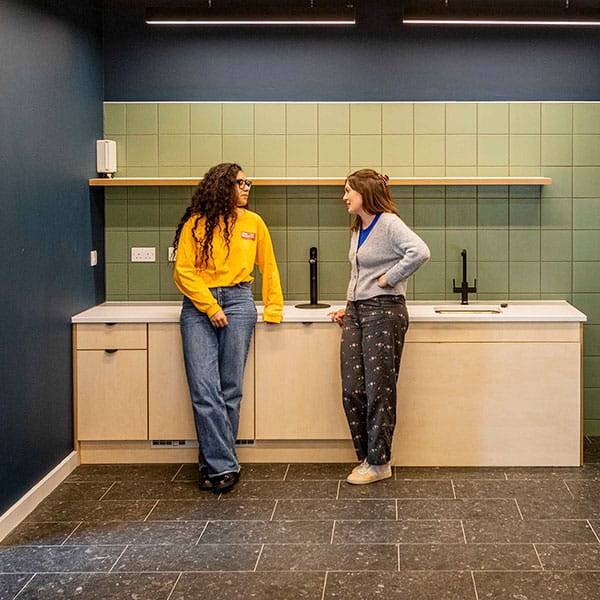
Accommodation
An excellent range of options for all of the Bristol campuses and the city centre.
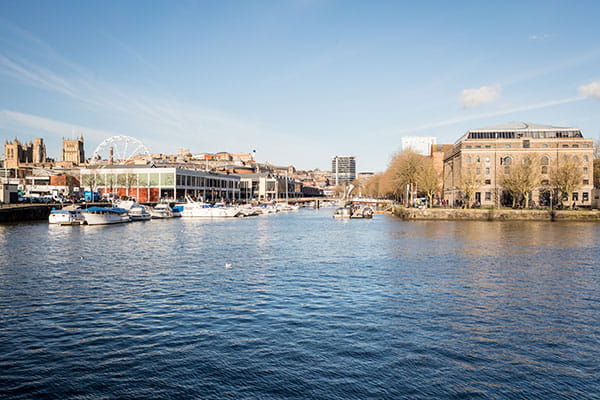
Bristol
A stunning city for student living with all the qualities to make you want to stay.

Sports, societies and activities
There is more to your experience here than study. Choose to make the most of it and try new things.

Health and Wellbeing
We provide support in the way you need it.

Campus and facilities
Discover our campuses and the wealth of facilities provided for our students.