BA(Hons) Sociology
Available in Clearing
Call +44 (0)117 32 83333We have Clearing places available on this course. Call us or apply online.
Clearing vacancies available for UK (Home) applicants only.
If you don't meet the standard entry requirements, we may still consider your application.
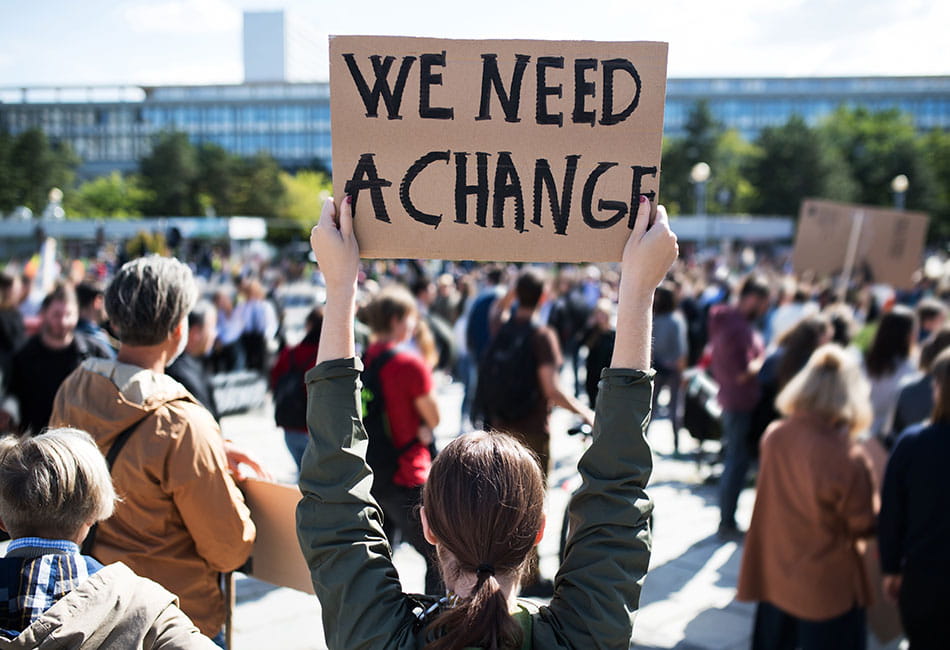
If you're curious about how society works - why people behave the way they do, how institutions shape our lives, and what drives social change - then sociology is your gateway to understanding the world. Explore the world through a thought provoking, eye opening, and life changing experience.
About
Why study sociology?
Sociology isn't just theory. It's a lens that helps you make sense of everything, from politics and inequality to popular culture and technology to personal and family life.
Studying sociology equips you with critical thinking, research skills, and a deep awareness of global issues - qualities that employers in a wide range of sectors value highly. But more than that, sociology empowers you to be a thoughtful, informed citizen of the world, a change maker, and a leader.
Why UWE Bristol?
Study BA(Hons) Sociology with us and join a vibrant, supportive academic community. Our approachable staff, who are leaders in their fields, provide expert guidance and prioritise your wellbeing and success. You'll have a voice in shaping your learning experience, becoming an active participant in your studies rather than a passive learner.
You'll also explore key social issues through diverse modules, applying sociological theories to real-world challenges and developing solutions that make a difference.
Where can it take me?
A BA(Hons) Sociology degree prepares you for a wide range of rewarding careers by developing strong transferable skills in analysis and communication. Your broad skills and experience will make you attractive to a wide range of employers.
You'll develop in-demand skills in evidence evaluation and problem-solving from multiple perspectives, while conducting research on key social issues like migration, gender equality, sustainability, and technology. Guest speakers and real-world projects deepen your insight into contemporary challenges.
Through work-based learning, volunteering, placements, and internships with organisations like Bristol Health Partners, Youth Offending Teams and the police, you'll gain valuable industry-focused experience and professional networks.
Graduates pursue roles in policy, education, social and charity work, research, media, law, journalism, public services, counselling, politics and more, or continue with postgraduate study.
Watch: Welcome to the School of Social Sciences at UWE Bristol
Entry
We are pleased to confirm that our New students webpages are now available for students starting this course in September 2026. Here you can find links to useful information about registering, course start dates, arriving on campus what to expect before and when you arrive.
We automatically send a message via your Welcome website plus an email to notify you once your Preparing to Study information is available. It is important that you regularly check your Welcome website for new messages.
Typical offers
You will need to meet the following Level 2 requirements:
- GCSE: Grade C/4 in English, or equivalent.
In addition to the above Level 2 qualifications, you'll need to achieve the published tariff points from your Level 3 studies prior to entry. Below is an indicative list of the main qualification types. However, we will consider any Level 3 qualifications towards meeting our entry requirements.
- Tariff points: 112
- Contextual tariff: See our contextual offers page.
- English Language Requirement:
International and EU applicants are required to have a minimum overall IELTS (Academic) score of 6.0, with 5.5 in each component (or approved equivalent*).
*The University accepts a large number of UK and international qualifications in place of IELTS. You can find details of acceptable tests and the required grades you'll need at English Language requirements.
- A-level subjects: No specific subjects required.
- BTEC: No specific subjects required.
For information on required Guided Learning Hours please see our minimum entry requirements page.
- Access:
No specific subjects required.
- Baccalaureate IB:
No specific subjects required. We accept the IB Career-related Programme in conjunction with other Level 3 qualifications.
- Irish Highers: No specific subjects required.
- Welsh Baccalaureate: We accept tariff points achieved from the Advanced Skills Baccalaureate Wales in conjunction with other Level 3 qualifications.
- Cambridge Technical: No specific subjects required.
- T Levels: No specific subjects required.
Entry requirements
If you don't meet the entry requirements, you may be eligible for BA(Hons) Sociology (with Foundation Year).
International applicants
If you're applying to UWE Bristol from another country or region, visit international study for tailored application information. If you're an international student and don't meet the academic requirements to study this course, you can qualify by completing preparatory study at our International College.
If you're applying to study at UWE Bristol and require additional support to meet our English language requirements, you may be able to attend one of our pre-sessional English courses. Read more about our pre-sessional English Programme.
Read more about entry requirements.
How to apply
Read more about undergraduate applications.
Read more about international applications and key international deadline dates.
For further information
- Email:
UK applicants
Admissions@uwe.ac.ukInternational/EU applicants
International@uwe.ac.uk - Telephone:
UK applicants
+44 (0)117 32 83333International/EU applicants
+44 (0)117 32 86644
Structure
Content
The optional modules listed are those that are most likely to be available, but they may be subject to change.
Year one
You'll study:
- Foundations in Social Theory - Provides a solid foundation in sociological knowledge by covering theories from the 'Founding Fathers' (Marx, Weber, Durkheim) through to contemporary feminism and applying their ideas to our everyday lives.
- Social Issues and Social Problems - Covers diverse 'problems' (poverty, riots, drug misuse) to examine how Sociology makes a difference in the 'real world' by addressing pressing and complex social issues to identify policy solutions.
- Comparing Cultures - Challenges assumptions about our contemporary western, capitalist lifestyles by comparisons with other 'non-modern' ways of life to raise profound questions around the supposed superiority of our society and its future sustainability.
- Critical Thinking (Sociology and Criminology) - Develops critical thinking capacities vital to higher education through symposia designed to enable an appreciation of the ambiguity and uncertainty of knowledge and the importance of advancing structured and coherent arguments to academic success.
- Becoming a Social Scientist - Introducing Social Research - Cultivates the sociological imagination to examine how 'the private troubles of individuals reflect and constitute the public issues of our times' (C. Wright Mills) while providing the basics of social research skills.
Year two
You'll study:
- Theorising Social Life - Deepens knowledge of sociological theories through applying key theorists (for example, Bourdieu, Foucault and Ahmed) to a range of stimulating themes and topics (social class, gender and sexuality, 'race', culture, environment and work).
- Research, Theory and Practice: Developing Skills for Life and Work - This module will provide students with the knowledge and skills to conduct sociological research, evaluate and think critically about knowledge, research, and their positionality as researchers and individuals in society, and to reflect on their own skills, experiences and abilities for post-university life and employment.
Plus, one optional module from:
- Gender and Society - Examines gendered power relations amongst women and between women and men and explores gender identities and inequalities through focussing on a range of practices and phenomena (dieting, dating, drag queens, etc).
- Difference': 'Race', Ethnicity and Diversity in Contemporary Society - Uses our multi-cultural city of Bristol as a starting point for exploring diversity in a national and global context through a highly varied set of themes and topics (slavery, immigration, Islamophobia, etc).
Plus, one optional module from:
- Mind, Emotion and Society: an Introduction to Psychosocial Studies - Introduces the innovative field of psychosocial studies, examining the reciprocal influence between the less rational side of our minds and current social dynamics, and how to understand and investigate them.
- Modernity and Global Intimacies - This module explores in detail the sociology of intimacy, families, and personal life across different contexts, cultures, and countries.
Placement year (if applicable)
If you study on the four year (sandwich) course, you'll spend a year away from the University on a work placement or Study Year Abroad after Year two. This could be at one of our partner universities - in Sweden (Malmo), Poland (Warsaw), or Hong Kong.
Depending on which you choose, you'll either complete a Placement Learning or Learning and Development module.
See the Placements and Fees sections for more information.
Final year
You'll study:
- Sociology Project and Placement Module - You can either conduct an independent research project under the supervision of an expert in the sociological field in which the project is located, or undertake a short work placement and produce a critical reflection on this, drawing on sociological research and theory.
Plus, one optional module from:
- Contemporary Critiques of Modern Society - Utilises advanced sociological theory to explain the crisis of modernity and discuss its possible resolution in relation to the big global issues (genocide, environmental catastrophe, economic collapse, war, etc).
- Digital Media and Society - Investigates the main social effects on our everyday lives of the proliferation of new communication technologies and computational devices within the context of an informational capitalist society dominated by networked power.
- A Sociology of Sustainability - the description will be published here as soon as possible.
Plus, optional modules (the choices available depending on credit requirements) from:
- Protest, Policing and Public Order - Uses key concepts to produce a case study analysis of the mobilisation and policing of protest groups and social movements ranging from gay liberation and animal rights through to Extinction Rebellion and #Blacklivesmatter.
- Sociology of Sexes, Genders, and Sexualities - Explores social constructions and framings of sex, gender and sexuality- identity categories often assumed to be fixed and congruent, and investigates how they operate to provide a framework for society and for our individual lives and life course.
- Stop, Look, Listen! A Sociology of Culture - Uses cutting edge theory to problematise what culture is across a range of cultural fields, but with a particular emphasis on popular music as reflects the academic expertise of the module leader.
- Sociology of Human, Non-Human and Environmental Rights - Explores the theory, practise and violation of the rights of humans, animals and even nature itself, subjecting their impact on economy, society and politics to sociological critique, with a special focus on arguably the most extreme form of rights violation: genocide and ecocide.
- Childhood Disorder and Disordered Childhood - Explores elements of contemporary childhood (e.g. poverty, medicalisation, fatherlessness, etc) through the lens of order/disorder within the framework of a late modernity that may be producing the over-regulation of children.
- Sociology Study* - Designed to twin with the Social Sciences Placement Year and provides you with an opportunity to further consider and critically analyse a topic which speaks to your experiences on the Placement Year and/ or your Sociological interests.
* Only available to study if you complete the sandwich placement year.
This structure is for full-time students only. Part-time students study the same modules but the delivery pattern will be different.
The University continually enhances our offer by responding to feedback from our students and other stakeholders, ensuring the curriculum is kept up to date and our graduates are equipped with the knowledge and skills they need for the real world. This may result in changes to the course. If changes to your course are approved, we'll inform you.
Learning and Teaching
Develop your academic and practical skills through a mix of lectures, seminars, workshops, technology-based learning, media presentations, independent project work and reflective diaries.
Explore technological, cultural and psycho-social processes through an impressive range of modules. We offer modules that differ in learning approach, so you can choose those that match your style.
You'll get to interact with different organisations and social groups, and attend regular presentations from visiting practitioners so you can learn about industry challenges and best practice.
See our full glossary of learning and teaching terms.
Community and Public Projects
Benefit from our close links with local schools and other organisations/ Take part in education-focused projects, and apply your knowledge to engage with the local community.
Study time
You'll have at least 12 hours of teaching and related activities each week.
Assessment
We'll assess you using essays, seminar presentations, timed assignments, group and individual projects, literature reviews, and computer-based assessments.
Learn more about assessments.
Fees
Full-time; Sandwich course
Part time course
Indicative Additional Costs
Supplementary fee information
Please note, the above tuition fees for home students are charged in the first academic year of study but may increase in subsequent years for both new and continuing students. This increase will track the tuition fee cap which is determined by government and is expected to increase in line with inflation. UWE Bristol will likely maintain its fees for new and returning home students at the maximum permitted level for each year of study.
The placement year fee will also increase when the fee cap changes so please use the above placement year fee for indication purposes only.
Additional costs
This refers to items you could need during your studies that aren't covered by the standard tuition fee. These could be materials, textbooks, travel, clothing, software or printing.
Features
Placements
Students who undertake work experience tend to graduate with better degrees and with improved employability skills, making them sought after graduates.
We have links with lots of employers, including the Alzheimer's Society, Bristol Children's Playhouse, Bristol Fair Trade Network, Bristol Refugee Rights, Claremont Special School, Lifeskills Centre or The Big Issue.
We also offer volunteering and other work-based experiences, to deepen your knowledge and skills.
You'll get help to find a placement and support throughout from staff within the School and our award-winning careers service.
Study facilities
Learn in modern, well-equipped facilities to support your study of sociology.
Enjoy 24 hour access to our main university library, which has spaces for silent and group study, and rooms you can book.
You'll have use of books, trade press, academic journals, and industry databases both on and off campus.
Learn more about UWE Bristol's facilities and resources.
Take a Virtual Tour of the Psychology, Sociology and Criminology facilities and see what's on offer here for you.
Personalised virtual tour
There's no need to visit us in person to explore our facilities and campuses. Take a personalised virtual tour and discover it all for yourself from wherever you are.
Take a virtual tourCareers
Careers / Further study
Our graduates are increasingly in demand by employers for their research and IT skills, their literacy and numeracy, and their understanding of individuals, social institutions and processes.
Many students choose to go into the public sector in local or central government or the civil service. Others take their skills into healthcare, the justice service, education, journalism, politics, public relations or human resources.
Many students also progress to postgraduate study and research degrees.
Get inspired
Our award-winning careers service will develop your employment potential through career coaching and find you graduate jobs, placements and global opportunities.
We can also help find local volunteering and community opportunities, provide support for entrepreneurial activity and get you access to employer events.
Visit our employability pages to learn more about careers, employers and what our students are doing six months after graduating.
See also:
Sociology graduates where are they now?
Life
Accommodation
An excellent range of options for all of the Bristol campuses and the city centre.
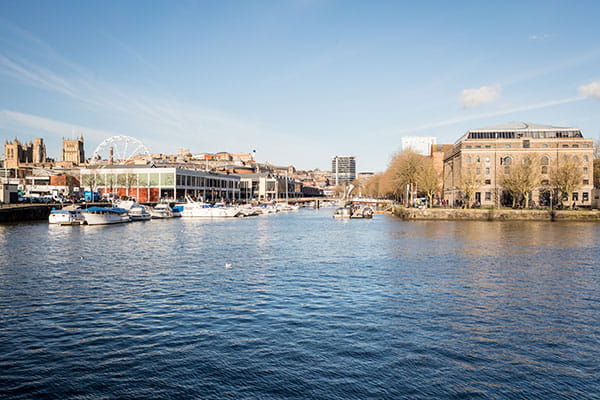
Bristol
A stunning city for student living with all the qualities to make you want to stay.

Sports, societies and activities
There is more to your experience here than study. Choose to make the most of it and try new things.

Health and Wellbeing
We provide support in the way you need it.

Campus and facilities
Discover our campuses and the wealth of facilities provided for our students.
Unistats
UWE Campus
Part Time
Full Time
Available in Clearing Call +44 (0)117 32 83333