Doctor of Counselling Psychology
This course is open for applications
Accreditations and partnerships:


100% of Professional Doctorate Counselling Psychology students are satisfied with the quality of their course overall.Postgraduate Taught Experience Survey, 2026.
An intensive applied professional training programme accredited by the British Psychological Society (BPS) and approved by the Health and Care Professions Council (HCPC).
About
This course gives you a doctorate-level education and training in psychotherapy and applied psychology, leading to the award of Doctor in Counselling Psychology. It includes a comprehensive programme of taught modules, 450 hours of supervised counselling psychology practice in a range of placements, and a doctoral research thesis. Experts guide you through psychotherapeutic theory, personal and professional development, and clinical practice. Our course builds upon Counselling Psychology's existential-phenomenological base as it integrates:
- contemporary developments of relational psychotherapy
- high-quality research that applies to real world contexts
- critical perspectives that deconstruct, decolonise, and reframe psychopathology
- the voices and knowledge of experts and those working across a range of related helping professions
- a caring ethos that brings together staff, students, external stakeholders, and the wider community.
In-depth preparation for practice
You'll receive thorough training on personal, professional and academic levels. This will require you to combine your unique psychobiography and social identities with advanced psychological theory as a basis for mindful and ethical clinical practice.
The training will equip you to work in a broad range of settings, including the NHS, industry, the third sector, private practice, academic and research roles, and many others. We have an extended network with partner providers and practices including NHS services and established charities. This makes our programme popular with prospective candidates and highly desirable with employers. Many of our graduates develop into portfolio professionals who combine interests and work in multiple contexts (for example, the NHS, consultancy, advocacy work, private practice and teaching/training).
This training is based on the relational psychodynamic approach, coupled with advanced Cognitive Behavioural Therapy (CBT) and an introduction to systemic approaches. It's designed to help you develop a critical and relational, integrative perspective that'll be authentic to your personal style and help you move in the direction you want as a therapist and as a member of society. For example, you may have already studied client-centred or existential therapy as part of counselling certificate courses. The programme team is committed to the view that the therapeutic relationship is the key factor in promoting client change, and that counselling psychologists should help to address structural barriers that contribute to poor mental health.
The full-time route takes three years to complete, while the part-time route can be completed in four or five years. If you don't complete the Professional Doctorate route, you may be eligible for a Postgraduate Diploma or Postgraduate Certificate in Psychotherapeutic Studies, or a Master's in Psychological Therapy.
You must engage in personal therapy during the course; a minimum of 60 hours is a requirement for gaining the award of Doctor of Counselling Psychology. This reflects our central focus on 'use of self' and a relational approach to practice. Please note that the cost for this is not included in the course fees.
Watch: Welcome to the School of Social Sciences at UWE Bristol
Entry
Typical offers
Entry requirements
Applicants are required to have the following:
- Graduate Basis for Chartership with the British Psychological Society
- upper second class or first class degree in psychology
- Certificate in Counselling Skills (comprising a minimum of 75 class hours)
- one year's experience of working in a one to one helping role
- the standard University levels of proficiency for English language.
You should state the grade achieved for your undergraduate research project on your application.
In addition, applicants must:
- be academically able to succeed at doctoral level and able to develop professional practice to doctoral level
- have reached a level of maturity, which is not to do with age, to enable them to work with the emotional demands of vulnerable clients and the personal development aspects of the course
- be open-minded and respectful of diverse views and perspectives
- have the capacity for self reflection and be open to feedback from others
- demonstrate a good level of interpersonal skills and sensitivity to others
- have the ability to synthesise and communicate complex ideas both verbally and in writing.
Health assessment/declaration - applicants must be in good health. Those offered a place are required to complete a questionnaire and be prepared to undergo a medical examination if necessary.
Disclosure of Criminal Background - the Rehabilitation of Offenders Act 1974 does not apply and all convictions, including those which are spent, must be disclosed. This is in accordance with the Rehabilitation of Offenders Act 1974 (Exceptions) Order 1975. Applicants who are offered a place must undergo a Disclosure and Barring Service (DBS) check and will be required to complete a Disclosure Application Form. All information will be treated in confidence and only taken into account when absolutely necessary.
Occasionally applicants are eligible for entry under an Accredited Prior Learning scheme. We review these applications on an individual basis. Our policy is based on HCPC Standards of Proficiency for Counselling Psychologists and applicants must be able to demonstrate that they meet relevant Standards of Proficiency.
How to apply
Our final date for applications is Monday the 15th February 2027 but we may close earlier due to high demand. Interviews for shortlisted applicants will be held in March. Interviews will be face-to-face, or virtual if you're unable to attend a face-to-face interview. Decisions will be made by the end of April.
Deferred entry
We don't accept deferred entry applications for this course.
Stages of your application:
- Submit your application online, complete with contact details for your referees by the application deadline (one of your referees must be an educational referee that is able to comment on your ability to work at doctoral level and complete a doctoral research project). Your personal statement should not exceed 1,000 words.
- If you are shortlisted for interview you'll need to provide two pieces of work no later than one week before the interview date. Please be aware the turnaround times between the closing date and interviews can be very short so you are strongly advised to prepare these pieces of work in advance:
- A draft 1,000 word research proposal.
- A 1,000 word narrative on 'Becoming a Counselling Psychologist'. Please use the guidance notes to ensure you submit something appropriate.
- You'll be given the opportunity to ask about the course and meet the programme team. This will be followed by an individual interview which will be in two parts with two members of academic staff. One part is a clinical interview, the other is a research interview.
- If you are offered a place on the course you'll be asked to complete DBS and Occupational Health checks.
- You'll also be expected to begin arranging your placement and you'll be able to access our programme database of placement providers to support you in this process. You'll need to be in a position to start your placement by the beginning of the course.
- You'll also be expected to arrange your personal therapy by the beginning of the course.
Please note that both your placement and your personal therapist will need to be approved by the course.
We recommend when applying for this course to consider the impact of research and ways in which it can be disseminated beyond traditional methods. Please check the staff pages for the research interests and outputs of the core members of the course as well as the wider UWE Bristol Psychology staff team. We are affiliated with the Psychological Sciences Research Group (PSRG) as well as other research centres within UWE Bristol, for example CAR and SSRG.
Read more about international applications and key international deadline dates.
If you're enquiring about a self-funded project, please explore our four research beacons. Our experienced supervisors will work with you to map your proposal into one our beacons, where you'll work in close collaboration with our experts.
Structure
Content
You're introduced to the relational psychodynamic approach in Year one and we expect you to adopt and practice this approach in your placements. In Year two the practitioner focus turns to relational CBT, which informs your choice of placement, while you retain and further develop a critical psychoanalytic lens as we examine and deconstruct psychopathology. In Year three, you get to explore your own identity as a counselling psychologist through modules on integration and advanced theory and practice in counselling psychology, including teaching on supervision, leadership, psychometrics, and neuropsychological assessment.
Year one
You'll study:
- Principles of Counselling Psychology - introduces the fundamental values and ethos of counselling psychology, with a strong focus on ethics and anti-oppressive practice.
- Theory and Practice in Counselling Psychology 1 - exposes you to the history and principles of the relational psychodynamic approach.
- Personal and Professional Development 1 - involves skills training, practice placements and personal reflection. You'll participate in a weekly experiential process group centred around relational psychodynamic principles.
- Qualitative and Quantitative Methods - covers research methods in qualitative and quantitative design, ensuring that you acquire the essential skills for carrying out your research.
- Systemic Thinking and Practice in Counselling Psychology - covers working with couples, families and groups. It gives you an opportunity to reflect on the systems in which you're embedded and identify institutional opportunities and barriers in your placements. The module forms the basis for extending your practice beyond the core emphasis on 1:1 work with individuals.
- Research in Counselling Psychology - this module contextualises research within the field of counselling psychology, covering advanced methods such as autoethnography and psychotherapy process research. It also provides support for students in developing their initial research ideas and guides them through the various stages of the UWE Bristol professional doctorate research journey.
Year two
You'll study:
- Theory and Practice in Counselling Psychology 2 - an in-depth look at the CBT approach filtered through a relational (rather than protocol-driven) lens, which equips you to work in the NHS. All teaching by an accredited CBT practitioner/counselling psychologist.
- Personal and Professional Development 2 - further development through practice placements and personal reflection, based on CBT.
- Critical Psychopathology - a critical deconstruction and interrogation of the knowledge(s) that psychologists, psychotherapists, and society at large draw upon when conceptualising mental health and wellbeing. We consider psychology's role in constructing 'individuals' and turn to community psychology for a more expansive understanding of the interrelatedness of people and their environment.
- Professional Issues in Counselling Psychology - will present a critical oversight of current issues within the profession, such as the current emphasis on empirically supported treatments and the prescription rights debate. It's designed to support your professional artistry, one of the distinguishing features of counselling psychology.
Final year
You'll study:
- Personal and Professional Development 3 - here we begin to integrate the approaches you have learned so far in applied practical and personal contexts. Placements can be chosen based on trainees' specialist interests.
- Advanced Theory and Practice in Counselling Psychology - this module covers leadership, psychometric testing, neuropsychological assessment and supervision.
- Professional doctorate thesis and viva examination - when you complete the taught modules of the course, you submit a 40,000 word thesis on a topic that you've researched during the training. Research in counselling psychology is never far from practice or the subjectivity of the researcher, and we'll help you develop your research interests into a passion for scholarship that speaks to people and contributes to social justice. You'll work closely with a research supervisor (Director of Studies) and have support from a second supervisor; you are expected to independently defend your thesis at the final viva as a trainee counselling psychologist seeking qualification.
This course structure is for full-time students only. Part-time students study the same modules but the delivery pattern will be different.
The University continually enhances our offer by responding to feedback from our students and other stakeholders, ensuring the curriculum is kept up to date and our graduates are equipped with the knowledge and skills they need for the real world. This may result in changes to the course. If changes to your course are approved we'll inform you.
Learning and Teaching
Please note that attendance of the taught components is mandatory and that this course is not delivered online.
The core team that teaches on the Professional Doctorate in Counselling Psychology includes Dr Eva Fragkiadaki, Dr Tony Ward, Dr Toni Dicaccavo, Dr Tanya Carpenter, Christine Ramsey-Wade and Dr Miltos Hadjiosif.
We value expertise gained through studying and training as well as living life. We rely on our excellent UWE Bristol Psychology colleagues as well as professionals from other disciplines, across and beyond the University, to foster a caring ethos and create a holding environment for training that is likely to challenge you and help you expand in personal and professional domains.
We use a wide range of teaching and learning methods to give you the best combination of personal, peer-assisted and applied learning. These include lectures, group discussion, group work, role-play, skills work, demonstrations, trainee presentations, supervised clinical practice, personal therapy and personal development activities.
For more details see our glossary of teaching and learning terms.
Study time
As a full-time student, you attend two days each week in Year one (currently Monday and Tuesday) and one day a week in Years two and three (currently Thursday).
If you study this course part time, you attend one day each week in Years one to three (currently Monday in Year one, Tuesday in Year two and Thursday in Year three). There is a four-year study option where you attend one day each week in Year four, on a Thursday. The five-year option requires you to attend one module in Year four and one module in Year five.
We strongly encourage successful applicants to have at least one day per week that can be fully and exclusively devoted to studying, writing assignments, and research. This day should not be during a weekend. While we are mindful of the accessibility of our course, family obligations and caring responsibilities, and the requirement to earn a living for most people, we are keen to protect time that is essential to develop as a therapeutic practitioner and researcher.
Assessment
We assess taught modules through coursework and assignments under controlled conditions. Practice assessment is through direct observation, case studies, process reports, supervision groups and placement reports.
For your research you submit a 30,000 to 40,000-word doctoral thesis of an original piece of research, examined by viva voce.
For more details see our full glossary of assessment terms.
Fees
There is currently no published fee data for this course.
Supplementary fee information
More information can be found on the Graduate School fees and funding pages.
Students also need to be aware of additional costs in completing the course which are not included in the fees. Students will need to meet the cost of personal therapy (60 hours minimum). In addition, as part of their professional development, students will be expected to accrue 40 hours of CPD across the duration of the course. There may be additional travel costs in meeting placement requirements and at times be necessary to pay for appropriate supervision if this in not met within the placement.
See our information on UK Government Postgraduate Doctoral Loans.
Features
Placements
Clinical work in placement settings is a central part of the training, and you must be in clinical practice placements throughout the course. You should arrange and complete at least 450 hours of counselling psychology practice on approved placements, covering a range of approaches, modalities and settings. We have links to placement providers and you'll receive support with finding a placement as you start the training.
Please note, all placements must be approved before you start, to ensure they meet all course requirements for clinical work and supervision arrangements.
Clinical supervision
You are expected to have clinical supervision on placement throughout your training, at a ratio of one hour of supervision for every eight client hours. It is a requirement of the course to have supervision by an accredited Counselling Psychologist for at least six months of your training.
Study facilities
You'll have access to a range of on-campus and online facilities to support your learning. The School of Social Science has an excellent reputation for the quality of its teaching and the facilities it provides.
Our lecturers incorporate their research into their teaching. They are active members of College and University-wide groups such as the Psychological Sciences Research Group and the internationally-renowned Centre for Appearance Research (CAR). They are responsible for cultivating a research culture that speaks to reflexive scientist-practitioners and have close links with related UWE Bristol courses and organisations across the South-West region.
Find out more about the facilities and resources UWE Bristol has to offer.
Take a personalised virtual tour of the Psychology, Sociology and Criminology facilities and experience what a typical day could look like here for you.
Personal Therapy
Being in personal therapy while training is the distinguishing feature of counselling psychology and sets it apart from all other branches of applied psychology. Our course requirement is that trainees complete at least 60 hours of personal therapy during the course, at their own expense. Therapists must be accredited and approved by the course.
The model taught in Year one is relational psychodynamic, so it would make sense if your therapist was consistent with this approach. However, the overall course approach is integrative and aspires to train critical, reflexive, and relational practitioners. We do not place requirements regarding the specific modality of your personal therapist. Contact the programme leader to find out more.
Careers
Students successfully completing this course are equipped to work as chartered counselling psychologists and accredited therapists in a wide range of roles in the private, public and third sectors. In fact, the majority of recent graduates have secured positions before they complete the qualification, based on their placement experience and prior qualifications/experience.
The qualification will also prepare you for wide-ranging opportunities in research roles and academic posts as well as service development and community work. We frequently collaborate with our graduates, who return to give guest lectures, participate in research programmes, and celebrate the ethos of our course.
Our award-winning careers service helps you develop your employment potential through career coaching, a vacancy service for internships, placements, jobs, global opportunities, volunteering and community activity plus support for entrepreneurial activity, and access to employer events.
Life

Support during your degree
Support at every stage of your doctorate, from supervision and research resources to community and representation.
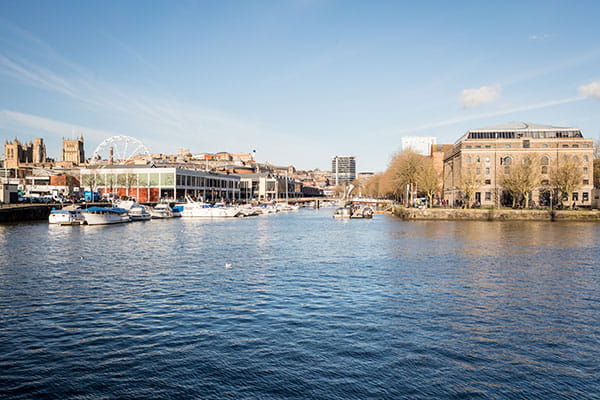
Bristol
A stunning city for student living with all the qualities to make you want to stay.

Skills development for researchers
Helping you build the skills, confidence and community needed to complete your doctorate.

Health and Wellbeing
We provide support in the way you need it.

Campus and facilities
Discover our campuses and the wealth of facilities provided for our students.