
BA(Hons) English Literature
This course is open for applications
On our English Literature degree, you'll explore fiction's impact on the world through a distinctive curriculum. You'll engage in debates on literature's contribution to urgent global issues, while honing your expertise in literary periods and genres. You may also complete a year in industry.
About
Why study English literature?
An English Literature degree indulges your love of reading while equipping you with the intellectual tools to think critically, creatively and globally. It's also a practical foundation for careers in the cultural industries, one of the UK's most vibrant and internationally recognised sectors.
English Literature graduates are highly employable, with proven strengths in communication, analysis, and problem-solving. This course challenges you to be creative, critical, collaborative, curious and world-ready, preparing you to tackle the pressing issues of our time, from politics to climate change.
Why UWE Bristol?
Our forward-thinking BA(Hons) English Literature shows you how literature is essential to understanding global culture and society. You'll study a distinctive core curriculum, covering literature's role in the marketplace and wider world. Bespoke modules explore literature's impact on politics, law, the economy, and society, and investigate its engagement with global challenges such as the climate crisis.
Our English Literature degree is part of the innovative New Humanities group - an exciting, contemporary approach to the arts and humanities. Join a dynamic academic community where you'll learn from experts in their field and benefit from globally recognised research in topics including screen studies and digital humanities.
You'll learn to critically engage with global voices from the English Renaissance to the twenty-first century. You'll collaborate with students from across the Humanities, complete field trips and engage with the rich literary heritage in Bristol's renowned arts and cultural hub. A sandwich year option offers valuable industry experience - rare in humanities degrees.
Where can it take me?
You'll graduate as a confident, resilient and adaptable thinker with sought-after academic and transferable skills. Many of our graduates find careers in the creative and cultural industries, publishing, media, marketing, teaching, or the arts. You could also go on to complete further postgraduate study.
Student showcase
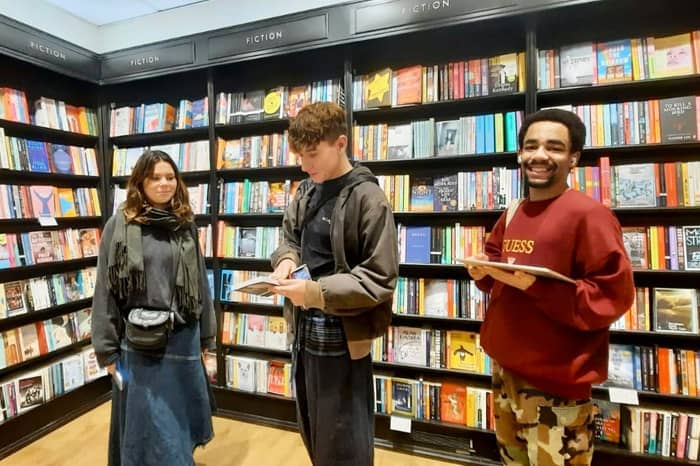
English Literature students on the Literature and the Marketplace field trip.
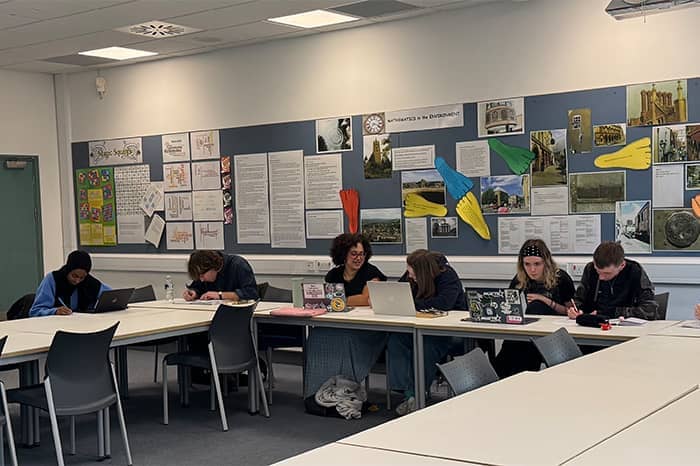
Contemporary American Narratives
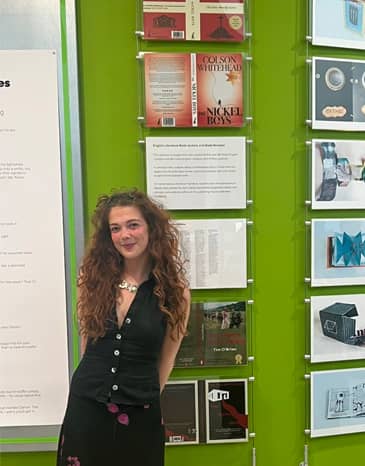
Student Jasmine Tyagi presenting her work at the English Literature degree show.
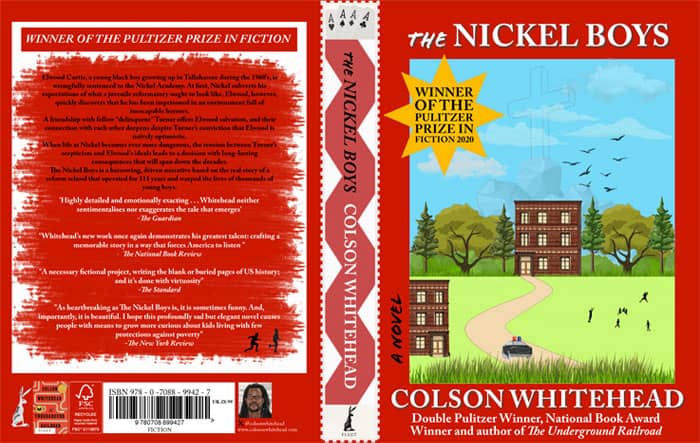
The Nickel Boys book jacket by Sera Wacokecoke.
Watch: Why I chose English Literature
Entry
Typical offers
You will need to meet the following Level 2 requirements:
- GCSE: Grade C/4 in English, or equivalent.
In addition to the above Level 2 qualifications, you'll need to achieve the published tariff points from your Level 3 studies prior to entry. Below is an indicative list of the main qualification types. However, we will consider any Level 3 qualifications towards meeting our entry requirements.
- Tariff points: 112
- Contextual tariff: See our contextual offers page.
- English Language Requirement:
International and EU applicants are required to have a minimum overall IELTS (Academic) score of 6.0 with 5.5 in each component (or approved equivalent*).
*The university accepts a large number of UK and International Qualifications in place of IELTS. You can find details of acceptable tests and the required grades you'll need in our English Language section.
- A-level subjects: No specific subjects required.
- EDEXCEL (BTEC) Diploma: No specific subjects required.
For information on required Guided Learning Hours please see our minimum entry requirements page.
- Access: No specific subjects required.
- Baccalaureate IB: No specific subjects required. We accept the IB Career-related Programme in conjunction with other Level 3 qualifications.
- Irish Highers: No specific subjects required.
- Welsh Baccalaureate: We accept tariff points achieved from the Advanced Skills Baccalaureate Wales in conjunction with other Level 3 qualifications.
- Cambridge Technical: No specific subjects required.
- T Levels: No specific subjects required.
Entry requirements
International applicants
If you're applying to UWE Bristol from another country or region, visit the international study pages for tailored application information. If you're an international student and don't meet the academic requirements to study this course, you can qualify by completing preparatory study at our International College.
If you're applying to study at UWE Bristol and require additional support to meet our English language requirements, you may be able to attend one of our pre-sessional English courses. Read more about our pre-sessional English Programme.
Read more about entry requirements.
How to apply
Read more about undergraduate applications.
Read more about international applications and key international deadline dates.
For further information
- Email:
UK applicants
Admissions@uwe.ac.ukInternational/EU applicants
International@uwe.ac.uk - Telephone:
UK applicants
+44 (0)117 32 83333International/EU applicants
+44 (0)117 32 86644
Structure
Content
You'll study:
Human Stories
You'll develop a critical understanding of storytelling as an aspect of human experience, exploring different approaches to storytelling and building critical literacy skills.
Approaches to Literature and Criticism
You'll be introduced to the study of English literature at university level. In particular, you'll hone your skills in close reading, and understand and apply critical and theoretical approaches to literature.
Literature and Constructions of Childhood
You'll study the role both adult literature about childhood and children's literature has had in shaping and constructing childhood, looking at the ever-changing construction of childhood in wider culture.
Literature and the Marketplace
You'll study the role of the author in the marketplace, developing an appreciation of how literature and creative responses to it are experienced and consumed by the public, and the cultural and economic value of literature.
You'll study:
Human Futures
You'll study human culture, including how humans interact with each other, with non-human animals, and with the world. You'll engage with the pressing questions of our age, as well as considering the power of culture, justice, and activism to offer solutions.
Literature in the World
On this module, you'll examine the relationship between literature, law, responsibility, and citizenship, extending your critical awareness of how literature responds to and shapes global narratives and policies.
Victorian Frictions: Literature and Society, 1837-1901
You'll analyse some major Victorian texts that articulate central concerns and conflicts of the period, considering the ways in which these texts emerge out of, and critique, Victorian culture and society.
Optional modules:
You'll study one module from:
- Love and Power in Renaissance Literature
- Voices of Dissent: American Literature Across Time.
Placement year (if applicable)
If you study on the four year (sandwich) course, you'll spend a year away from the University on a work placement after Year two.
You'll complete the Professional Development on Placement module.
See the Placements and Fees sections for more information.
You'll study:
Humanities Research Project
You'll design and deliver a self-devised project which addresses a series of research questions using appropriate methods. Your completed project will showcase your individual contribution to knowledge within the Humanities
Literature and Global Futures
You'll develop an understanding of literature's engagement with existential issues through topics that may include climate migration, future technologies, speculative futures, race, and gender and sexuality.
Optional modules:
Plus, optional modules (the amount depending on credit requirement)* from:
- Contemporary British Fiction
- Gothic Literature
- Contemporary American Literature
- Children's Fiction Since 1900.
*The number of these modules that you take depends on whether you complete the sandwich placement year. If you do complete it, youll study one of them. If you don't, then you'll study two.
Any optional modules listed are those that are most likely to be available, but they may be subject to change.
This structure is for full-time students only. Part-time students study the same modules but the delivery pattern will be different.
The University continually enhances our offer by responding to feedback from our students and other stakeholders, ensuring the curriculum is kept up to date and our graduates are equipped with the knowledge and skills they need for the real world. This may result in changes to the course. If changes to your course are approved, we'll inform you.
"I enjoyed the broad assessment methods, which developed my communication and teamwork skills. These skills prepared me for roles in customer service and HR, which led me to work as a Student Recruitment Officer at the Dyson Institute of Engineering and Technology." Lynsey, English Literature graduate
Learning and Teaching
You'll be taught through a mix of lectures, small-group seminars, workshops, and tutorials, and field trips where you can apply your theoretical thinking to practice.
Teaching on our BA(Hons) English Literature is research-led. Our lecturers have research specialisms in Renaissance, Victorian, children's, American, and contemporary British literature.
At all levels, staff teach their own research specialisms, so you'll benefit from teaching by academics who are actively writing and publishing in the areas you study.
You'll study a diverse range of primary texts from canonical, non-canonical, and emerging authors. You'll also craft your skills as a researcher, working with academics and partners helping to shape new thinking in the field.
You'll be offered training in Adobe Creative Cloud, giving you a strong foundation for a career in publishing, marketing, advertising, or the media.
To find out more, see our full glossary of learning and teaching terms.
Get involved
Participate in all things English literature by joining our English Literature Society and attending its events or become a peer assisted learning leader or student ambassador.
Bristol is an exciting cultural hub and you can also gain experience with our established partners, such as the BBC, Watershed, the Arnolfini and local literary festivals.
Study time
In your first and second year, you can expect to be timetabled for an average of 12 hours of contact time a week; we advise you to undertake a minimum of 18 hours of independent study to support your weekly learning in class.
Assessment
We use a wide variety of assessments for the modules, focusing on the different kinds of writing you want to develop during your English Literature degree.
You'll write essays, and have opportunities to develop your creative writing, and produce an independent project in your final year.
You'll also have opportunities to demonstrate your knowledge creatively and critically across several different forms including field trip reports, book reviews, book jacket designs, book pitches, and podcasts.
The large variety of traditional and innovative assessments will strengthen your communication, presentation, creative expression, analytical and critical skills, and ensure your learning is skill-based and current.
Learn more about assessments.
Fees
Full-time, sandwich course
Indicative Additional Costs
Part time course
Supplementary fee information
Your overall entitlement to funding is based on how long the course is that you're registered on. Standard funding is allocated based on the standard number of years that your course lasts, plus one additional year.
You'll apply for funding each year that you study and Student Finance will take into account how long the course is in each year that you apply. So if you register for the four year course and then transfer to the three year course, the number of years you can apply for funding will change. Student Finance will reassess your funding based on how many years you have been in study, not just those years for which you received student finance.
Always seek advice before taking any action that may have implications for your funding.
Additional costs
Additional costs are for items you could need during your studies that aren't covered by the standard tuition fee. These could be materials, textbooks, travel, clothing, software or printing.
Features
Placements
The course includes an optional year in industry between years two and three. This will last at least 26 weeks and will be relevant to your subject area.
Work experience hones your skills by putting them into practice in a work environment, equips you with industry knowledge, and helps you develop a strong professional network, making you highly sought after when you graduate.
Get help to find your placements and support from our award-winning careers service.
Fieldwork
On our BA(Hons) English Literature, you'll have opportunities to take part in field trips, visiting venues such as bookshops and heritage centres in Bristol and beyond. You'll see first-hand how literature is marketed in the world, and the valuable contribution it makes to society, culture and the economy.
Study facilities
English Literature is based at Frenchay Campus, along with other Arts and Cultural Industries courses.
Our 24/7 Frenchay library houses a large collection of books and e-resources. These include Literature Online, Eighteenth-Century Collections, Project Muse, OED online and various digital archives and scholarly journals. You'll develop into a competent researcher with excellent data retrieval skills.
Learn more about UWE Bristol's facilities and resources.
Take a personalised virtual tour of the English and Creative Writing facilities and experience what a typical day could look like here for you.
Personalised virtual tour
There's no need to visit us in person to explore our facilities and campuses. Take a personalised virtual tour and discover it all for yourself from wherever you are.
Take a virtual tourCareers
Careers / Further study
Graduates in English literature are highly employable, due to their advanced transferrable skills.
Building professional, research and enterprise skills into your modules, you'll be encouraged to apply them at every opportunity, ensuring you're career ready.
Former students have gone on to work in marketing communications, digital marketing, HR, recruitment, publishing, PR, writing, journalism, and teaching in primary, secondary and further education. Many choose to continue their studies with postgraduate degrees in English and related subjects.
Get inspired
Our award-winning careers service will develop your employment potential through career coaching and help find you graduate jobs, placements and global opportunities.
We can also help find local volunteering and community opportunities, provide support for entrepreneurial activity and get you access to employer events.
Visit our employability pages to learn more about careers, employers and what our students are doing six months after graduating.
Useful links:
- Prospects - what can I do with my degree?
- English Media Centre (EMC) - what jobs so people with an English degree end up doing?
- The Complete University Guide - Careers with an English Degree.
- Times Higher Education - What can you do with an English Literature degree?
- University English - English Creates Futures.
Watch: Welcome to the School of Arts at UWE Bristol
Life

Accommodation
An excellent range of options for all of the Bristol campuses and the city centre.
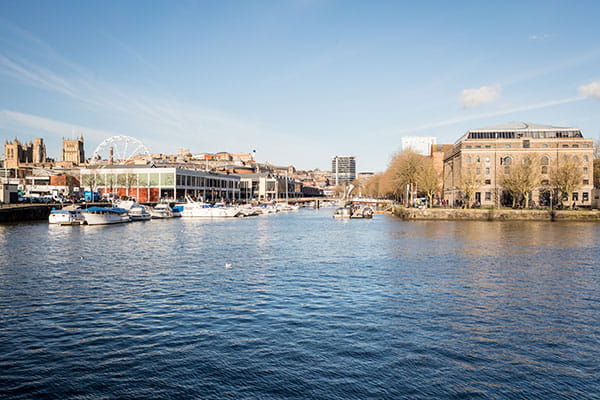
Bristol
A stunning city for student living with all the qualities to make you want to stay.

Sports, societies and activities
There is more to your experience here than study. Choose to make the most of it and try new things.

Health and Wellbeing
We provide support in the way you need it.

Campus and facilities
Discover our campuses and the wealth of facilities provided for our students.