PGCE with QTS Secondary Modern Languages
Applications for 2027/28 entry can be submitted through the Department for Education from October 2026
About
The Postgraduate Certificate in Education (PGCE) Secondary Modern Languages is a one-year course that leads to Qualified Teacher Status (QTS). You'll train to become a Modern Languages teacher for the secondary age range (11-16). You'll gain 60 academic credits at Master's level as part of the course.
Teaching is both a challenging and a rewarding career with a high level of job satisfaction. It is a great privilege, as well as a great responsibility, to play such a key role in young people's lives. We focus on supporting our trainees to thrive, and we do this alongside teachers and mentors in school. We also facilitate you to collaborate with your peers, and to graduate with a ready-made, supportive professional network.
All our courses are future-facing and underpinned by a strong values base. Our provision directly addresses education for sustainable futures. We equip you to be able to work thoughtfully, creatively and successfully with your learners. At UWE Bristol, we're committed to training reflective, innovative, and adaptable teachers for the future.
This course may be eligible for a Government bursary. For funding options, please see the Government's scholarships and bursaries page.
As time spent on campus is limited, many students choose to commute from further afield.
Find out why you should train to teach with us.
Watch: Welcome to the School of Education and Childhood at UWE Bristol
Entry
Entry requirements
- An undergraduate Honours degree with a 2:2 or above, or an equivalent qualification, in a related subject.
- GCSE grade C/4 or above in English and Mathematics, or equivalent.
Candidates with substantial and relevant professional experience with a degree in any subject (and GCSE English and Maths) would be considered on an individual basis.
Language requirements
You must be able to offer two languages: a major language and a minor (subsidiary) language, drawn from French, German and Spanish. These reflect the languages taught in our partner schools.
Your major language is the one you'll teach across the full age and ability range (11-16). Your minor language is one you'll teach to a lower level, and which you'll develop further during the course.
If you're a native speaker of French, German or Spanish, you'll still need to meet the entry requirements for both languages in your chosen combination. Any offer may be conditional on completing a Subject Knowledge Enhancement (SKE) course to bring your main or second language up to teaching standard
Personal statement
As part of your application we ask for a personal statement with detailed responses to the following questions:
- Why do you want to become a teacher?
- Why are you interested in teaching your chosen subject and age range?
- What relevant skills, experience and personal qualities would you bring to teaching?
- What experiences have helped you understand children, young people, learning or education?
- What have you learned from these experiences and how will they support your development as a teacher?
- What is your understanding of the role and responsibilities of a teacher?
- Please explain your chosen major and minor language combination and demonstrate how your subject knowledge, language proficiency, and experience have prepared you to teach both languages confidently at secondary level.
The personal statement forms part of your application, and will be used to decide whether you are shortlisted for an interview.
Work experience
Whilst work experience is not a requirement we recommend that you get experience of working with or volunteering with children to help prepare you for the placement-based learning involved in this course.
Selection process
Shortlisted candidates will be invited to an online Teams interview. Your interview will include a short task so please make sure that you read your interview invitation in order to be able to prepare. Interviews typically run on Thursdays 9-4 GMT from October to July, or until a course is full.
After interview a Subject Knowledge Enhancement (SKE) course may be required, if so this will be included as a condition of your offer.
Additional requirements
- Health checks for Fitness to Teach.
- A clear Enhanced DBS Disclosure including check of children's barred list.
- Satisfactory references including one from your latest employer and/or latest role involving working with children.
- Verification of identity and right to work in the UK.
- Check for sanction, restriction or prohibition on teaching issued by the Teaching Regulation Agency (TRA) (if in teaching role).
- Overseas Criminal Record check, if you've lived, studied or worked overseas for five months or more in the last five years.
The university will also check that candidates are not:
- subject to a prohibition order issued by the Secretary of State
- disqualified from childcare or have obtained a childcare disqualification waiver from Ofsted.
Read more about professional checks.
Deferred places
We accept deferred places.
English Language Requirement
All International and EU applicants are required to have a minimum overall IELTS (Academic) score of 7.0 with 6.5 in each component or approved equivalent. For more information please see our English language requirements.
How to apply
You'll apply using the GOV.UK online application system.
For further information
- Email: Admissions@uwe.ac.uk
- Telephone: +44 (0)117 32 83333
Structure
Content
If you have a genuine passion and enthusiasm for languages and want to inspire the next generation of linguists in an exciting and innovative way, then this is the course for you. The Modern Languages PGCE explores all aspects of teaching and learning with a balance of theory and practice. We place emphasis on effective pedagogy, adaptive teaching and practical activities for the classroom. This course will support you in becoming a highly skilled, confident, inspiring and reflective teacher of Modern Languages.
To develop expertise in Modern Languages you'll:
- consider the linguistic and cultural importance of teaching Modern Languages
- explore and experience a range of effective, current and empowering pedagogies which will inspire even the most reluctant of learners
- read and discuss influential research on Modern Languages as well as the teaching of Modern Languages
- engage in a range of subject specific workshops.
You'll study the following modules:
- Curriculum, Pedagogy and Practice (Secondary)
- Becoming a Transformational Teacher (Secondary)
- Professional Practice A (QTS)
- Professional Practice B (QTS).
The University continually enhances our offer by responding to feedback from our students and other stakeholders, ensuring the curriculum is kept up to date and our graduates are equipped with the knowledge and skills they need for the real world. This may result in changes to the course. If changes to your course are approved, we'll inform you.
Learning and Teaching
The PGCE courses are part of a broad range of specialist education provision in the School of Education and Childhood at UWE Bristol.
You'll be supported in school by a mentor, who liaises closely with your UWE Bristol tutor. You'll work with close support and encouragement to develop your understanding and skills, set targets, and evidence your progress. We'll challenge you to evaluate and improve throughout your course, and we'll help you to celebrate your achievements.
The PGCE course is designed so that your experiences on placement are complemented by university-based learning. You'll learn through lectures, seminars, directed tasks, school-based experiences, intensive training and practice opportunities, independent study, online learning and collaboration, subject-specific practical work, assessment tasks, reflection and debate. Research-informed practice underpins the course.
Throughout the course you'll be supported by your tutors, external specialists, and expert colleagues in early years settings and schools to apply your knowledge and understanding in school to equip you to meet the Teachers' Standards, to teach and assess in the Secondary Modern Languages (11-16).
See our full glossary of learning and teaching terms.
Assessment
Assessment is based on professionally focused assignments and the final block school experience.
To gain the award of PGCE, you need to pass each academic assessment as well as pass classroom practice against the standards specified by the Secretary of State for the award of Qualified Teacher Status (QTS).
Learn more about assessments.
Fees
Full time course
Supplementary fee information
The PGCE is financed as an undergraduate course. More information on fees can be found on our tuition fees pages.
For funding options, please see the Government's scholarships and bursaries page.
Features
Placements
As a trainee teacher, you'll complete 120 days in school placement practice blocks in at least two different schools, plus further focused teaching experiences.You'll practise as a subject specialist teacher for the secondary age range (11-16), and gain experience of the 16-18 age range.
The schools and settings within our Initial Teacher Training partnership are geographically diverse, with placements in Bristol, South Gloucestershire, Bath and North East Somerset, Somerset, Wiltshire, Devon, Cornwall and Wales. We work hard to match placements to trainee teacher needs, experience and locations.
At UWE Bristol, we'll support you to become an authentic, effective, thoughtful teacher. Towards the end of your course, your progress review will enable your entry to the teaching profession and your ongoing development as an Early Career Teacher (ECT).
Study facilities
Take a personalised virtual tour of the Education and Teaching facilities and experience what a typical day could look like here for you.
Careers
Careers / Further study
PGCE programmes include 60 credits assessed at Master's level.
As a trainee teacher, you'll be joining a modern and well-regarded programme to train to teach across the 11-16 age range and gain Qualified Teacher Status (QTS).
Studying a PGCE at UWE Bristol
PGCE students talk about the support they have received from the PGCE programme at UWE Bristol. This is the first of three talks. Find out more.
Life

Postgraduate support
Our support includes access to fantastic facilities, study tools and career consultants, plus practical help to access everything from funding to childcare.
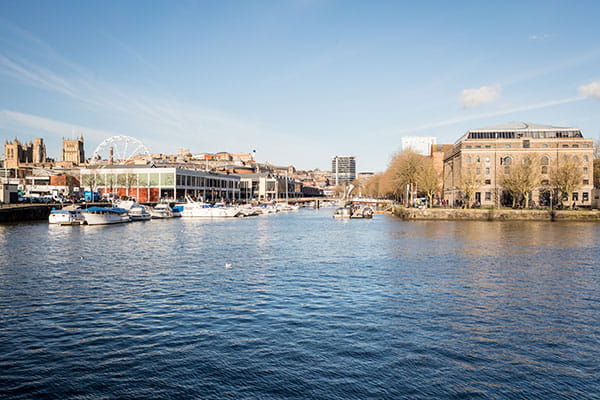
Bristol
A stunning city for student living with all the qualities to make you want to stay.

Sports, societies and activities
There is more to your experience here than study. Choose to make the most of it and try new things.

Health and Wellbeing
We provide support in the way you need it.

Campus and facilities
Discover our campuses and the wealth of facilities provided for our students.
