
BA(Hons) Drama, Acting and Performance
This course is open for applications
92% of Drama, Dance and Cinematics graduates were in graduate-level employment or further study 15 months after graduating. The Sunday Times Good University Guide 2026
100% of BA(Hons) Drama and Acting students agree teaching on their course is good or very good.National Student Survey, 2026.
Top 10% in the UK for Drama courses.National Student Survey, 2026.
Gain valuable experience in actor training techniques for stage and screen, write and devise performance projects, and learn about the contexts of production to prepare you for a range of careers in the creative industries.
About
Why study this course?
Performance is a part of our everyday lives, from live theatre and cinema, to television, radio, and digital storytelling.
Studying BA(Hons) Drama, Acting and Performance at UWE Bristol enables you to understand the production contexts, learn actor training techniques, and build confidence to communicate effectively across a range of formats.
Performance is a significant contributor to the global economy, and enriches audiences with culture, entertainment, education, and information. It needs creative thinkers to become the makers of the future.
This creative course is ideal for you if you're passionate about making compelling drama.
Why UWE Bristol?
As a BA(Hons) Drama, Acting and Performance student at UWE Bristol, you'll learn through practice-based creative projects that respond to Bristol's social, historical, and geographical landscapes, as well as global contexts.
Bristol, a diverse and creative city, is home to renowned theatres and production companies, offering you inspiration, and future opportunities: locally, nationally, and internationally.
You'll collaborate with students from the School of Arts, as well as artistic, charitable, educational, and community groups. Working with a variety of people makes you adaptable, entrepreneurial and career ready.
Where can it take me?
You'll gain industry-relevant skills, preparing you for a variety of careers. You may also pursue further study (PGCE, MA, PhD) in related subjects at university or drama school.
You'll apply your performance knowledge to social, cultural, and political contexts, gaining the confidence to experiment with narrative devices to communicate ideas across different media.
You'll take into your career an informed creative practice that is ethical, inclusive, and sustainable.
Your degree provides you with a solid foundation for a career in the creative industries, including roles such as performers, writers, devisers, directors, producers, educators, administrators, managers, and technicians.
Watch: Welcome to the School of Arts at UWE Bristol
Entry
Typical offers
You will need to meet the following Level 2 requirements:
- GCSE: Grade C/4 in English, or equivalent.
In addition to the above Level 2 qualifications, you'll need to achieve the published tariff points from your Level 3 studies prior to entry. Below is an indicative list of the main qualification types. However, we will consider any Level 3 qualifications towards meeting our entry requirements.
- Tariff points: 112
- Contextual tariff: See our contextual offers page.
- English Language Requirement:
International and EU applicants need to have a minimum overall IELTS (Academic) score of 6.0, with 5.5 in each component (or approved equivalent*).
*The University accepts a large number of UK and international qualifications in place of IELTS. You can find details of acceptable tests and the required grades you will need in our English language section. Please visit English language requirements.
- A-level subjects: No specific subjects required.
- BTEC: No specific subjects required. For information on required Guided Learning Hours please see our minimum entry requirements page.
- Access:
No specific subjects required.
- Baccalaureate IB:
No specific subjects required. We accept the IB Career-related Programme in conjunction with other Level 3 qualifications.
- Irish Highers: No specific subjects required.
- Welsh Baccalaureate: We accept tariff points achieved from the Advanced Skills Baccalaureate Wales in conjunction with other Level 3 qualifications.
- Cambridge Technical: No specific subjects required.
- T Levels: No specific subjects required.
Entry requirements
We're looking for applicants who are curious, creative and motivated to develop their performance skills, explore new ideas and collaborate with others in a dynamic creative environment.
- Applicants studying qualifications that we've identified as subject-relevant will be considered on the basis of their predicted or achieved grades, provided they meet our entry requirements.
- Applicants whose qualifications fall outside these subject-relevant areas will be invited to an online interview.
Our admissions approach is designed to be fair, inclusive and supportive. We recognise both academic achievement and creative potential, ensuring you have the opportunity to demonstrate your suitability for the programme in a way that reflects your individual strengths.
For more details on the process, please visit our selection page.
International applicants
If you're applying to UWE Bristol from another country or region, visit international study for tailored application information.
If you're applying to study at UWE Bristol and require additional support to meet our English language requirements, you may be able to attend one of our pre-sessional English courses. Read more about our Pre-Sessional English Programme.
Read more about entry requirements.
How to apply
Read more about undergraduate applications.
Read more about international applications and key international deadline dates.
For further information
- Email:
UK applicants
Admissions@uwe.ac.ukInternational/EU applicants
International@uwe.ac.uk - Telephone:
UK applicants
+44 (0)117 32 83333International/EU applicants
+44 (0)117 32 86644
Structure
Content
You'll study:
Creative Contexts
This module will introduce the knowledge, research practices and professional skills expected across the creative industries. You'll deepen your understanding of the aesthetic and formal qualities of your chosen craft while exploring industry roles, activities and processes. Indicative content includes critical reflective writing, teamwork, collaboration, project and time management, professional ethics, responsibility, presentation and health and safety. Broad, open briefs will allow you to develop outcomes that reflect your discipline while working with cross-disciplinary perspectives, strengthening transferable skills and supporting your developing career aspirations.
Introduction to Actor Training
This practical module will introduce you to actor training for stage and screen through a range of performance practices. You'll explore improvisation, Stanislavski-based methodology, text analysis, character creation and ensemble working, while developing skills in rehearsal, performance and creative collaboration. Training will help you build confidence in responding to different performance challenges and preparing work independently. By the end of the module, you'll have developed a practical toolkit that supports character development, performance-making and effective work with others.
Performance Practice
In this module, you'll explore experimental approaches to making and devising performance through collaborative and individual creative practice. Working across mixed-media forms, you may use film or video, sound, live work and digital performance to create original responses to production briefs. A series of playful practical projects will help you generate, develop and communicate ideas while experimenting with different ways of making. Along the way, you'll build confidence in collaboration, creative problem-solving, reflective practice and the development of distinctive performance work.
Performance Texts
This module will introduce you to influential scripts for stage, screen and radio, helping you develop critical approaches to performance texts. You'll investigate topics such as context, genre, style, theme, performance history, staging and semiotics, considering how and why texts create meaning in different forms. Through interactive workshops, reading and discussion, you'll build a critical toolkit for analysing dramatic material and its cultural significance. The module will strengthen your ability to form, support and communicate informed interpretations of performance texts.
You'll study:
Creative Futures
In this module, you'll explore future possibilities for creative practice and the industries that support it. You'll investigate how social, cultural, technological, environmental and professional change may create new opportunities and challenges. Research and practical enquiry will help you consider emerging contexts, audiences and ways of working, while developing ideas that connect your values with future directions. Through experimentation and reflection, you'll strengthen your ability to adapt, communicate creative propositions and make informed choices about the development of your practice and professional identity.
Acting for Stage
Focusing on contemporary stage performance, this module will help you develop practical acting skills through rehearsal and live production work. You'll explore a range of acting methodologies, study influential practitioners and examine approaches used by theatre directors and production companies. Practical workshops, research activities and collaborative projects will support your development as a performer. As the module progresses, you'll refine your stagecraft, strengthen your professional practice and gain experience of working within creative processes that reflect expectations within the theatre industry.
Acting for Screen
This module will introduce key techniques and working practices for screen performance. You'll develop acting skills for camera, exploring approaches to close-up and mid-shot performance alongside character and script analysis. Technical training will help you build confidence in filmmaking processes, including location work, storyboarding, microphone techniques and editing workflows. Through collaborative projects, you'll gain experience of producing and performing for screen while developing an understanding of professional expectations within the industry. By the end of the module, you'll be better prepared for independent work within screen-based performance contexts.
Live and Digital Performance Lab
In this module, you'll investigate experimental performance practices and explore how digital technologies can shape contemporary creative work. You'll engage with concepts such as liveness, embodiment, virtuality and intermediality while examining influential experimental practitioners and performance traditions. Practical workshops will support the creation of original work responding to social, political and cultural issues. Alongside performance training, you'll learn how multimedia tools, interactive technologies and digital platforms can enhance audience engagement. The module encourages creative collaboration, critical reflection and innovative approaches to live and mediated performance-making.
You'll study:
Creative Research Project
This module will enable you to design and complete an independent research project focused on a subject relevant to your creative specialism. Building on previous learning, you'll identify an area of personal interest and develop a project that strengthens your critical, creative and analytical thinking. Supported by supervision and project-planning activities, you'll investigate research methods, evaluate ideas and manage a substantial piece of work from conception to completion. The module also encourages reflection on professional aspirations, helping you develop transferable skills and specialist knowledge relevant to creative industries and future employment.
Production Company
This module will provide experience of working within a production company environment, applying your creative skills to the development of a live performance project. You'll explore a range of production roles that may include acting, directing, stage management, lighting, sound or technical support while learning how to collaborate effectively with others. The module encourages ethical and sustainable working practices, informed artistic decision-making and professional responsibility. By contributing to a completed production, you'll strengthen practical skills, build confidence and gain insight into creative career pathways.
Performing the Self
This module uses performance as a way of exploring identity, experience and personal perspective. You'll investigate how performance can communicate ideas about age, gender, sexuality, race, ethnicity, class, disability, faith and mental health through a range of theoretical and practical approaches. The module may draw on performance art, drag, stand-up, verbatim theatre, ritual, puppetry and site-specific performance. Supported by scholarship and critical discussion, you'll examine the ethical dimensions of performance while developing creative, analytical and collaborative skills within an inclusive environment.
Professional Project
This module will help you develop professional and enterprise skills relevant to the creative industries. You'll explore production contexts, funding, budgeting, marketing, curation and project management while learning how performances and events are developed and delivered. Opportunities to engage with festivals, showcases, competitions and live briefs will help you understand professional expectations and working practices. Alongside practical activity, you'll reflect on work experience and personal strengths, building a clearer understanding of career pathways and developing the skills needed to pursue a portfolio career in the sector.
This structure is for full-time students only. Part-time students study the same modules but the delivery pattern will be different.
The University continually enhances our offer by responding to feedback from our students and other stakeholders, ensuring the curriculum is kept up to date and our graduates are equipped with the knowledge and skills they need for the real world. This may result in changes to the course. If changes to your course are approved, we'll inform you.
Learning and Teaching
You'll be taught by highly skilled lecturers and technicians who have experience of acting, directing, research, writing, and working with technology to produce live and recorded drama.
You'll learn about contemporary performance practices and their contexts through a variety of workshops, and experiment with writing in a supportive group environment. You'll be trained in acting techniques for stage, screen, and emerging technologies.
Projects are both staff-directed and student-led, with the chance to collaborate across subjects like filmmaking, animation, and media production.
Classes are a safe and inclusive space where you're encouraged to become creative producers of original work, shaping you into a responsive graduate, ready for a range of employment opportunities.
Learning is developmental across modules and levels of study, so you'll gain a deep knowledge of the subject, and acquire creative, technical, and transferable skills to realise your independent projects.
See our full glossary of learning and teaching terms.
Study time
The course can be studied either full time over three years or part time over six years.
Full-time students take four modules each year, part-time students take two modules each year.
Outside of timetabled classes, you'll also be expected to engage with preparation, coursework, and rehearsals, but you will have time to schedule placements, volunteering, or paid work alongside your learning.
We also encourage you to get involved in other creative activities, which might involve setting up your own theatre company and making an extracurricular production for our theatre, or joining university societies, which include drama, sports, and music.
Assessment
Our assessments reflect the industry and take the form of live and recorded performances and presentations, and creative coursework. Depending on module requirements, these may take place live in our theatre or studio, be filmed on location, or be site-specific within the community. We don't have any written exams.
You'll often work towards assessment in groups, so we expect you to collaborate in a professional manner, mirroring the creative industries' workforce.
As an inclusive and diverse course, assessments can be flexible depending on your own needs.
You'll receive constant feedback ahead of your assessments, giving you the confidence to develop your work.
Academics and technicians guide you every step of the way, with consultations, and one-to-one and group facilitation of creative practice during classes.
In addition, you're assigned an Academic Personal Tutor who will support your study and wellbeing throughout your time at UWE Bristol.
Learn more about assessments.
Fees
Part time course
Full time course
Supplementary fee information
Please note, the above tuition fees for home students are charged in the first academic year of study but may increase in subsequent years for both new and continuing students. This increase will track the tuition fee cap which is determined by government and is expected to increase in line with inflation. UWE will likely maintain its fees for new and returning home students at the maximum permitted level for each year of study.
The placement year fee will also increase when the fee cap changes so please use the above placement year fee for indication purposes only.
Additional costs
This refers to items you may need during your studies that aren't covered by the standard tuition fee. These could be for example, materials, textbooks, travel, clothing, software or printing.
Features
Placements
Placements prepare you for a variety of careers. Your skills, knowledge and professionalism improve through industry contact, making you a sought-after graduate.
As a vibrant and creative city, Bristol is home to a range of workplaces relevant to your course: from theatres and live performance venues to media production companies, talent agencies, heritage sites, schools and colleges, and charitable trusts. Placements and networking can often result in longer-term employment.
Get help to find your placement from our award-winning Careers Service, which provides a range of resources to help you decide on your career path.
Volunteering is another great way to start your career and you can find relevant opportunities at home and abroad.
Whatever you decide, you'll be supported to find a placement or volunteering opportunity in the UK's creative or education sectors, or with trusted global volunteering providers.
Fieldwork
When you join us on the course, you'll be encouraged to build your profile through creative projects that use a range of techniques in different environments.
With a real-world education that prepares you for industry, we're dedicated to helping get you career ready. For example, we offer free headshots in your final year of study, and our course is recognised as industry-standard actor training with eligible entry to Spotlight and Equity.
Within each module, you'll be encouraged to develop work that challenges and enriches your own approach and abilities as a drama, acting and performance student.
Study facilities
Based at UWE Bristol's City Campus, BA(Hons) Drama, Acting and Performance uses state-of-the-art theatres for learning and public productions. Equipped with high specification technical kit, our theatres meet the demands of contemporary performance, including multi-camera editing for livestreams.
Bower Ashton Studios has a theatre, a black box studio, classrooms and a creative arts library. As a School of Arts student, you'll have access to rehearsal spaces, filmmaking kit, editing suites, and voice recording booths. City Campus at Arnolfini has classrooms and an auditorium.
Learn more about UWE Bristol's facilities and resources.
Take a personalised virtual tour of the Drama, Acting and Performance facilities and experience what a typical day could look like for you.
Personalised virtual tour
There's no need to visit us in person to explore our facilities and campuses. Take a personalised virtual tour and discover it all for yourself from wherever you are.
Take a virtual tourCareers
Careers / Further study
Many graduate careers in the creative industries relate directly to the course, whilst others are in areas, such as recruitment, events, and education. Thanks to their transferable skills, resilience, and array of experiences, our graduates often develop portfolio careers as self-employed freelancers.
Some graduates undertake further study, such as PGCEs; MAs in acting, creative writing, directing, or dramatherapy, and research degrees.
Our graduates work for world famous organisations like the Royal National Theatre, Royal Shakespeare Company, BBC, Channel 4, and Sky.
Typical roles include actors, theatre and film directors, stage managers, writers, script editors, producers, teachers, administrators, broadcast presenters, casting assistants, events and marketing executives, academics, entrepreneurs, dramatherapists, recruitment consultants, voiceover artists, theatre managers, and production assistants.
Past students' careers include:
- Actors at the RNT, RSC, West End, UK Tours, ITV, Channel 4, BBC
- Artistic Director of the Theatre Royal Bury St Edmunds
- Performance Artist at BBC New Creatives
- Broadcast Presenter at BBC Radio Bristol
- Film and TV Director at ITV and British Film Institute
- Theatre Directors at Chichester Festival, West End, UK Tours
- Producer at Bristol Old Vic
- Academics at UWE Bristol and Bristol University
- Script Editor at the BBC, Sky, Studio Canal
- Puppeteer for The Queen's Platinum Jubilee, West End, UK Tours
- Stage Managers and Technicians for the Olympics, West End, UK Tours
- Casting Assistant at RNT
- Wedding Planner at De Vere Hotels
- Project Executive at Dyson.
Postgraduate study includes:
- PGCE - UWE Bristol, Cambridge, Cardiff Metropolitan
- FdA Stage Management - Royal Academy of Dramatic Arts
- MA Acting - Bristol Old Vic Theatre School, Drama Studio London, East 15, London Academy of Music and Drama Arts, Liverpool Institute for Performing Arts, Royal Central School of Speech and Drama
- MA Creative Producing - Mountview
- MA Contemporary Performance Practice - Manchester Metropolitan
- MA Creative Writing - University of Birmingham
- MA Directing - BOVTS, Birkbeck
- MA Dramatherapy - RCSSD
- PhD - University of Bristol.
Our award-winning Careers Service helps you develop your employment potential through career coaching, a vacancy service for internships, placements, jobs, global opportunities, volunteering and community activity plus support for entrepreneurial activity, and access to employer events.
Learn more about our graduate destinations.
Life
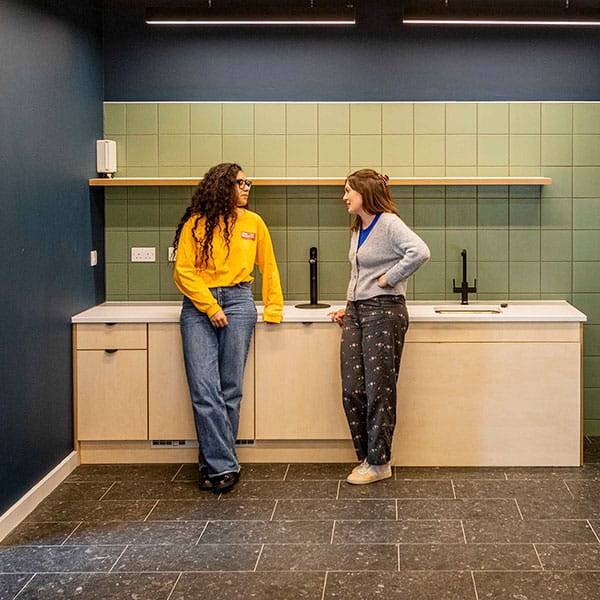
Accommodation
An excellent range of options for all of the Bristol campuses and the city centre.
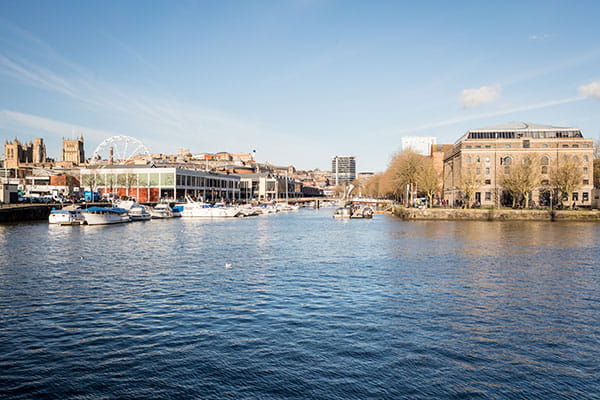
Bristol
A stunning city for student living with all the qualities to make you want to stay.

Sports, societies and activities
There is more to your experience here than study. Choose to make the most of it and try new things.

Health and Wellbeing
We provide support in the way you need it.

Campus and facilities
Discover our campuses and the wealth of facilities provided for our students.