
BA(Hons) Education in Professional Practice (Top Up)
Continuing Professional Development
This course is open for applications
This third-year top-up degree allows you to continue working in an educational support role while gaining an honours degree and progressing your career.
About
Why study education in professional practice?
Working in education is highly rewarding. It's an area where you can truly make a difference and improve people's lives. Working with children or adults in schools, colleges or elsewhere in the community, you help people live fulfilled lives, build positive relationships and make contributions of their own.
Studying education in professional practice will help you progress your career in education and related fields. You'll increase your knowledge and relate your existing experience to educational theory. It's an opportunity to share ideas with peers and learn new theories and approaches from research-active tutors.
Why UWE Bristol?
BA(Hons) Education in Professional Practice gives you the opportunity to gain a higher education degree, while at work in an education-related role.
Earn as you learn, and top up existing credits to gain a full honours degree. If you work in education and related areas or hold qualifications from overseas, this allows you to further develop your career.
Our students include unqualified teachers and teaching assistants, education welfare officers, family support workers, mentors and those working in pupil referral units, prisons or the youth sector.
Work independently and with other students to complete a varied range of assignments. Examine innovative curricula, develop ways to support learners with emotional barriers to learning and investigate ideas for teaching and learning in a changing world.
Gain excellent research and independent study skills and build on your existing experience of working in education.
Where can it take me?
You'll graduate ready to progress on to a PGCE and primary Qualified Teacher Status (QTS), or to postgraduate study in education or related fields, such as our Master's in Education.
The course also provides an excellent foundation for career progression in education and related fields.
Find out more about courses for school support staff at UWE Bristol.
Entry
Typical offers
- GCSE: Grade C/4 in English, or equivalent.
- English Language Requirement:
If you're applying to UWE Bristol from another country or region, visit the international study pages for tailored application information or contact your local British Council Office, or email your CV to admissions@uwe.ac.uk giving us details of all the qualifications you hold, examining boards and grades or scores obtained.
Please note that the English Language requirements for IELTS are:
- Overall score of 6.5 with 5.5 in each component OR
- Overall score of 6.0 with 6.0 in each component.
Entry requirements
You should typically meet the following criteria:
120 credits at Level 4 and 120 credits at Level 5 in Education or a related subject, from a Foundation Degree or equivalent. Applicants without a Foundation Degree are considered, dependent on evidence of their alternative professional qualification and/or educational experience; such applicants may be invited to an online interview to discuss suitability for the course.
International applicants
We will not be able to consider your application if you require a Tier 4 visa.
Route into PGCE Primary/Primary Early Years
For those considering this degree as a route into PGCE Primary/Primary Early Years, you will also need GCSE Grade C/4 or above in Mathematics and Science, or equivalent.
Read more about entry requirements.
How to apply
Read more about undergraduate applications.
For further information
- Email: Admissions@uwe.ac.uk
- Telephone: +44 (0)117 32 83333
Structure
Content
The optional module listed, is that which is most likely to be available but may be subject to change.
You'll study:
- Education for a Changing World
- Lifelong Learning and Professional Future
- Research Project
- Reflective Practice.
Plus:
The following optional module, which is available only in exceptional circumstances, where additional credit is needed and where agreement to study the module has been obtained from the Programme Leader:
- Guided Studies.
The University continually enhances our offer by responding to feedback from our students and other stakeholders, ensuring the curriculum is kept up to date and our graduates are equipped with the knowledge and skills they need for the real world. This may result in changes to the course. If changes to your course are approved, we'll inform you.
Learning and Teaching
You'll attend classes on one day each week during term time. Tasks are work-based so you need to be employed or volunteering in an educational setting.
See our full glossary of learning and teaching terms.
Assessment
We use a range of assessments across the course designed to enhance your learning and support your future employability. We do not use written exams as part of our formal assessments.
See our full glossary of assessment terms.
Fees
Full time course
Indicative Additional Costs
Supplementary fee information
Additional costs are for items you could need during your studies that aren't covered by the standard tuition fee. These could be materials, textbooks, travel, clothing, software or printing.
Find out more about available scholarships and bursaries which if you're eligible, can offer financial support during your study.
Features
Placements
Work experience hones your skills and industry knowledge, making you a sought after graduate.
The course is directly linked to the workplace and you'll gain credits by completing tasks at work.
You must be working or volunteering in an education-related field for a minimum of 16 hours a week as a teaching assistant or support worker, or in education-related posts such as family support, youth or community work.
Posts may be in a range of education settings, for example, schools, further education colleges, special schools, children's centres, pupil referral units or prisons.
Study facilities
You'll use modern, purpose-built facilities such as high-quality teaching rooms, industry standard technology, and equipment that can be booked out and borrowed.
Our friendly staff are always on hand to help.
Learn more about UWE Bristol's facilities and resources.
Take a personalised virtual tour of the Education and Teaching facilities and experience what a typical day could look like here for you.
Personalised virtual tour
There's no need to visit us in person to explore our facilities and campuses. Take a personalised virtual tour and discover it all for yourself from wherever you are.
Take a virtual tourCareers
Careers / Further study
You'll graduate ready to progress to a PGCE and primary Qualified Teacher Status (QTS) for either ages 3-7 or 5-11 depending on your experience, or to postgraduate study in education or related fields, such as our master's in Education.
The course also provides an excellent foundation for career progression to more senior roles in education. It can also act as a route into training and consultancy, youth and community work, local government, play work, speech therapy, social work and day care management.
Possible careers could include special educational needs coordinator (SENCO), nursery manager, family support manager, youth leader, community liaison officer, careers adviser, personal tutor, mentor or behavioural support manager.
Our award-winning careers service will develop your employment potential through career coaching and help find you graduate jobs, placements and global opportunities.
We can also help find local volunteering and community opportunities, provide support for entrepreneurial activity and get you access to employer events.
Visit our Employability pages to learn more about careers, employers and what our students are doing six months after graduating.
See also:
Life
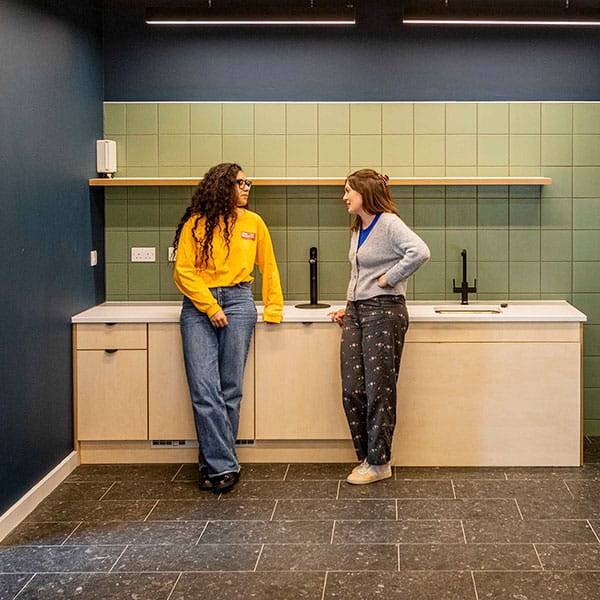
Accommodation
An excellent range of options for all of the Bristol campuses and the city centre.
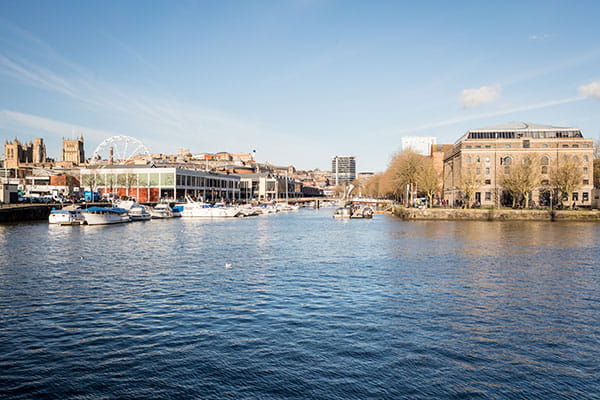
Bristol
A stunning city for student living with all the qualities to make you want to stay.

Sports, societies and activities
There is more to your experience here than study. Choose to make the most of it and try new things.

Health and Wellbeing
We provide support in the way you need it.

Campus and facilities
Discover our campuses and the wealth of facilities provided for our students.