Doctor of Education (EdD)
Eligible for visa sponsorship: No
This course is open for applications
Advance your knowledge and research skills with our part-time, campus-based Doctor of Education. Equivalent to a PhD, it blends interactive in-person teaching and original research, giving you the skills to lead enquiry in your professional context and contribute change to educational practice.
About
Why study Doctor of Education?
A Doctor of Education (EdD) award is equivalent in status and challenge to a PhD and builds on your research skills gained at master's level. It comprises four to six years part-time study, with the first two years delivered on campus. On completion, you'll be able to use the title 'Dr'.
Advance your ability to critically analyse and evaluate research literature, methodologies, and educational theories, while differentiating between competing perspectives.
Why UWE Bristol?
UWE Bristol's in-person Doctor of Education is research-informed and rooted in the latest academic theory and practice. Our aim is to deepen understanding and enhance training and education programmes, ultimately strengthening professional services and their contribution to a democratic society.
The EdD blends taught and research elements, with highly interactive teaching delivered through seminars and workshops led by multiple tutors. In Years 1 and 2, your learning is grounded in real-world practical tasks. From Year 3, you'll be assigned to a dedicated supervisory team who support you throughout the research phase.
Assessments prioritise professional learning, using it as the foundation for meeting the academic standards required to achieve the Doctor of Education award. As your research progresses, you'll critically reflect on your work, adapt your projects to emerging challenges, and have your findings peer-reviewed by recognised experts in the field.
Where can it take me?
Our Doctor of Education is aimed at professionals from any area of educational practice. These include teachers from all sectors, lecturers from colleges and universities, policy officers, and education professionals working in specialist fields such as health, community work and police or other public services.
By completing a Doctor of Education degree, you'll develop theoretical knowledge and advanced research skills tailored to your professional context. You'll lead original research that contributes new knowledge to your field and offers practical recommendations to improve educational practice relevant to your workplace.
Entry
Typical offers
Entry requirements
Participants will normally hold a Masters degree and will have a minimum of four years' experience in a relevant professional area.
For further information regarding this course, please feel free to contact the tutors:
- Professor Jane Andrews email jane.andrewsEDU@uwe.ac.uk or phone +44 (0)117 32 84186.
- Professor Richard Waller email richard.waller@uwe.ac.uk or phone +44 (0)117 32 84100.
Please note, we're unable to accept your application for this course if you require a Student visa.
If you require a student visa and are interested in a non-EdD programme, such as a fulltime PhD, then please contact Tim Clark.
For any visa related queries, please contact the UWE Bristol Immigration Advice team at immigrationadvice@uwe.ac.uk who are best placed to advise on eligibility and options.
How to apply
All applicants who meet the minimum criteria will be invited to interview to discuss their application to the course.
Read more about international applications and key international deadline dates.
If you're enquiring about a self-funded project, please explore our four research beacons. Our experienced supervisors will work with you to map your proposal into one our beacons, where you'll work in close collaboration with our experts.
Structure
Content
The programme is organised into two parts.
Part one
Four taught modules of 30 credits each, giving a total of 120 credits:
- Action Research, Evaluation and Ethics in Education - This module explores the methods and challenges involved when professionals engage in researching their own practice and/or context. Issues of reflexivity and ethics are particularly focused upon.
- Theoretical Perspectives on Learning and Teaching - A range of theoretical perspectives available to researchers in educational settings are discussed in this module including, as an example sociocultural theory.
- Researching Educational Policies and Professional Identities - Methodologies and methods for studying education policies and professional identities are the focus for this module.
- Advanced Preparation for Research - This module allows students to develop their skills and understanding in developing their own research proposal.
Part two
Supervised study with a Director of Studies and one or more supervisors supporting you as you engage in a piece of research resulting in a written thesis of 60,000 words.
The University continually enhances our offer by responding to feedback from our students and other stakeholders, ensuring the curriculum is kept up to date and our graduates are equipped with the knowledge and skills they need for the real world. This may result in changes to the course. If changes to your course are approved we will inform you.
Learning and Teaching
Will I have specialist support for my research?
There are two aspects to research supervision: support for the substantive theme of your research (for example management styles, nursing practice, policy training, social bases for pupil disaffection) and support for the methodological challenges you face (for example is it appropriate to use a survey or how do I handle the ethics of observing the work of my colleagues?).
We will always provide support for methodological challenges and if required, will also provide support for the substantive theme of your research. However, some people prefer to cope with the substantive challenge themselves and to use supervision to advance their methodological understanding.
We can offer supervision across a wide range of substantive and methodological fields, some examples of which include: case study; statistical procedures; quasi-experimental design; grounded theory; discourse analysis; social theory (for example Bourdieu); action research; interpretative sociology; life history research; feminist approaches; questionnaire design; narrative research; focus group work.
Student Views
"The EdD route was particularly helpful for me, after a gap of several years. Since completion of my Masters, it encouraged me to get back into the disciplines of evaluating sources, of relating theory to practice effectively, and of being appropriately academically critical. As a part-time student, the level of online support and a community of mature fellow-learners from comparable academic backgrounds was a great benefit."
"Overall the EdD was a hugely enjoyable and rewarding experience... A number of key strands remain with me; a continuing interest and engagement with both the substantive and research literature, a more profound knowledge of a number of important areas of my work in education, and a broader horizon of approaches to understand complex issues".
"I was fortunate in that I had my headteacher role already, so the EdD has not advanced my career in the orthodox sense but it has advanced my knowledge, skills and confidence".
Hear more from our EdD students.
Study time
What will my time commitment be?
Each component has a specified number of hours 'contact time'. In addition, you should plan to spend between 20 to 30 hours each month engaged in personal and directed study.
Features
Study facilities
The Department of Education at UWE Bristol's Frenchay Campus has excellent facilities and resources for learning and teaching. It's modern, purpose-built facilities provide high quality teaching rooms with state-of-the-art technology available. The department has excellent IT facilities and houses an open learning area with the latest equipment.
The education department's research centre, Education and Childhood Research Group (ESRG), holds seminars approximately monthly with a variety of staff and postgraduate students from across the University, and national and international speakers.
Find out more about the facilities and resources UWE Bristol has to offer.
Take a personalised virtual tour of the Education and Teaching facilities and experience what a typical day could look like here for you.
Fees
For information about fees, please see our Graduate School fees and funding pages.
Please note, that no bursaries are available for this course.
Life

Support during your degree
Support at every stage of your doctorate, from supervision and research resources to community and representation.
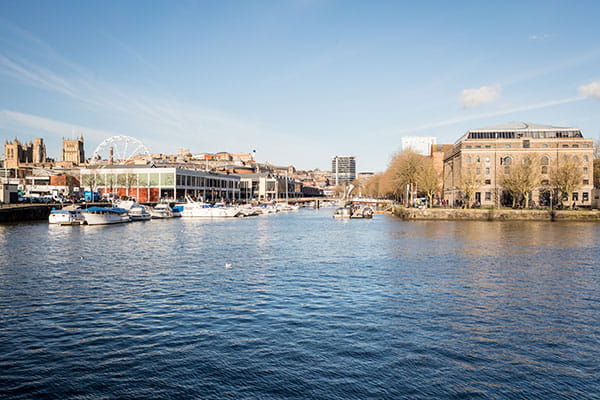
Bristol
A stunning city for student living with all the qualities to make you want to stay.

Skills development for researchers
Helping you build the skills, confidence and community needed to complete your doctorate.

Health and Wellbeing
We provide support in the way you need it.

Campus and facilities
Discover our campuses and the wealth of facilities provided for our students.