MSc/Postgraduate Diploma Science Communication
This course is open for applications
Study in our Science Communication Unit, a research centre recognised for leading research, creative practice, and outstanding teaching. Our teaching block structure supports study alongside other commitments, while you build connections and gain in-demand skills.
About
Why study this course?
Our MSc Science Communication is well-known and widely respected. Teaching and research are shaped in collaboration with active practitioners to ensure you'll gain the skills that employers need. The course blends theory with practice, helping you understand how to communicate science effectively and why it matters, so you're prepared for a career as a professional science communicator in an evolving landscape.
Why UWE Bristol?
On our Science Communication master's, you'll study in our Science Communication Unit, a research centre known for its creative practice, outstanding teaching, and research that connects science with society.
You'll be taught by experienced academics and hear from visiting lecturers working across science communication; recent speakers include the BBC Natural History Unit, British Science Association, the Pervasive Media Studio, and a range of science communication consultancies, universities, and research councils.
You'll gain a theoretical foundation in areas such as public engagement with science, understanding audiences, digital media, inclusive approaches to science communication, and models of informal learning.
Through optional modules in science writing, video and audio production, and face-to-face public engagement, you'll build a portfolio of work that showcases your expertise as a science communicator.
The course is also designed with flexibility in mind, using teaching blocks that support students balancing study with work or caring responsibilities.
Lectures, workshops, and seminars are supplemented by directed and independent study, guided online learning, tutorials, and mentoring.
Where can it take me?
MSc Science Communication graduates leave with a strong mix of academic knowledge, practical experience and professional connections. The final project lets you explore your interests in depth, with the option to publish your work. You'll also have opportunities to collaborate with sector partners, and with Bristol as a hub for science media and engagement, you'll be surrounded by possibilities.
Visit the Science Communication Unit Blog to see where some of our graduates are now working.
Student quote
"The MSc was a game changer for me. Smaller cohorts allowed better integration and interaction between staff and students, which boosted my confidence to contribute in class. The staff encouraged us to explore our individual creative and research interests, to push boundaries and take risks." Sophie, MSc Science Communication graduate.
Find out more about past projects by our students.
Watch: Welcome to the School of Applied Sciences at UWE Bristol
Entry
Entry requirements
An honours degree (at least 2:2) awarded by a UK institute of higher education, or equivalent.
As science communication is a field that requires cross disciplinary knowledge, skills, and/or experience, we accept students with a range of backgrounds across the sciences, arts, humanities, and social sciences. For example, previous students have come from disciplines including natural and applied sciences, psychology, journalism, medicine, media studies, arts, mathematics, education, and engineering. We encourage you to contact the Programme Leader (Dr Amanda Webber) if you would like clarification on whether you meet the entry requirements.
If you don't meet the above entry requirements but have at least 12 months relevant professional experience and/or equivalent qualifications, we'll consider your application on an individual basis.
We accept deferrals for this course.
UWE Bristol's International College
International students who do not meet the academic or English language requirements to study this course can qualify by completing preparatory study at our International College.
English Language Requirement
International and EU applicants are required to have a minimum overall IELTS (Academic) score of 6.5 with 5.5 in each component (or approved equivalent*).
*The University accepts a large number of UK and international qualifications in place of IELTS. To find details of acceptable tests and the required grades please visit our English language requirements pages.
English language support
If you meet the academic requirements but require additional support to take your language skills to the required level, you may be able to attend one of our pre-sessional English courses. Students who successfully complete the pre-sessional course can progress onto their chosen degree course without retaking an IELTS or equivalent.
Read more about our Pre-Sessional English Programme.
How to apply
If you would like further information about the course, please contact the Programme Leaders.
Read more about postgraduate applications.
Read more about international applications and key international deadline dates.
For further information
- Email: Admissions@uwe.ac.uk
- Telephone: +44 (0)117 32 83333
Structure
Content
You'll study:
Contemporary Science Communication
You'll study a range of contemporary practices in science communication, including communication management and a variety of communication channels, as well as looking at science communication roles and competences.
Science and Society
You'll be introduced to key concepts, theories and approaches used in science communication. You'll have opportunities to explore practical ways to analyse, reflect and critique key approaches used in science communication and related contexts.
Science Communication Project
You'll be supported to undertake a research project, demonstrating your independent research skills. This is an excellent opportunity to demonstrate self-direction, originality, and creativity, and create a project specific to your current or future professional career.
The optional modules listed are those that are most likely to be available, but they may be subject to change.
You'll study two optional modules from:
- Science on Air and on Screen - Learn the practical skills associated with making a podcast or radio programme including techniques for interviews, scriptwriting, sound recording and pre and post-production. You'll also learn the skills associated with creating a vodcast or TV segment, including camera techniques and production and exploring the strengths and weaknesses of different audio and video formats.
- Science in Public Spaces - Develop your own science communication initiative in this hands-on module that explores all areas of project development from formulating an idea through to implementation, as well as managing and evaluating a project. You'll explore a range of innovative approaches from sci-art, to museums, festivals to theatre.
- Writing Science - Improve your journalistic and other writing styles to become confident in writing clear, engaging material that grabs your readers' attention while staying true to the science. You'll develop skills in writing news stories and long-form feature articles, writing opinion-based articles and blogs as well as techniques for writing online. You'll create a portfolio of writing as well as an online magazine.
This structure is for full-time students only. Part-time students study the same modules but the delivery pattern will be different.
The University continually enhances our offer by responding to feedback from our students and other stakeholders, ensuring the curriculum is kept up to date and our graduates are equipped with the knowledge and skills they need for the real world. This may result in changes to the course. If changes to your course are approved, we'll inform you.
Learning and Teaching
This course is designed to support the needs of working students and those with caring responsibilities and is delivered through short, intensive blocks of three to five days. This design also works well for students who want to study without moving to Bristol.
Full-time students take four taught modules in their first academic year alongside their science communication project, completing the course in 18 months.
Part-time students take two modules in their first year and two in their second year. They can then either start their science communication project in their second year, completing the course in 30 months, or delay it until the third year.
If you've completed any of our Science Communication CPD courses and wish to use your learning to count towards the MSc, please email the Programme Leader to discuss.
See our glossary of learning and teaching terms.
Study time
18 months full-time or 30 months part-time.
You'll attend three teaching blocks for each 30-credit module.
You'll be provided with a teaching block timetable well in advance of the course to assist in planning your activities, including when you'll need to be in Bristol.
Assessment
The modules are assessed in a variety of ways, to reflect the theoretical concepts, knowledge and practical skills you'll develop. This includes portfolios, reports and presentations all of which you can use to attract prospective employers. The ability to evaluate your own work and others' is critical to success in the workplace and several assessments are designed to help you acquire these skills.
Learn more about assessments.
Fees
Full time course
Part time course
Indicative Additional Costs
Supplementary fee information
See our funding pages for more information.
Features
Fieldwork
Some modules offer field trips. Recently these have included visits to Aerospace Bristol, Bristol Museum and Art Gallery, M Shed and We the Curious.
Study facilities
You'll have access to our Science Communication Unit, a centre of excellence in this specialist field.
Learn more about UWE Bristol's facilities and resources.
Take a personalised virtual tour of the Environmental Science facilities and experience what a typical day could look like here for you.
Careers
Careers / Further study
Science communication skills are in high demand in a wide range of sectors and industries, such as journalism, public relations, science centres and museums, science education, policy, professional consultancy, and Research Council/learned institutions.
You'll be encouraged to develop your professional skills and have access to a range of opportunities to help you achieve your career goals. Our Learning Lab placements are created in collaboration with students and host organisations, offering real-world experience with partners such as BBC Science Focus Magazine, Films@59 and Select Science.
You'll also have the chance to apply for an external project as part of your final module. Previous students have worked with organisations including the British Science Association, the British Geological Survey, and the Green Man Festival gaining valuable insight and industry connections.
Dedicated careers sessions run throughout the course, helping you explore different pathways and build your CV. For example, 'We The Curious' offers sessions on volunteering and working in science engagement.
You'll also have access to our Postgraduate Science Communication Blackboard site, where we share voluntary, placement, and paid job opportunities. Thanks to the Course's strong reputation, employers often approach us directly to advertise roles. After graduation, you can stay connected through our LinkedIn group, where alumni and staff continue to share opportunities and advice.
Our award-winning Careers Service helps you develop your employment potential through career coaching, a vacancy service for internships, placements, jobs, global opportunities, volunteering and community activity plus support for entrepreneurial activity, and access to employer events. Learn more about our graduate destinations.
Watch: Where the MSc in Science Communication at UWE Bristol can take you
Life

Postgraduate support
Our support includes access to fantastic facilities, study tools and career consultants, plus practical help to access everything from funding to childcare.
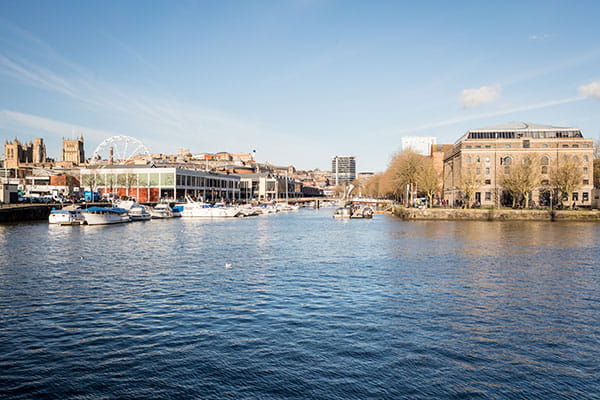
Bristol
A stunning city for student living with all the qualities to make you want to stay.

Sports, societies and activities
There is more to your experience here than study. Choose to make the most of it and try new things.

Health and Wellbeing
We provide support in the way you need it.

Campus and facilities
Discover our campuses and the wealth of facilities provided for our students.
