MSc Psychology (Conversion)
This course is open for applications
Accreditations and partnerships:

100% of MSc Psychology (Conversion) students are satisfied with the quality of their course overall.Postgraduate Taught Experience Survey, 2026.
Study an applied, practical conversion course that enables graduates from other disciplines to access psychology careers. On successful completion, you'll meet the Graduate Basis for Chartership (GBC) requirements, a pre-requisite for Chartered membership of the British Psychological Society (BPS).
About
Why study MSc Psychology (Conversion)?
Psychology gives us the tools to investigate and understand the human mind and behaviour, which has broad applications in a wide range of careers, from health to business. The breadth of career paths makes psychology a popular career choice, for those with and without a first degree in psychology.
For individuals from non-psychology backgrounds, there's a growing interest in psychology conversion courses, which provide an alternative entry route into the profession. Our MSc Psychology (Conversion) meets this demand, enabling graduates from other disciplines to access careers in psychology, without the need to complete a second undergraduate degree.
A unique, applied conversion course
MSc Psychology (Conversion) provides a unique conversion course, embedding an applied and integrative focus where you'll apply your psychological skills and attributes to real-world questions and scenarios.
Prioritised in-person delivery means you'll engage with others in an integrated work- and practice-based learning approach, ensuring what you learn is directly relevant to your psychology career. You'll also have the chance to study this course part-time, giving you the flexibility to fit your studies around other commitments.
A springboard to careers in psychology
To pursue a career as a chartered psychologist, you'll need to complete further postgraduate training accredited by the British Psychological Society (BPS) Our Psychology Conversion master's provides a necessary foundation to study one of our BPS-accredited postgraduate degrees.
When you graduate from this conversion course, you'll be guaranteed an interview for one of our specialist postgraduate psychology courses at UWE Bristol. These courses already have strong satisfaction scores, so you'll benefit from our established reputation for high quality teaching across postgraduate psychology.
While studying one of our postgraduate professional pathways, you'll have access to specialist chartered psychologists, enabling you to learn from experienced practitioners who are experts in their field.
Watch: Welcome to the School of Social Sciences at UWE Bristol
Entry
Entry requirements
A degree level qualification at 2.2 or above. This may include a degree in a subject other than psychology or a degree in psychology that has not been accredited by the British Psychological Society (BPS). The latter may also include applicants who have undertaken an accredited degree, but who have failed to pass the empirical psychology project but have achieved at least a Lower 2:2 degree.
Accredited Learning is only permissible to a maximum of 60 credits and credit for experiential learning is not permitted. Successful completion of 180 credits in psychology is required to meet eligibility for Graduate Basis for Chartered (GBC) membership.
We accept deferrals for this course.
English Language Requirement
International and EU applicants are required to have a minimum overall IELTS (Academic) score of 6.5 with 5.5 in each component (or approved equivalent*).
*The University accepts many UK and international qualifications in place of IELTS. You can find details of acceptable tests and the required grades you will need in our English Language section.
English language support
If you meet the academic requirements but require additional support to take your language skills to the required level, you may be able to attend one of our pre-sessional English courses. Students who successfully complete the pre-sessional course can progress onto their chosen degree course without retaking an IELTS or equivalent.
Read more about our Pre-Sessional English Programme.
How to apply
Read about postgraduate applications.
For further information
- Email: Admissions@uwe.ac.uk
- Telephone: +44 (0)117 32 83333
Structure
Content
You'll study:
Biological and Cognitive Neuropsychology
In this module, you'll explore the biological, cognitive and social factors that shape health, behaviour and psychological functioning. You'll examine the neurophysiological foundations of health and disease, the role of sensory, motor and cognitive systems in adaptation, and contemporary approaches to understanding consciousness. The module also considers biopsychosocial perspectives on neuropsychological conditions and experiences, including acute and persistent pain. By engaging with current theory and research, you'll develop a critical understanding of how biological and cognitive processes contribute to human behaviour and wellbeing.
Developmental, Conceptual and Historical Themes in Psychology
This module explores key questions, debates and developments that have shaped contemporary psychology. You'll examine developmental processes across areas such as social, cognitive, cultural and language development, while considering the influence of contexts including family, education and relationships. The module also investigates conceptual and historical perspectives, helping you understand how psychological theories and approaches have evolved over time. Through critical engagement with competing viewpoints, you'll develop a deeper appreciation of the complexities of psychological science and its relevance to understanding human behaviour.
Experience-Based Learning
This module provides the opportunity to reflect on practical experience and explore how psychological theory is applied in professional settings. Drawing on your experience in an applied context, you'll examine the relationship between evidence-based practice and real-world decision making. Topics may include reflective practice, ethical and professional standards, project management, appreciative inquiry and action learning. Through critical reflection and guided support, you'll develop a stronger understanding of how psychological knowledge can be used effectively in practice while enhancing your professional and personal development.
Social Psychology and Individual Difference
This module introduces key theories and research within social psychology and individual differences, exploring how personal, social and cultural influences shape behaviour. You'll examine topics such as personality, intelligence, motivation, identity, prejudice, group processes and interpersonal relationships, while considering both historical and contemporary perspectives. The module encourages critical evaluation of different theoretical and methodological approaches and explores how psychological knowledge can be applied to current social issues. By the end of the module, you'll have developed a broader understanding of the factors that influence individual and collective behaviour.
Dissertation for Psychology (Conversion)
This module gives you the opportunity to design, undertake and communicate an independent research project in an area of psychology that interests you. Working with a supervisor, you'll develop a specialist area of study and apply appropriate research methods to investigate a psychological question. Along the way, you'll strengthen your understanding of ethical research practice, academic enquiry and scientific communication. By completing your own research project, you'll develop valuable analytical, problem-solving and research skills while gaining experience of translating findings into clear and rigorous psychological evidence.
Research Methods in Psychology
This module will develop your understanding of both quantitative and qualitative research methods while building the practical skills needed to carry out and communicate psychological research effectively. You'll explore the scientific method, research design, data collection and statistical analysis, including approaches such as correlation, regression and analysis of variance. The module will also introduce key concepts underpinning qualitative research, including subjectivity, reflexivity and research ethics, alongside methods such as interviews, focus groups and thematic analysis. By the end of the module, you'll be able to critically evaluate research, apply appropriate methodologies and communicate research findings clearly and accurately.
This structure is for full-time students only. Part-time students study the same modules but the delivery pattern will be different.
The University continually enhances our offer by responding to feedback from our students and other stakeholders, ensuring the curriculum is kept up to date and our graduates are equipped with the knowledge and skills they need for the real world. This may result in changes to the course. If changes to your course are approved, we will inform you.
Learning and Teaching
Our MSc Psychology (Conversion) will be mainly delivered on campus, with integrated support material available online.
Due to the applied focus of this conversion course, you'll engage in work and practice based learning throughout the course, supported by employability modules and placements. This will enable you to apply psychological theory to real-world questions.
You'll also engage in research training, a dissertation project and lab-based work, where you'll learn to use specialist software packages.
By the end of your course, you'll be a capable graduate with the expertise and confidence to pursue further study and a career in psychology.
See our full glossary of learning and teaching terms.
Study time
MSc Psychology (Conversion) is available on a full-time or part-time basis.
Full-time students will study the course over a one-year duration.
Part-time students will study the course over two years.
Assessment
Our assessment procedures reflect the applied nature of this course. Orientated around real-world practice, your understanding will be evaluated through accessible, authentic, and inclusive assessment methods. You won't sit any formal exams.
The integrated course structure means your assessment methods will be complementary, staggered and diverse. These methods aim to maximise student choice and diversity in demonstrating your understanding.
Learn more about assessments.
Fees
Full-time
Part time course
Supplementary fee information
Additional costs
Additional costs are for items you could need during your studies that aren't covered by the standard tuition fee. These could be materials, textbooks, travel, clothing, software or printing.
Features
Professional accreditation
This is a professional course accredited by the British Psychological Society (BPS).
Our Psychology Conversion course will give you eligibility for Graduate Basis for Chartered (GBC) membership, allowing you to progress to a BPS-accredited postgraduate professional course. This additional qualification will form stage one of your training to become a chartered psychologist.
Study facilities
You'll have access to a wide range of course-specific facilities in our well-equipped department, plus general support resources across campus, such as computer labs and extensive libraries.
With research excellence across many domains in psychology, you'll be able to develop your skills using a variety of specialised equipment.
The on-campus psychology facilities include: eye tracking, EEG, pain research and lie detection labs, experience simulators and more.
Learn more about UWE Bristol's facilities and resources.
Take a personalised virtual tour of the psychology, sociology and criminology facilities and experience what a typical day could look like here for you.
Careers
Careers / Further study
Our MSc Psychology (Conversion) is aimed at those who are interested in pursuing a psychology career after graduating from another discipline. From Forensic Science to Journalism, this course enables you to shift the direction of your career as you start your training to become a chartered psychologist.
Our conversion course is open to those with a non-psychology undergraduate degree, who have gained sufficient, relevant work experience. This course is also suitable for overseas students looking to progress to BPS-accredited training, which will enable them to practice as a psychology professional in the UK.
If you don't have a background in psychology, our Psychology Conversion master's is your first step to gaining access to careers in psychology or counselling. Completing this course (with at least a Lower Second Class Honours degree; 2:2) will give you eligibility to apply for Graduate Basis for Chartered (GBC) membership with the BPS.
The BPS Graduate membership acts as stage one before you gain further experience and become eligible to hold BPS Chartered membership and practice professionally in the UK. Building on this first step, the next step in becoming a chartered psychologist involves additional postgraduate training accredited by the British Psychological Society (BPS).
In line with this requirement, when you graduate from our conversion course, you'll be guaranteed an interview for one of the following BPS-accredited postgraduate professional courses at UWE Bristol:
By continuing your postgraduate studies in a specialist subject at UWE Bristol, you'll complete stage one training. This is a necessary step to becoming a chartered psychologist. Depending on which pathway you choose, completing further study will enable you to pursue a broad range of chartered career routes, including:
- Health Psychology
- Sport and Exercise Psychology
- Occupational Psychology
- Forensic Psychology
- Educational Psychology.
Our award-winning careers service helps you develop your employment potential through career coaching, a vacancy service for available internships, placements, jobs, global opportunities, volunteering and community activity, plus support for entrepreneurial activity and where possible, access to employer events.
Life

Postgraduate support
Our support includes access to fantastic facilities, study tools and career consultants, plus practical help to access everything from funding to childcare.
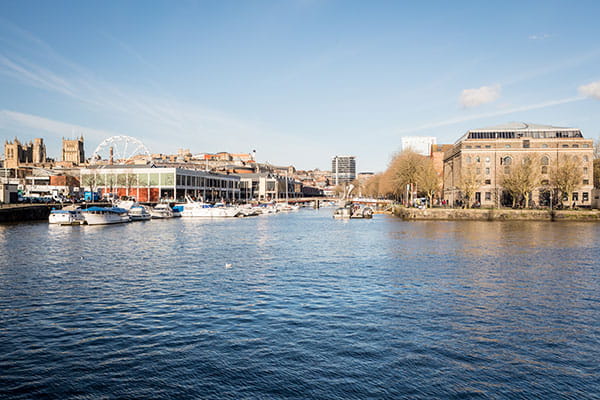
Bristol
A stunning city for student living with all the qualities to make you want to stay.

Sports, societies and activities
There is more to your experience here than study. Choose to make the most of it and try new things.

Health and Wellbeing
We provide support in the way you need it.

Campus and facilities
Discover our campuses and the wealth of facilities provided for our students.
