MSc Environmental Management and Consultancy
This course is open for applications
Accreditations and partnerships:

100% of MSc Environmental Management students are in graduate-level employment 15 months after graduating. Graduate Outcomes Survey 2023/24, published 2026.
UWE Bristol's MSc Environmental Management and Consultancy lets you tailor your studies through optional modules while developing skills for senior consultancy, management and policy roles. A professional practice placement provides hands-on industry experience.
About
Why study Environmental Management and Consultancy?
This MSc develops both technical capability and professional judgement. You'll work with real data, engage in applied tasks, and build consultancy-style skills through reports, presentations, portfolios and field-based enquiry. Whether you're aiming for environmental consultancy, environmental management or a broader sustainability role, you'll gain the insight and confidence needed for a rapidly evolving sector.
Why study with UWE Bristol?
At UWE Bristol, environmental management and consultancy are combined within one flexible, professionally focused degree. You'll be taught by academics who are active researchers and practitioners, ensuring your learning is informed by current evidence and sector priorities.
An industry steering group of environmental consultants and professionals advises on the course, contributes to teaching and offers placement opportunities. This ensures the curriculum stays closely aligned to industry needs. The course is supported by a minimum 20-day professional placement, giving you direct experience of working with consultancies, local authorities, NGOs or environmental organisations. You'll receive guidance from both academic staff and our careers service to help you secure your placement.
Where can it take me?
You'll gain the skills and experience to support career progression within consultancy firms and across public, private and third-sector organisations.
Typical graduate destinations include roles such as:
- Flood and Coastal Risk Management Officer, Environment Agency
- Wastewater Strategy Engineer, Wessex Water
- Senior Carbon Consultant, WSP
- Sustainability and Energy Consultant, Envision
- Procurement Sustainability Manager, National Grid
- Chartered Environmental Consultant and Carbon Advisor (Infrastructure), Arup.
Watch: Welcome to the School of Architecture and Environment at UWE Bristol
Entry
Entry requirements
We normally require an honours degree of 2:2 or above.
This course is generally suitable for graduates of degrees from any academic background, but particularly social sciences, physical sciences, environmental studies, geography and planning.
If you don't meet the above grade requirements but have at least 12 months relevant professional experience and/or equivalent qualifications, we'll consider you on an individual basis.
Personal Statement
You are required to complete a personal statement for this course. Please read the personal statement guidance carefully and make sure that you answer the questions on the postgraduate application form within the personal statement tabs, keeping to the advised word count.
UWE Bristol's International College
International students who do not meet the academic or English language requirements to study this course can qualify by completing preparatory study at our International College.
English language support
If you meet the academic requirements but require additional support to take your language skills to the required level, you may be able to attend one of our pre-sessional English courses. Students who successfully complete the pre-sessional course can progress onto their chosen degree course without retaking an IELTS or equivalent.
Read more about our Pre-Sessional English Programme.
English Language Requirement
International and EU applicants are required to have a minimum overall IELTS (Academic) score of 6.5 with 5.5 in each component (or approved equivalent*).
*The University accepts a large number of UK and international qualifications in place of IELTS. You can find details of acceptable tests and the required grades you will need in our English language section.
How to apply
Read more about postgraduate applications.
Read more about international applications and key international deadline dates.
For further information
- Email: admissions@uwe.ac.uk
- Telephone: +44 (0)117 32 83333
Structure
Content
You'll study:
- Masters project
- Professional Practice.
Plus, six optional modules from:
- Climate Change and Climate Action: a Multidisciplinary Perspective
- Sustainable Development: Principles and Practice
- Sustainable Business and Consultancy
- Ecology
- Environmental Assessment
- Introduction to Applied Geographical Information Systems (GIS)
- Sustainable Water Management
- Air Quality Management
- Renewable Energy and Carbon Futures.
Please also note this structure is for the full-time course delivery only. For part-time delivery, the same modules will be available but the structure will differ.
The University continually enhances our offer by responding to feedback from our students and other stakeholders, ensuring the curriculum is kept up to date and our graduates are equipped with the knowledge and skills they need for the real world. This may result in changes to the course. If changes to your course are approved, we'll inform you.
Learning and Teaching
You'll learn through a range of theoretical teaching and hands-on practical sessions. Lectures introduce key environmental concepts, while practical and field activities give you the chance to experience real-world applications, apply techniques, develop technical skills and work with real data.
All modules are designed around applied, practice-focused learning. You'll use industry-standard software, explore relevant case studies and work on assessments that reflect the kinds of tasks undertaken by environmental professionals.
You'll be supported through well-structured Blackboard sites, recorded lectures where appropriate, academic guidance and access to UWE Bristol's full range of learning support services.
See our full glossary of learning and teaching terms.
"During the course, I learnt how science, policy and advocacy work in real life environmental battles. The master's project and work placement are amazing opportunities to enhance skill-based work and build networks." Shejuti, MSc Environmental Management (now MSc Environmental Management and Consultancy).
Study time
The MSc can be studied full time (on average 2-3 days per week on campus) or part time (1-2 days per week on campus), although the number of days may vary across the academic year. You'll usually spend more time in face-to-face teaching sessions in the first semester before undertaking more independent work such as your professional placement or Master's project in the second semester.
The full-time route is studied over one year, with the part-time option taken over two years. The course is delivered entirely on our Frenchay Campus, with no online component, allowing you to benefit fully from in-person teaching, expert academic staff, specialist facilities and a diverse student community.
Teaching typically includes a mix of scheduled lectures, practical sessions, workshops, seminars and field activities, supported by independent study.
You'll also need to commit additional time to guided reading, assessment preparation, applied tasks and your Master's project.
The 20-day professional placement forms an important part of the course, giving you structured experience in a relevant organisation. Placement tutors and the careers service support you with sourcing and preparing for opportunities.
Throughout your studies, teaching materials and lecture recordings are provided to help you plan your workload effectively.
Assessment
Assessment is 100% coursework based and designed to reflect real professional practice. You'll complete a range of applied coursework, such as:
- Environmental reports and management plans
- Consultancy-style briefs and evaluations
- Portfolios and project work
- Presentations and posters
- Reflective tasks focused on professional development
Each module has a single assessment point, with clear criteria and manageable deadlines. Assessments are structured across the programme so that earlier tasks build skills for more advanced work, including your Master's project.
You'll get feedback in class and in practical sessions, and on draft work to help you strengthen your skills. Assessments are inclusive, and adjustments are available when needed.
See our full glossary of assessment terms.
Fees
Full time course
Part time course
Supplementary fee information
For information about funding for postgraduate courses see our funding pages.
Features
Professional accreditation
This course is accredited by the Community for Environmental Disciplines in Higher Education (CEDHE), the education committee of the Institution of Environmental Sciences (IES).
We're seeking accreditation by the Institute of Sustainability and Environmental Professionals (ISEP) and the Chartered Institution of Water and Environmental Management (CIWEM).
You can apply for free Student Membership and for a fast-track route to membership once you graduate, starting you on a route towards becoming a Chartered Environmentalist or Chartered Scientist.
Working in partnership
We work closely with a range of organisations to keep the course current and industry-relevant. Many are based in Bristol and may offer professional practice placements during your studies:
- Air Quality Consultants (Logika Group)
- Binnies (RSK Group)
- BSSEC
- Entran
- Eunomia Research and Consulting
- Greengage Environmental
- Hoare Lea
- Jacobs
- JRP Solutions
- Kalaco
- Mott MacDonald
- Pell Frischmann
- Renewable Energy Investors
- Ricardo (WSP Group)
- RSK
- Stantec
- T&P Regeneration
- WSP.
Fieldwork
You'll undertake fieldwork, giving you hands-on experience, opportunities to speak with professionals, and the chance to develop skills such as data collection and environmental sampling.
Previous field trips include:
- Bridgwater Water Treatment Works (Sustainable Water Management; Renewable Energy and Carbon Futures modules)
- Castle Park Water Source Heat Pump (Sustainable Water Management; Renewable Energy and Carbon Futures modules)
- Environmental sampling fieldwork (Environmental Assessment module).
Study facilities
As a campus-based learner, you'll have access to UWE Bristol's specialist laboratories, GIS and computing facilities, field equipment and industry-standard software.
You'll benefit from flexible study spaces, the university's extensive library resources, academic skills support and digital learning materials.
Learn more about UWE Bristol's facilities and resources.
Take a personalised virtual tour of the Geography and Environmental Management facilities and experience what a typical day could look like here for you.
Careers
Careers / Further study
This MSc prepares you for a wide range of roles across the environmental sector, including consultancy, management, regulation and environmental analysis. A work-based placement allows you to apply your skills in a professional setting and demonstrate your value to employers, supporting progression into senior and specialist roles.
The global focus of the course opens up career opportunities worldwide and provides a strong foundation for postgraduate research, including PhD study.
Strong industry links, research-informed teaching and applied learning ensure you graduate as a confident, practice-ready environmental professional. You'll also be supported by our award-winning Careers Service through career coaching, placements and employer engagement.
Learn more about our graduate destinations.
Life

Postgraduate support
Our support includes access to fantastic facilities, study tools and career consultants, plus practical help to access everything from funding to childcare.
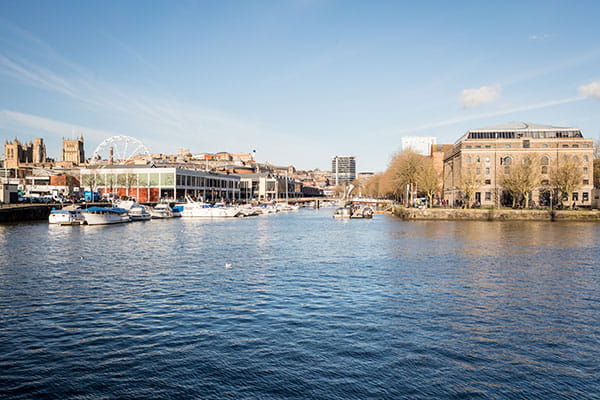
Bristol
A stunning city for student living with all the qualities to make you want to stay.

Sports, societies and activities
There is more to your experience here than study. Choose to make the most of it and try new things.

Health and Wellbeing
We provide support in the way you need it.

Campus and facilities
Discover our campuses and the wealth of facilities provided for our students.
