PhD Postgraduate Research: School of Architecture and Environment
To apply for October 2027 entry, please click Apply Now. If you would like to study this course from January or April 2027 please visit the 2026/27 course page.
Application deadlines for the self-funded PhD are below:
| Course start date | Application deadline |
|---|---|
| 1 October | 1 June |
| 1 January | 1 November |
| 1 April | 1 February |
Application deadlines for funded studentships may vary; please visit this page for details.
About
Why study a PHD with the School of Architecture and Environment?
A PhD allows you to push boundaries - both academically and personally. You'll contribute new knowledge to your field while developing an advanced set of transferable skills, including research methods, critical thinking and academic writing.
You may also gain experience in getting published, teaching, and presenting original research at national or international conferences.
You'll have the space to explore a topic in real depth and shape your identity as an emerging expert.
Why UWE Bristol?
At UWE Bristol, your PhD experience is enriched by a vibrant research culture and a supportive, inclusive community. As part of our Doctoral Academy, you'll join a thriving network of researchers from around the world, working across a wide range of disciplines.
Your supervision is tailored to your needs. You'll be supported by a dedicated supervision team led by your Director of Studies (DoS), an experienced academic who has guided other researchers to successful completion. Together, your supervisors bring subject expertise and methodological insight chosen specifically for your project. Where beneficial, additional supervisors, including external specialists, can be added to support the direction of your research.
With structured, personalised guidance, regular checkins and a comprehensive programme of training in research methods, academic practice and career development, you'll have the support you need to progress with confidence.
Entry
Typical offers
Entry requirements
Applicants will normally hold at least a 2:1 or a Masters qualification from a UK university or a degree of comparable standing from a university outside the UK.
English Language Requirements
If English is not your first language, you'll be required to meet the UK Border Agency and Universities minimum English Language requirements such as the International English Language Test (IELTS) overall score of 7 or equivalent. For further details please visit our English Language requirements page.
How to apply
- Check the minimum eligibility criteria
- Discuss your research proposal
- Apply at least four months before your proposed start date
- Apply for a student visa in good time if you need one
- Submit your form online
- Attend an interview, if invited.
Read more about Eligibility and applications.
If you're enquiring about a self-funded project, please explore our four research beacons. Our experienced supervisors will work with you to map your proposal into one our beacons, where you'll work in close collaboration with our experts.
Structure
Learning and Teaching
PhD study is centred on independent, original research that leads to the submission of a substantial thesis. You'll explore a topic in real depth and contribute meaningful insight to your field.
You'll be supported throughout by a dedicated supervision team led by your Director of Studies. They'll provide personalised, structured guidance, help you navigate key milestones, and offer regular checkins to keep your research moving forward with confidence.
Alongside being part of the Doctoral Academy, you'll also belong to a specific college, school or department. Depending on your research area, you may work within a specialist research group or centre, and you'll be part of the wider UWE Bristol research community through collaboration with academics and fellow postgraduate researchers.
Study time
Full-time registration is between 2-4 years; Part-time registration is between 3-8 years.
Assessment
Your progression through a research award is dependent on your successful achievement of the progress point relevant to each stage of PGR registration.
Each postgraduate research student (PGR) needs to complete a Stage 1 progression examination, comprising a written report and a viva, to demonstrate that suitable progress has been made since the start of your research degree.
Subsequent Progress Reviews at Stage 2 and 3 is carried out to ensure that satisfactory progress on the project is being maintained. A review meeting is held between the PGR, Director of Studies (DoS), and an independent reviewer at which submitted evidence of progress is discussed and objectives for the coming stage are identified.
Your final assessment is by submission of a thesis and oral examination (viva voce). Word length for the PhD thesis varies according to discipline and is generally about 40,000 words for engineering, creative practice and science subjects, or up to 80,000 for other areas.
After you submit, your thesis will be the subject of an oral examination (viva voce) in which you will need to show how you have critically investigated your area of research and made an independent and original contribution to knowledge. During your PhD study you will need to gain 60 taught module credits (included in the tuition fee) in order to complete the requirements of a PhD. This will provide you with an opportunity to develop your subject-specific expertise and professional skills.
Fees
There is currently no published fee data for this course.
Supplementary fee information
Fees for postgraduate research students will remain variable to reflect the potential duration of study and will therefore increase over the duration of your course of study.
Read more about fees and funding.
Features
Study facilities
Academic Supervision
You will be allocated a supervision team, led by a Director of Studies (DoS), which will include at least one other supervisor. Your DoS will have already supervised other research students through to successful completion and will be able to guide you academically as well as assist you in navigating the milestones that form part of your research degree.
Your supervisors will be chosen on the basis of the knowledge and expertise relevant to your individual research interests and/or methodological approach. Depending on the nature of your research project, there may be scope to add additional members onto the team. One or more members of the team can also be external to UWE Bristol, if necessary.
Your College
As well as being part of the Doctoral Academy community, you will also be a postgraduate researcher within a specific college, school or department.
Depending on the nature of your research, you may become a member of a research group or centre situated within a given college.
As a researcher, you will also have the opportunity to become part of the wider research community at UWE Bristol through your contact with academic colleagues and other postgraduate researchers.
Dedicated library support
You will have access to materials and support from librarians specialising in research and knowledge exchange, such as help from subject-specific librarians, training sessions.
Life

Support during your degree
Support at every stage of your doctorate, from supervision and research resources to community and representation.
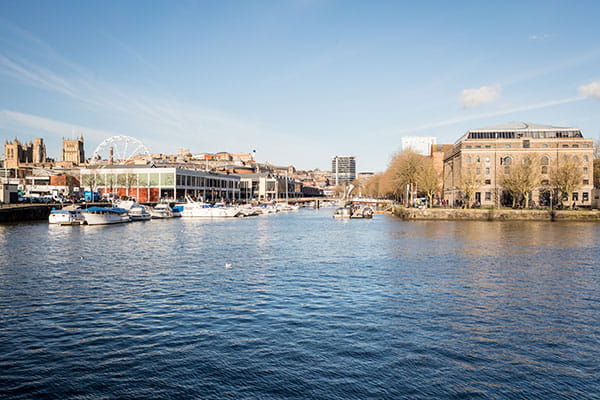
Bristol
A stunning city for student living with all the qualities to make you want to stay.

Skills development for researchers
Helping you build the skills, confidence and community needed to complete your doctorate.

Health and Wellbeing
We provide support in the way you need it.

Campus and facilities
Discover our campuses and the wealth of facilities provided for our students.