BEng(Hons) Civil Engineering (with Foundation Year)
This course is open for applications
Accreditations and partnerships:






Get industry ready on this degree, which has high graduate employment rates and provides learning opportunities in the class room, laboratory and in the field. This degree is accredited by the Joint Board of Moderators (JBM). See under Features/Professional accreditation for more details.
About
Why study civil engineering?
Civil engineers are creative problem solvers who tackle some of the world's biggest challenges.
From the world's tallest buildings to resilient water supplies in developing countries, civil engineers work on the design, construction and maintenance of infrastructure.
This puts them in a prime position to shape the world around us, and protect and enhance our environment through the sustainable use of resources.
Why UWE Bristol?
BEng(Hons) Civil Engineering introduces you to the broad spectrum of civil and environmental engineering, with a focus on the climate emergency.
Learn about structures and materials, soil mechanics, hydraulics, hydrology and risk management. Get involved with research in transport, flooding, bridges and sustainability. You'll also explore topics of international interest, such as earthquakes.
Develop vital professional skills in management, creative skills in design and practical skills in surveying, geographical information systems (GIS) and computer-aided design (CAD).
Apply what you've learned through projects based on real-world scenarios. Complete placements provided by our partner employers and get their advice on CV-writing and interview techniques.
Gain an inside track on the profession through site visits and guest lecturers.
Where can it take me?
This degree is accredited by the Joint Board of Moderators (JBM). See under Features/Professional accreditation for more details.
This course is your first step on the path to becoming an Incorporated Engineer. By completing a programme of accredited further learning, you could also become a Chartered Engineer.
See the JBM website for further information and details of Further Learning programmes for CEng.
Careers will be varied, with opportunities in the UK and overseas in areas such as structural design, water, power, road or railway infrastructure engineering, business planning and cost forecasting.
Watch: Welcome to the School of Engineering at UWE Bristol
Entry
Typical offers
You will need to meet the following Level 2 requirements:
- GCSE: Grade C/4 in English and Mathematics, or equivalent.
Level 3
In addition to the above Level 2 qualifications, you'll need to achieve the published tariff points from your Level 3 studies prior to entry. Below is an indicative list of the main qualification types. However, we will consider any Level 3 qualifications towards meeting our entry requirements.
- Tariff points: 72
- Contextual tariff: See our contextual offers page.
- A-Levels: No specific subjects required.
- T Levels: No specific subjects required.
- BTEC: No specific subjects required.
For information on required Guided Learning Hours please see our minimum entry requirements page.
- Access: No specific subjects required.
- International Baccalaureate: No specific subjects required. We accept the IB Career-related Programme in conjunction with other Level 3 qualifications.
- Cambridge Technical: No specific subjects required.
- Irish Highers: No specific subjects required.
- Welsh Baccalaureate: We accept tariff points achieved from the Advanced Skills Baccalaureate Wales in conjunction with other Level 3 qualifications.
- English Language Requirement:
International and EU applicants are required to have a minimum overall IELTS (Academic) score of 6.0 with 5.5 in each component (or approved equivalent*). *The University accepts a large number of UK and International qualifications in place of IELTS. You can find details of acceptable tests and the required grades you will need in our English language requirements section.
Entry requirements
If you exceed the entry requirements you may be eligible for BEng(Hons) Civil Engineering.
International applicants
If you are an international student your recommended route of study for this degree is through our International College, which upon successful completion to the required level and with good attendance, guarantees entry to year one of the degree.
Read more about entry requirements.
How to apply
Read more about undergraduate applications.
Read more about international applications and key international deadline dates.
For further information
- Email:
UK applicants
Admissions@uwe.ac.ukInternational/EU applicants
International@uwe.ac.uk - Telephone:
UK applicants
+44 (0)117 32 83333International/EU applicants
+44 (0)117 32 86644
Structure
Content
You'll study:
Foundation Mechanics
You'll focus on building your knowledge and skills in statics, dynamics, fluid dynamics and the required mathematics for those areas of mechanics, giving you the confidence to progress to the next year of study.
Foundation Mathematics: Algebra and Calculus
You'll cover foundational Numerical, Algebraic and Calculus methods so that you feel confident when approaching material at higher levels and developing your appreciation for mathematics as a driving force for problem-solving.
Introduction to Mechatronics
Through hands-on activities, this module will introduce you to mechatronic systems and show how mechanical, electrical and digital components work together. You'll explore bearings, gears, transmission systems and pneumatic actuators alongside switches, motors, relays, pumps, sensors, solenoids, current, voltage, resistors, capacitors and inductors. Sensing topics will include temperature, proximity, distance and magnetic-field detection. You'll also develop foundations in Scratch and Python, digital information, logic gates, binary and hexadecimal notation, microcontrollers, programming methods and flowcharts, applying this knowledge to build a simple working system.
Engineering Experimentation
This module will develop the practical skills needed to conduct engineering experiments safely, accurately and responsibly. You'll learn how to follow health and safety requirements, minimise risk, collect and analyse data, draw meaningful conclusions and maintain clear laboratory records. Activities may relate to robotics, mechanical, automotive, aerospace or electronic engineering and may include industrial robot programming, electronic circuit assembly and testing, mechanical systems, structures, fluid flow, machine vision, aerodynamics, design and manufacture. Rotating laboratory and workshop sessions will build your precision, technical confidence and ability to communicate findings.
Foundation Group Project
Working with others, you'll investigate engineering problems and explore how simulation and optimisation modelling can be applied to real-world situations. The module will develop your research, problem-solving and data-analysis skills, including defining goals, selecting strategies and using software tools to model information. You'll examine group dynamics, understand different roles within teams and learn how to manage your own contribution and collaborate with peers. Alongside this, you'll strengthen your project management, information research, referencing, report writing, oral communication and visual presentation skills through project-based learning.
You'll study:
Civil Engineering Design and Technology
This module will introduce civil engineering design and the technologies used to develop built-environment solutions. You'll explore hard systems such as foundations, substructures, drainage, utilities, building structures, bridges, tunnels, dams, flood defences and transport systems. Alongside the physical elements of design, you'll consider soft systems including the design process, project and risk management, ethics, sustainability, and health and safety. Through integrated design thinking, you'll develop an understanding of how technical, environmental and professional considerations shape civil engineering projects.
Civil Engineering Field Skills and Surveying
This module will develop the field and surveying skills needed to collect and interpret data for civil engineering projects. You'll use techniques including levelling, total stations, observation and field data collection, supported by mathematical methods such as algebra, trigonometry and probability. Digital tools will help you analyse information, make decisions and communicate results. You'll also explore hand sketching, mapping resources and Geographic Information Systems, while collaborative activities will strengthen your ability to work effectively as part of a group.
Engineering Principles for Civil Engineering
This module will develop your understanding of structural and engineering mechanics for civil engineering. You'll learn how to analyse statically determinate structures and evaluate the effects of forces and deformation on structural elements. Topics are likely to include equilibrium, reactions, shear and moment diagrams, trusses, beams, dynamics, buckling and vibration. You'll also study axial, bending, shear and torsional stresses, combined and principal stresses, Mohr's circle and composite sections, strengthening your ability to interpret and predict structural behaviour under varied loading conditions.
Construction Materials and Sustainability
This module explores the relationship between construction materials and sustainable building practice. You'll examine the mechanical and physical properties of concrete, masonry, steel, timber, glass, bitumen, polymers and emerging materials, alongside their production, transport, use and disposal. Sustainable alternatives may include recycled, biodegradable and low-carbon materials. You'll also learn about relevant testing procedures, specifications and the selection of materials for engineering applications, developing your ability to consider performance, durability and environmental impact when making informed material choices.
Professional Skills for Engineers
This module will support your development towards professional engineering practice. You'll explore the competencies and social responsibilities associated with engineering, including diversity, sustainability, security, cybersecurity, teamwork and professionalism. Activities will develop engineering habits of mind such as identifying problems, creative problem-solving, visualising, systems thinking, improving and adapting. Through reflecting on your skills and responsibilities, you'll build professional awareness and strengthen your ability to work collaboratively, respond to changing challenges and consider the wider impact of engineering decisions.
Digital Design in Civil Engineering
This module will introduce digital methods used to design and communicate civil engineering projects. You'll develop skills using computer-aided design and related tools to create, interpret and manage technical information. Topics may include two-dimensional and three-dimensional modelling, engineering drawings, digital workflows, data management and building information modelling. Through practical design activities, you'll learn how digital representations support the development, coordination and communication of civil engineering solutions while considering relevant conventions, accuracy requirements and professional standards.
You'll study:
Hydraulics and its Applications
This module will develop your understanding of fluid mechanics and its application to water and the built environment. You'll study fluid properties, pressure, buoyancy, Newtonian flow, continuity, Bernoulli's equation, momentum and energy. Further topics will include laminar and turbulent flow, open channels, pipe systems, pressure surge, pumps and turbines. You'll learn how to apply hydraulic theory to design problems, compare alternative options and consider feasibility, including the interaction of water with structures and systems and the use of net present value analysis.
Computational Civil Engineering
This module will equip you with computational tools for solving civil engineering problems. You'll learn programming principles and good practice, using scripts, variables, vectors and matrices to structure solutions. Topics will include plotting and graphing, operators, conditional statements, loops, statistics, data analysis, and optimisation algorithms. By writing programs to analyse data and address engineering challenges, you'll develop your ability to compare methods critically, and select appropriate numerical and statistical approaches for different applications.
Integrated Structural Engineering
This module will take you through the analysis and design of structural systems under different loads and boundary conditions. You'll learn how to use analysis results to design elements in reinforced concrete, steel and timber, following standard codes of practice and industry guidance. Working with an open-ended brief for a small multi-storey building, you'll develop a structural scheme and select appropriate materials. Alongside structural performance and safety, you'll consider how design decisions and material choices can reduce embodied carbon emissions.
Soil Mechanics
In this module, you'll explore the fundamental properties and behaviour of soils. You'll learn to describe and classify soil as a three-phase material and examine how laboratory and in-situ tests are used to determine its characteristics. The module will introduce horizontal and vertical effective stress, soil strength and the Tresca and Mohr-Coulomb failure criteria. You'll also study compaction, compression and consolidation, together with permeability, seepage and flow nets, developing the knowledge needed to interpret how soils respond to loading and the movement of water.
Project Management for Engineers
This module will develop the project-management, commercial and research skills needed to plan engineering work in a business context. You'll explore scope, scheduling, procurement, resources, costs, stakeholders, communication and risk, alongside sustainability and ethical considerations. The research strand will cover research processes, action and case-study approaches, qualitative and quantitative data, ethics, planning, budgeting, analysis and presentation. Through project-based teamwork, you'll learn how to shape commercially viable and sustainable business models and prepare an evidence-based engineering project proposal grounded in clear objectives and appropriate methods.
Digital Automation for Civil Engineering
This module will connect civil engineering with digital automation and cyber security, building on your existing building information modelling skills. You'll advance your modelling and digital-collaboration techniques before exploring extended reality, additive manufacturing and robotics. Practical work may involve using virtual or augmented reality to visualise designs, preparing construction components for 3D printing, selecting suitable materials or programming robotic systems. You'll learn how to evaluate emerging technologies, integrate them into civil engineering workflows and communicate complex technical ideas through digital visualisation while considering secure and responsible practice.
Optional modules:
Placement year (if applicable)
You'll have the option to study the five-year sandwich course if you secure a work or study placement. This means spending a year away from the University on a work or study placement after Year two.
You'll also complete a placement learning module.
See the placements and fees sections for more information.
You'll study:
Transport Engineering Design
In this module, you'll explore the principles that guide the design and construction of transport infrastructure. You'll learn how design information, specifications, standards and site-specific conditions influence engineering decisions. Topics will include geometric design for highways and railways, including horizontal and vertical curves, alongside highway pavement and permanent way construction. You'll also investigate sub-grade strength, methods for preventing water ingress, and the selection of appropriate materials. By applying these principles, you'll develop the ability to design key elements of transport infrastructure.
Infrastructure Design and Implementation Project
In this module, you'll explore the factors involved in designing and implementing infrastructure projects. You'll examine the nature of infrastructure, relevant policy and funding, and the stages of planning, design, implementation and delivery. The module will consider masterplanning, stakeholder interests, communication and decision-making, alongside the practical challenges that can affect successful delivery. Working within a multidisciplinary group, you'll develop your ability to contribute different perspectives, negotiate project priorities and understand how technical, organisational and strategic considerations interact throughout an infrastructure project.
Advanced Structural Analysis
In this module, you'll develop the knowledge and skills needed to analyse complex, multi-variable structural systems, including statically determinate and indeterminate structures and plates. You'll study matrix methods, stiffness analysis, influence lines and the modelling of single and multiple degree-of-freedom dynamic systems. The module will introduce finite element analysis, including meshes, boundary conditions, loading, pre-processing and post-processing. You'll also consider uncertainty, validation and verification, helping you interpret computer output critically and make informed assumptions about materials, loads and structural behaviour.
Geotechnics
In this module, you'll apply soil mechanics principles to the analysis and design of geotechnical structures. You'll learn how to plan site investigations, interpret ground conditions and extract engineering data from investigation reports. Topics will include shallow and piled foundations, settlement, slope stability, earth pressures and the design of gravity, reinforced concrete and embedded retaining walls. Throughout the module, you'll consider the uncertainty and risk associated with geotechnical decisions, developing a sound basis for designing foundations, walls, embankments and other structures that interact with the ground.
Engineering in Society
This module will explore what it means to work as a professional engineer and prepare you for the transition from university to graduate employment. You'll examine the modern engineering environment, including ethics, professional behaviours, human factors, quality improvement and safety management. The module will also consider equality, diversity and inclusive workplaces, alongside sustainability and emerging issues for engineering. Through personal skills analysis and reflective practice, you'll identify development goals, consider future career opportunities and begin planning your continuing professional development.
Engineering Project
This module will give you the opportunity to undertake a detailed individual engineering research project. Building on a proposal developed during earlier study, you'll manage your investigation from defining aims and objectives through to analysing and communicating its outcomes. Your topic may draw on industrial experience, personal interests or university activity. Through predominantly independent study with supervisory support, you'll integrate specialist engineering knowledge with project management, health and safety, risk assessment and research skills, while considering the ethical, societal and environmental implications of your work.
Optional modules:
Plus one module from:
- Assessment and Mitigation of Natural and Anthropogenic Hazards
- Engineering Geology
- Traffic Management and Safety
- Water Management.
The Final year module Engineering in Society won't be available to study if you complete the Sandwich year.
You normally need to pass your foundation year before going into Year one.
The optional modules listed are those that are most likely to be available, but they may be subject to change.
This structure is for full-time students only. Part-time students study the same modules but the delivery pattern will be different.
The University continually enhances our offer by responding to feedback from our students and other stakeholders, ensuring the curriculum is kept up to date and our graduates are equipped with the knowledge and skills they need for the real world. This may result in changes to the course. If changes to your course are approved, we'll inform you.
Learning and Teaching
Our lecturing staff achieve consistently high scores on the National Student Survey and provide a friendly environment for learning. They're active researchers or industrial consultants and stay aware of advances in the field.
Find out more about our School's approach to learning and teaching.
The structure of the course provides a balance between theory, practice and design.
Learn through a blend of lectures, seminars, small group work, laboratory classes, fieldwork and practical work.
Gain skills and apply knowledge through problem-based and work-based learning in project modules. Get involved in national competitions to build your skills and experience.
Attend presentations from visiting professionals to learn about industry challenges and decide which area to go into. Develop key analytical, communication and business skills that will help you succeed in the workplace.
Receive mentoring from more advanced students through our Peer Assisted Learning (PAL) scheme.
See our full glossary of learning and teaching terms.
Showcase your work
Present your final year project work at the annual degree show.
Network with industry
Attend careers fairs and engineer 'speed dating' events to help you find work as soon as you graduate.
Take part in workshops with our partner employers and get advice on careers, CV-writing and interview techniques.
Study time
Study this course three years full-time, four years sandwich (with a placement year after Year two) or five years part-time by day release.
If you're a part-time student, you'll study the same core modules as full-time students, but they'll be spread over five years.
This is a popular route as it lets you earn while you learn and your work provides a practical context for your learning. Work-based learning routes are available for some modules.
Assessment
Modules are assessed through a diverse pool of assignments, combining exams and coursework. Exams take place at the middle and end of each year.
You'll complete most coursework individually but there are some group assignments. Coursework can comprise of portfolios, essays, reports, presentations, teamwork exercises and progress tests.
We encourage you to do formative work, for example, practice tests, to prepare for assessments. This doesn't count towards your marks but feedback will help you to improve your performance.
Support is available if you have difficulties with numeracy, IT, literacy and study skills.
Meet the teaching team
The staff profiles shown reflect the teaching team for this course at the time of publication. Teaching staff may change depending on your year of entry.
Fees
Full-time; Sandwich course
Supplementary fee information
Please note, the above tuition fees for home students are charged in the first academic year of study but may increase in subsequent years for both new and continuing students. This increase will track the tuition fee cap which is determined by government and is expected to increase in line with inflation. UWE will likely maintain its fees for new and returning home students at the maximum permitted level for each year of study.
The placement year fee will also increase when the fee cap changes so please use the above placement year fee for indication purposes only.
Your overall entitlement to funding is based on how long the course is that you're registered on. Standard funding is allocated based on the standard number of years that your course lasts, plus one additional year.
You'll apply for funding each year that you study and Student Finance will take into account how long the course is in each year that you apply. So if you register for the five year course and then transfer to the four year course, the number of years you can apply for funding will change. Student Finance will reassess your funding based on how many years you have been in study, not just those years for which you received student finance.
Always seek advice before taking any action that may have implications for your funding.
Additional costs
Additional costs are for items you could need during your studies that aren't covered by the standard tuition fee. These could be materials, textbooks, travel, clothing, software or printing.
Features
Professional accreditation
This degree is accredited by the Joint Board of Moderators (JBM), comprising the Institution of Civil Engineers, Institution of Structural Engineers, Institute of Highway Engineers, the Chartered Institution of Highways and Transportation and the Railway Engineering Institution (RailEI) on behalf of the Engineering Council, for the purposes of partially meeting the academic requirement for registration as a Chartered Engineer (CEng).
Candidates must hold a masters or doctorate accredited as further learning for CEng to hold accredited qualifications for CEng registration.
See the JBM website for further information and details of Further Learning programmes for CEng.
Placements
Students who get work experience tend to graduate with better degrees. Experience also hones your skills, industry knowledge and professional network, making you a sought after graduate.
If you choose the five year (sandwich) course, you'll spend a year away from the University on a work placement after year two.
Placements are available with our partner employers, as well as organisations across the region. Past students have worked for water companies, local authorities, regional and international consultancies.
Many of these employers have been so impressed with the calibre of our placement students that they employed them on graduation.
You can also volunteer to help develop the infrastructure in developing countries through initiatives like Engineers without Borders.
Fieldwork
Fieldwork helps you gain valuable practical experience and a number of modules include site visits.
Destinations include South Wales, the South West of England and the wider Bristol Area.
Study facilities
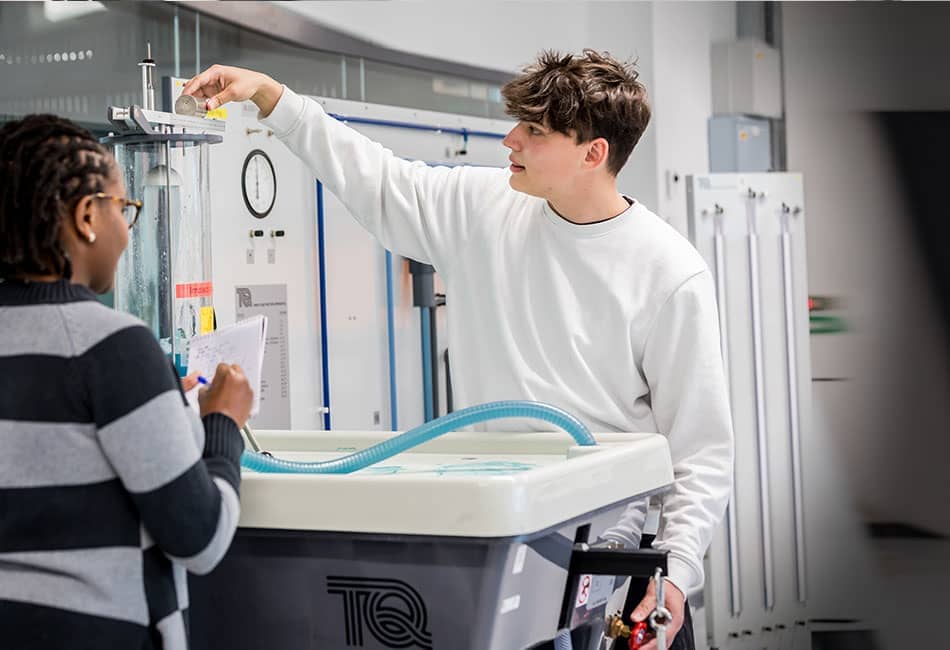
Learn in a modern building with new studios, teaching rooms and well-equipped laboratories for concrete and environmental science, hydraulics, environmental physics, earth sciences and surveying technology.
Measure angles, distances and topography and carry out level surveys in our surveying lab.
Model and test hydrological and surface water drainage, map locations and design structures using industry-standard geographic information system (GIS) and statistical software in our computer labs.
Create and test structures in our concrete and physics labs and explore and test theories in our hydraulics labs.
Study and collaborate on group assignments in our teaching areas.
This mix of traditional and highly creative learning environments enables you to learn essential knowledge and real-world skills, standing you in good stead for your professional career.
Learn more about UWE Bristol's facilities and resources.
Take a personalised virtual tour of the Engineering facilities and experience what a typical day could look like here for you.
Personalised virtual tour
There's no need to visit us in person to explore our facilities and campuses. Take a personalised virtual tour and discover it all for yourself from wherever you are.
Take a virtual tourCareers
Careers / Further study
Careers are varied, with opportunities both in the UK and overseas. Work in areas like structural design, water, power, road or railway infrastructure engineering, business planning and cost forecasting.
With the relevant work experience, you could become an Incorporated Engineer.
See the JBM website for further information and details of Further Learning programmes for CEng.
Many graduates continue studying on MSc courses, either full-time or part-time alongside their Initial Professional Development.
Several recent graduates have secured research studentships to complete an Engineering Doctorate or PhD.
Get inspired
Our award-winning careers service will develop your employment potential through career coaching and find you graduate jobs, placements and global opportunities.
We can also help find local volunteering and community opportunities, provide support for entrepreneurial activity and get you access to employer events.
Visit our employability pages to learn more about careers, employers and what our students are doing six months after graduating.
Take a look at the Engineering building
Step inside our new School of Engineering building at UWE Bristol.
Life
Accommodation
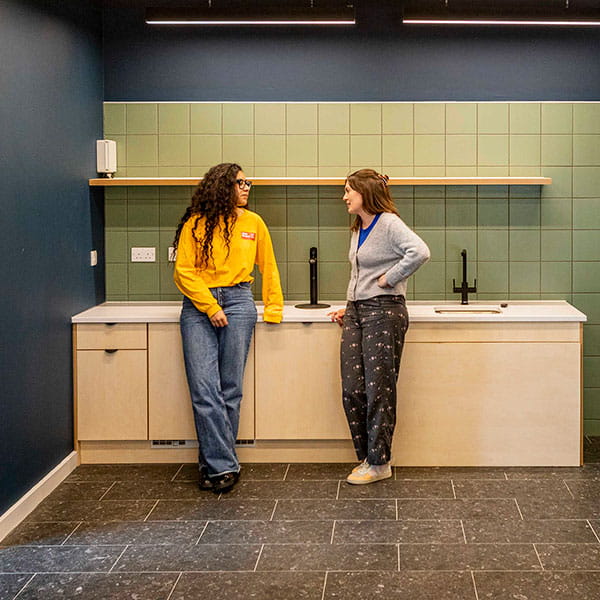
An excellent range of options for all of the Bristol campuses and the city centre.
Bristol
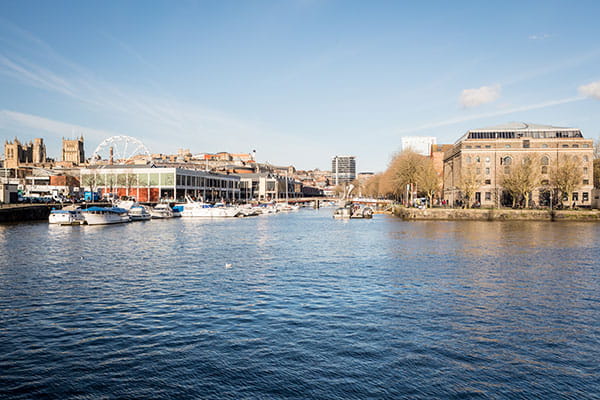
A stunning city for student living with all the qualities to make you want to stay.

Sports, societies and activities
There is more to your experience here than study. Choose to make the most of it and try new things.

Health and Wellbeing
We provide support in the way you need it.
Campus and facilities
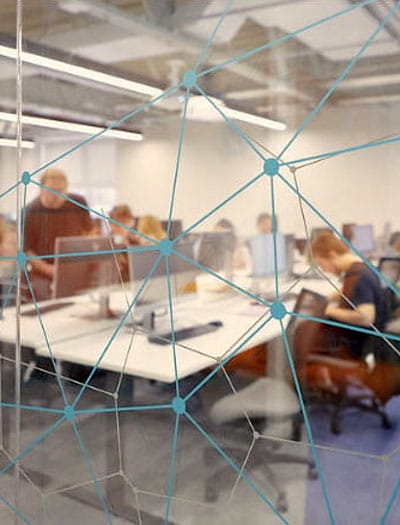
Discover our campuses and the wealth of facilities provided for our students.