
BEng(Hons) Aerospace Engineering (with Foundation Year)
This course is open for applications.
Accreditations and partnerships:


Study in the UK's aerospace hub on a course developed with some of the biggest names in engineering.
About
Why study aerospace engineering?
Engineering is where creative thinkers become world changers. An aerospace engineering degree will challenge you to ask questions, take risks and explore new perspectives. You'll turn ideas into reality as you apply the principles of science and technology to the research, design, manufacture and certification of current and future aerospace vehicles.
If you're fascinated by the history, technology and progress of aircraft and spacecraft, we'll take your passion and transform it into career-shaping skill and experience.
Why UWE Bristol?
BEng(Hons) Aerospace Engineering has been designed in response to an increasing demand for qualified aerospace engineers. Developed with input from regional aerospace partners, it will to give you the industry-relevant skills and attributes you need to become a technical specialist and future leader within the aerospace industry.
This course equips you with industry knowledge and an in-depth understanding of the aerospace design and build process. Study materials and manufacturing, stress and dynamics, energy and thermodynamics to gain a solid grounding in aerospace engineering principles. In your second year, you'll have the opportunity to specialise through the Systems, Design and Manufacturing pathways.
You'll be taught in our new state-of-the-art School of Engineering designed to revolutionise the way engineering is taught. Featuring engine test cells, dedicated collaborative learning spaces and all of the latest high-tech equipment, it's purpose-built to support a wide range of engineering disciplines.
The course has been accredited by the Royal Aeronautical Society (RAeS) on behalf of the Engineering Council, accredited as meeting the EngC CEng academic requirement in full.
Get an inside track on the industry through regular factory tours and professional briefings from leading aerospace organisations, and work on placements to build up valuable experience and professional skills.
Graduate ready to take up your place within the exciting, fast-paced aerospace industry.
Where can it take me?
As a graduate, you'll be set for a career in the aerospace industry.
Job opportunities range from working on the design and manufacture of civil and military aircraft, to working with helicopters and jet engines.
Watch: Welcome to the School of Engineering at UWE Bristol
Entry
Typical offers
You will need to meet the following Level 2 requirements:
- GCSE: Grade C/4 in English and Mathematics, or equivalent.
Level 3
In addition to the above Level 2 qualifications, you'll need to achieve the published tariff points from your Level 3 studies prior to entry. Below is an indicative list of the main qualification types. However, we will consider any Level 3 qualifications towards meeting our entry requirements.
- Tariff points: 72
- Contextual tariff: See our contextual offers page.
- A-Levels: No specific subjects required.
- T Levels: No specific subjects required.
- BTEC: No specific subjects required.
For information on required Guided Learning Hours please see our minimum entry requirements page.
- Access:
No specific subjects required.
- International Baccalaureate:
No specific subjects required. We accept the IB Career-related Programme in conjunction with other Level 3 qualifications.
- Cambridge Technical: No specific subjects required.
- Irish Highers: No specific subjects required.
- Welsh Baccalaureate: We accept tariff points achieved from the Advanced Skills Baccalaureate Wales in conjunction with other Level 3 qualifications.
- English Language Requirement:
International and EU applicants are required to have a minimum overall IELTS (Academic) score of 6.0 with 5.5 in each component (or approved equivalent*).
*The university accepts a large number of UK and International Qualifications in place of IELTS. You can find details of acceptable tests and the required grades you will need in our English Language section. Please visit our English language requirements page.
Entry requirements
If you exceed the entry requirements you may be eligible for BEng(Hons) Aerospace Engineering.
International applicants
If you are an international student your recommended route of study for this degree is through our International College, which upon successful completion to the required level and with good attendance, guarantees entry to Year one of the degree.
Read more about entry requirements.
How to apply
Read more about undergraduate applications.
For further information
- Email:
UK applicants
Admissions@uwe.ac.ukInternational/EU applicants
International@uwe.ac.uk - Telephone:
UK applicants
+44 (0)117 32 83333International/EU applicants
+44 (0)117 32 86644
Structure
Content
You'll study:
Foundation Mechanics
You'll focus on building your knowledge and skills in statics, dynamics, fluid dynamics and the required mathematics for those areas of mechanics, giving you the confidence to progress to the next year of study.
Foundation Mathematics: Algebra and Calculus
You'll cover foundational Numerical, Algebraic and Calculus methods so that you feel confident when approaching material at higher levels and developing your appreciation for mathematics as a driving force for problem-solving.
Introduction to Mechatronics
Through hands-on activities, this module will introduce you to mechatronic systems and show how mechanical, electrical and digital components work together. You'll explore bearings, gears, transmission systems and pneumatic actuators alongside switches, motors, relays, pumps, sensors, solenoids, current, voltage, resistors, capacitors and inductors. Sensing topics will include temperature, proximity, distance and magnetic-field detection. You'll also develop foundations in Scratch and Python, digital information, logic gates, binary and hexadecimal notation, microcontrollers, programming methods and flowcharts, applying this knowledge to build a simple working system.
Engineering Experimentation
This module will develop the practical skills needed to conduct engineering experiments safely, accurately and responsibly. You'll learn how to follow health and safety requirements, minimise risk, collect and analyse data, draw meaningful conclusions and maintain clear laboratory records. Activities may relate to robotics, mechanical, automotive, aerospace or electronic engineering and may include industrial robot programming, electronic circuit assembly and testing, mechanical systems, structures, fluid flow, machine vision, aerodynamics, design and manufacture. Rotating laboratory and workshop sessions will build your precision, technical confidence and ability to communicate findings.
Foundation Group Project
Working with others, you'll investigate engineering problems and explore how simulation and optimisation modelling can be applied to real-world situations. The module will develop your research, problem-solving and data-analysis skills, including defining goals, selecting strategies and using software tools to model information. You'll examine group dynamics, understand different roles within teams and learn how to manage your own contribution and collaborate with peers. Alongside this, you'll strengthen your project management, information research, referencing, report writing, oral communication and visual presentation skills through project-based learning.
You'll study:
Professional Skills for Engineers
This module will support your development towards professional engineering practice. You'll explore the competencies and social responsibilities associated with engineering, including diversity, sustainability, security, cybersecurity, teamwork and professionalism. Activities will develop engineering habits of mind such as identifying problems, creative problem-solving, visualising, systems thinking, improving and adapting. Through reflecting on your skills and responsibilities, you'll build professional awareness and strengthen your ability to work collaboratively, respond to changing challenges and consider the wider impact of engineering decisions.
Design, Build, Fly
This practical module will take you through the process of designing, building and testing a flying vehicle. You'll apply aerodynamic, structural and engineering principles while working through concept development, analysis, manufacture and evaluation. Topics may include aircraft configuration, materials, stability, control, propulsion, performance and project planning. Collaborative activities will help you develop teamwork and technical communication, while testing and refining your design will strengthen your ability to connect theoretical understanding with practical engineering decisions and performance outcomes.
Aerospace Engineering Maths
In this module, you'll build the mathematical foundation needed for aerospace engineering analysis. You'll study algebra, trigonometry, vectors, matrices, complex numbers, differentiation and integration, applying these techniques to aerospace examples. Topics may include differential equations, numerical methods, rates of change, forces, motion and the mathematical modelling of engineering systems. Through structured problem-solving and computer-supported activities, you'll learn how to select appropriate methods, perform accurate calculations and interpret mathematical results in preparation for more advanced aerospace study.
Solid Mechanics, Materials and Manufacturing
This module will connect solid mechanics with materials science and manufacturing practice. You'll examine how forces, material properties, geometry and production methods influence the behaviour and performance of engineering components. Topics are likely to include stress, strain, bending, torsion, material structure, testing and selection, as well as manufacturing processes for metals, polymers and composites. Through analytical and practical activities, you'll learn how to evaluate materials and processes and make informed decisions when developing reliable engineering solutions.
Aerospace Thermofluids
This module will provide a foundation in fluid dynamics, thermodynamics and heat transfer for aerospace applications. You'll study conservation of mass, momentum and energy, Bernoulli's principle, gas laws, hydrostatics and dimensional analysis. Topics are likely to include laminar and turbulent flow, flow measurement and uncertainty, energy equations, heat engines, thermodynamic cycles, conduction, convection and radiation. Experiments and practical exercises will reinforce the theory, helping you understand thermofluid mechanisms relevant to aerodynamics, propulsion, hydraulics, structural integrity and aerospace vehicle performance.
Introduction To Aerospace Engineering
This module will introduce you to key aerospace engineering principles through the study of aerodynamics, aircraft performance and design. You'll explore atmospheric properties, fluid mechanics and aerofoil theory, learning how lift, drag, thrust and weight influence flight. The module will examine finite wing effects, flight performance during take-off, climb, cruise and glide, and the importance of weight and balance. By applying engineering design processes to a model aircraft project, you'll develop analytical, problem-solving and evaluation skills while gaining insight into the aerospace product lifecycle.
You'll study:
Project Management for Engineers
This module will develop the project-management, commercial and research skills needed to plan engineering work in a business context. You'll explore scope, scheduling, procurement, resources, costs, stakeholders, communication and risk, alongside sustainability and ethical considerations. The research strand will cover research processes, action and case-study approaches, qualitative and quantitative data, ethics, planning, budgeting, analysis and presentation. Through project-based teamwork, you'll learn how to shape commercially viable and sustainable business models and prepare an evidence-based engineering project proposal grounded in clear objectives and appropriate methods.
Flight Dynamics and Control
This module will introduce the fundamentals of aircraft dynamics and control. You'll learn how to derive and linearise six-degree-of-freedom equations of motion, use small-disturbance theory and calculate stability derivatives. Longitudinal and lateral-directional dynamics will help you analyse aircraft modes and dynamic stability. You'll also study transfer functions, state-space representations, root-locus and Bode methods, stability-augmentation systems and basic autopilot structures. Through numerical exercises and simulation, you'll develop the ability to interpret aircraft behaviour, assess stability and design classical control loops for core flight-control applications.
Flight Mechanics
This module will develop your understanding of aircraft flight mechanics, performance and stability through practical examples, computational exercises and flight-test analysis. You'll explore trim, take-off, landing, climb, descent and level flight, alongside principles of longitudinal and lateral-directional stability. Mathematical models, analytical methods and numerical simulations will help you investigate weight and balance, static margin and control-surface effects. You'll learn how to process and interpret experimental flight-test data, compare measurements with theoretical predictions and derive key aircraft performance parameters from in-flight information.
Fundamental Aerodynamics
In this module, you'll build a thorough understanding of aerodynamic principles and their significance for aircraft performance. Topics will include potential-flow theory, two-dimensional aerofoils, three-dimensional wings, boundary layers and high-lift devices. You'll examine subsonic, transonic and supersonic flows, including compressibility effects, shock waves and expansion fans. Computer practicals will introduce computational fluid dynamics using engineering software, covering geometry and mesh generation, boundary conditions, accuracy, convergence and post-processing. You'll learn how to validate numerical results by assessing them against published data.
Structural Mechanics
This module will develop your ability to analyse the behaviour of structural components under different forms of loading. You'll study axially loaded members, statically indeterminate problems, stress concentrations, eccentric and asymmetric bending, composite beams and beam or shaft deflection. Further topics will include column buckling, transverse shear, shear flow, torsion, stress transformation and Mohr's circle. You'll learn how to apply failure criteria and theoretical methods to increasingly complex structural problems, building the mechanics knowledge needed to assess deformation, stability, stress and potential failure.
Aerospace Systems Design
In this module, you'll explore the design and integration of aerospace systems and the considerations involved in developing system solutions for aircraft. You'll examine systems-design approaches, requirements, architecture, interfaces, safety, reliability and the relationships between aircraft subsystems. The module will help you understand how design decisions are developed, compared and justified within an aerospace context. Through engineering scenarios, you'll build skills in analysing system needs, selecting appropriate concepts and considering how individual components and subsystems work together to support the operation and performance of a complete aircraft.
Fundamental Aero-Propulsion
This module will introduce the fundamental principles of aircraft propulsion. You'll examine how thermodynamics and fluid mechanics are applied to propulsion systems, developing an understanding of thrust, efficiency and engine performance. Topics may include momentum theory, gas-turbine cycles, compressible flow and the operation of major engine components such as intakes, compressors, combustion chambers, turbines and nozzles. You'll learn how component behaviour affects an engine as a whole and apply analytical methods to investigate propulsion performance under different operating and flight conditions.
You'll study:
Engineering in Society
This module will explore what it means to work as a professional engineer and prepare you for the transition from university to graduate employment. You'll examine the modern engineering environment, including ethics, professional behaviours, human factors, quality improvement and safety management. The module will also consider equality, diversity and inclusive workplaces, alongside sustainability and emerging issues for engineering. Through personal skills analysis and reflective practice, you'll identify development goals, consider future career opportunities and begin planning your continuing professional development.
Aerospace Group Design Project
This module will give you experience of contributing to a substantial aerospace design project as part of a group. You'll bring together knowledge from across your studies to develop and evaluate an integrated response to an aerospace engineering brief. The project will involve considering requirements, generating concepts, carrying out analysis and making justified design decisions. Working collaboratively, you'll strengthen skills in systems thinking, project planning, technical communication and design integration while developing an appreciation of the competing technical, operational and professional factors that shape aerospace solutions.
Engineering Project
This module will give you the opportunity to undertake a detailed individual engineering research project. Building on a proposal developed during earlier study, you'll manage your investigation from defining aims and objectives through to analysing and communicating its outcomes. Your topic may draw on industrial experience, personal interests or university activity. Through predominantly independent study with supervisory support, you'll integrate specialist engineering knowledge with project management, health and safety, risk assessment and research skills, while considering the ethical, societal and environmental implications of your work.
The optional modules listed are those that are most likely to be available, but they may be subject to change.
Year zero (foundation year)
You'll study:
- Engineering Experimentation
- Foundation Group Project
- Foundation Mathematics: Algebra and Calculus
- Foundation Mechanics
- Introduction to Mechatronics.
You normally need to pass your foundation year before going into year one.
Year one
You'll study:
- Aerospace Engineering
- Aerospace Thermofluids
- Dynamics Modelling and Simulation
- Engineering Practice 1
- Solid Mechanics Materials and Manufacturing.
Year two
You'll study:
- Aerospace Systems Design
- Engineering Practice 2
- Engineering Research
- Flight
- Fundamental Aero-Propulsion
- Fundamental Aerodynamics
- Structural Mechanics.
Placement year (if applicable)
If you study on the five year sandwich course, you'll spend a year away from the University on a work placement after year two.
You'll complete a placement learning module.
See the Placements and Fees sections for more information.
Year three (Final Year for BEng)
You'll study:
- Aerospace Group Design Project
- Engineering Project
- Professionalism for Engineers.*
*Not available to study if you complete the placement year.
Plus, four optional modules from:
- Aero Structures
- Airline Operations**
- Avionics
- Composite Engineering
- Control Engineering
- Digital Manufacturing in Aerospace
- Further Aero-Propulsion
- Further Aerodynamics
- Integrated Electro-Mechanical Systems
- Space Engineering
- Spaceflight.
**Only available to students transferring to this course from our MEng or BEng(Hons) Aerospace Engineering with Pilot Studies. Due to its credit value, students who study this module can only choose two further optional modules from this list.
The University continually enhances our offer by responding to feedback from our students and other stakeholders, ensuring the curriculum is kept up to date and our graduates are equipped with the knowledge and skills they need for the real world. This may result in changes to the course. If changes to your course are approved, we'll inform you.
Learning and Teaching
Learn through lectures, tutorials and seminars with a programme of laboratory, practical and project work.
You'll design, develop and optimise a model aircraft in the first year Introduction to Aeronautics module. You'll have the opportunity to undertake a flight test course in a real aircraft in your third year and you'll also work in group projects to such as the ImechE Unmanned Aerial System (UAS) Challenge.
See our full glossary of learning and teaching terms.
Assessment
You can expect to be assessed through a mix of assignments, exams, continuous assessment and group work depending on the module. In your final year, a project report and presentation will form part of the assessment.
We encourage you to exhibit your final year work at our annual degree show, where you can discuss your work and celebrate your achievements with family, friends and potential employers.
Learn more about assessments.
Meet the teaching team
The staff profiles shown reflect the teaching team for this course at the time of publication. Teaching staff may change depending on your year of entry.
Fees
Full-time; Sandwich course
Supplementary fee information
Please note, the above tuition fees for home students are charged in the first academic year of study but may increase in subsequent years for both new and continuing students. This increase will track the tuition fee cap which is determined by government and is expected to increase in line with inflation. UWE will likely maintain its fees for new and returning home students at the maximum permitted level for each year of study.
The placement year fee will also increase when the fee cap changes so please use the above placement year fee for indication purposes only.
Your overall entitlement to funding is based on how long the course is that you're registered on. Standard funding is allocated based on the standard number of years that your course lasts, plus one additional year.
You'll apply for funding each year that you study and Student Finance will take into account how long the course is in each year that you apply. So if you register for the five year course and then transfer to the four year course, the number of years you can apply for funding will change. Student Finance will reassess your funding based on how many years you have been in study, not just those years for which you received student finance.
Always seek advice before taking any action that may have implications for your funding.
Additional costs
Additional costs are for items you could need during your studies that aren't covered by the standard tuition fee. These could be materials, textbooks, travel, clothing, software or printing.
Features
Professional accreditation
The course has been accredited by the Royal Aeronautical Society (RAeS) on behalf of the Engineering Council, accredited as meeting the EngC CEng academic requirement in full.
Placements
Students who get work experience tend to graduate with better degrees. Experience also hones your skills, industry knowledge and professional network, making you a sought after graduate.
If you study on the five year (sandwich) course, you'll spend a year away from the University on a work placement after Year two.
We work in partnership with Bristol employers like Airbus, Rolls Royce, GE Aviation and Leonardo Helicopters. We also have strong relationships with smaller companies across the UK.
They provide work placements and graduate employment opportunities for our students. Past students have worked with Airbus, GE Aviation, E-Stress, Rolls Royce, Qinetic and Lockeed Martin.
Get help to find your placement and support throughout from College staff and our award-winning careers service.
Read more about our partner employers and how students benefit from their placements.
Fieldwork
Throughout the course, you'll see aerospace engineering in action at a range of facilities.
This includes visits to Airbus, GKN and the National Composites Centre and museums such as the Fleet Air Arm Museum in Yeovil.
In your first year, you'll design and build a model glider aircraft's wings, then race it against the competition.
Study facilities
Our engineering building is designed to inspire the engineers of the future. Built for hands-on investigation, with engine test cells, wind tunnels and collaborative learning spaces. An ideal environment for encouraging you to explore, take risks and discover ways to change the world for the better.
Apply what you've learned and develop vital professional skills in well-equipped facilities.
Design, model and simulate new aerospace concepts using industry-standard computer-aided design (CAD), Finite Element Analysis (FEA) and Computational Fluid Dynamics (CFD) simulation and planning software on our extensive PC network.
Test vehicle aerodynamics in our subsonic and supersonic wind tunnels. Develop and test materials using our composite manufacturing facilities and stress and materials laboratories.
Try out designs using our industry standard flight simulator, which you can update with your prototype aircraft's model data to validate its handling qualities and performance.
A mix of traditional and hands-on learning environments helps you quickly take on essential knowledge and skills, standing you in good stead for your professional career.
Take a personalised virtual tour of the Engineering facilities and experience what a typical day could look like here for you.
Personalised virtual tour
There's no need to visit us in person to explore our facilities and campuses. Take a personalised virtual tour and discover it all for yourself from wherever you are.
Take a virtual tourCareers
Careers / Further study
This course will prepare you for employment in leading aerospace companies such as Airbus UK, BAE Systems, Rolls-Royce, Leonardo, MBDA, Boeing and GE Systems.
Past graduates have gone into careers in the design and manufacture of civil and military aircraft, helicopters and jet engines.
Get inspired
Our award-winning careers service will develop your employment potential through career coaching and find you graduate jobs, placements and global opportunities.
We can also help find local volunteering and community opportunities, provide support for entrepreneurial activity and get you access to employer events.
Visit our employability pages to learn more about careers, employers and what our students are doing six months after graduating.
Additional resources
Take a look at the Engineering building
Step inside our new School of Engineering building at UWE Bristol.
Life
Accommodation
An excellent range of options for all of the Bristol campuses and the city centre.
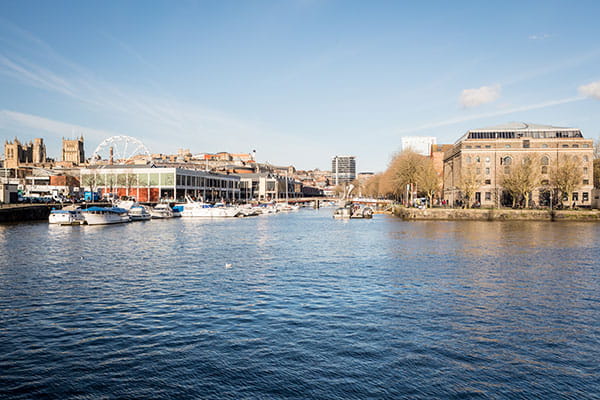
Bristol
A stunning city for student living with all the qualities to make you want to stay.

Sports, societies and activities
There is more to your experience here than study. Choose to make the most of it and try new things.

Health and Wellbeing
We provide support in the way you need it.
Campus and facilities
Discover our campuses and the wealth of facilities provided for our students.