MArch Architecture
This course is open for applications
Accreditations and partnerships:



On this Master of Architecture, you'll engage with internationally acclaimed research, industry professionals and live projects to gain experience to apply to your architectural practice. Develop design innovation skills sought after by employers to progress your architecture career.
About
Why study a Master of Architecture?
On our holistic, future-facing Master of Architecture, you'll study a diverse set of subjects focused on the future of the built and natural environments. The course will equip you to tackle pressing global issues in architecture, transforming cities, places, and spaces for the benefit of people and the planet.
Gain a deep understanding of contemporary professional practice, while challenging traditional boundaries in architectural design. You'll also explore the crucial role of fire and life safety and sustainability, learning to create safe, sustainable buildings that protect both occupants and the public.
Why UWE Bristol?
Join our School of Architecture and Environment, an inclusive community that celebrates diverse skills and perspectives and engages with the region through design, research, and knowledge exchange. UWE Bristol has strong reputation for its Architecture courses and sustainability initiatives, making it an ideal place to study topics such as regenerative design and sustainable urbanism.
The MArch offers a student-centred structure that allows you to tailor your studies to personal interests and emerging areas of practice. You can gain professional practical experience through live projects, as well as collaborations with industry professionals, local communities and partnerships beyond traditional architectural disciplines.
You'll also engage with internationally acclaimed research from our Centre for Advanced Built Environment Research (CABER) and Architecture Research Group, which is integrated into your module content. This research-informed teaching will give you unique insights into the latest trends and technologies in architecture, supporting real-world problem solving.
Where can it take me?
On successful completion of the MArch, you'll be an independent, competent, creative and ethical designer, shaping the built environment with professionalism and imagination. As an environmentally conscious and socially responsible global citizen, you'll be empowered to drive positive change and contribute to a sustainable future.
Watch: Welcome to the School of Architecture and Environment at UWE Bristol
Entry
Entry requirements
We normally require an architecture honours degree of 2.2 or above from a UK university or an overseas qualification of an equivalent standard.
If you don't meet the above criteria, we'll assess your application and you may be required to attend an interview or provide a sample of work. If this applies to you, please upload your portfolio and details of your practice experience with your application.
You're very welcome to come and visit us and our school, please contact us if you would like to do so.
English language support
If you meet the academic requirements but require additional support to take your language skills to the required level, you may be able to attend one of our pre-sessional English courses. Students who successfully complete the pre-sessional course can progress onto their chosen degree course without retaking an IELTS or equivalent.
Read more about our Pre-Sessional English Programme.
English Language Requirement
International and EU applicants are required to have a minimum overall IELTS (Academic) score of 6.5 with 5.5 in each component (or approved equivalent*).
*The University accepts a large number of UK and international qualifications in place of IELTS. You can find details of acceptable tests and the required grades you will need in our English language section.
How to apply
If you don't meet the entry requirements, as stated above, you may be required to attend an interview or provide a sample of work. Please find our advice on this process below:
Advice on submitting a sample of work
Should a portfolio be required we'll ask you to give us access to an online portfolio where your work is stored. Once we have received the links (URL) to your sample of work , the MArch Architecture team will review your application and portfolio. We'll sometimes ask applicants to attend an interview (via MS Teams for overseas applicants) to discuss their application and portfolio in more detail.
For general portfolio advice and what to include, please see our portfolio and interview guidance.
Advice on interviews
The purpose of the interview is to consider your application and your future studies at UWE Bristol. The interview will cover your previous experiences both as a student and in professional practice, if applicable. We'll also wish to discuss your portfolio and approach to architecture.
For further advice on the interview, please see our portfolio and interview guidance.
Please see the general information about applications.
Read more about international applications and key international deadline dates.
For further information
- Email: Admissions@uwe.ac.uk
- Telephone: +44 (0)117 32 83333
Structure
Content
You'll study:
Zero Carbon Design and Innovation
This module will focus on designing for a zero-carbon future through environmental analysis, technical understanding and creative innovation. You'll investigate how design decisions affect energy use, materials, building performance and carbon across a project's lifecycle. The module will encourage you to integrate sustainable strategies with contextual, social and user needs, evaluating alternatives and developing informed proposals. Through iterative design work, you'll strengthen your ability to connect ambitious environmental goals with practical architectural thinking and communicate solutions that support responsible, resilient and low-carbon places.
Pathway Studio
This studio module will enable you to pursue an architectural pathway through a substantial design project. You'll respond to complex environmental, social and technical issues by researching context, analysing evidence and synthesising ideas into an informed proposal. Your work will consider building lifecycles, user wellbeing and sustainable practice as part of both conceptual and technical development. Depending on the brief, you may work collaboratively or independently. Through iterative design, communication and critique, you'll develop versatility, confidence and a more clearly defined architectural direction.
Exploratory Design Studio
This module will use an exploratory studio environment to address complex contemporary architectural challenges. Working with project briefs developed with academic staff and industry professionals, you'll investigate issues such as urban resilience, social inclusivity and environmental responsibility. Design development will integrate client and user needs, environmental impact, equality, diversity and inclusion, and wider societal requirements. Through collaborative thinking, rigorous research and creative experimentation, you'll learn to question assumptions, test possibilities and communicate thoughtful architectural responses to real-world concerns.
Architectural Ethics and Agency
This module will examine architecture as an ethical and socially responsible practice. You'll explore consequentialism, deontology and virtue ethics, using these ideas to evaluate the societal and environmental impacts of design decisions. Themes will include professional agency, power, equity, accessibility, inclusivity, social value and community-centred design. You'll consider how architecture can empower or marginalise people and how practice can support sustainability and the United Nations Sustainable Development Goals. The module will help you develop a personal ethical framework informed by professional standards and responsible design.
Critical Architectural Practices
Building on Architectural Ethics and Agency, this module will examine the social, political, cultural and environmental contexts that shape architectural practice. You'll engage with contemporary theories, design approaches, interdisciplinary research and case studies to question established conventions and analyse architecture's impact on communities and environments. Themes will include climate change, social inequality and urban resilience. Through critical analysis and reflection, you'll begin to formulate a personal design philosophy, justify design decisions through rigorous enquiry and communicate your perspective for interdisciplinary and professional discussion.
You'll study:
Design Thesis
The Design Thesis will guide you through an advanced architectural design process, from rigorous research to a detailed proposal. You'll define a distinctive research question, investigate precedents and undertake site, context, spatial and stakeholder analysis to establish a clear design proposition. Developing this research through design, you'll integrate technical, spatial, social, environmental and inclusive considerations. The module will strengthen your ability to use experimentation, mapping and varied media, producing a theoretically informed architectural response that connects people, buildings and their wider context.
Future Practice in Architecture
This module will develop your practical understanding of architectural project lifecycle management, regulation and professional responsibility through the RIBA Plan of Work. Using a theoretical project, you'll follow the stages of architectural delivery and consider the goals, responsibilities and outputs associated with each. You'll examine fees, contracts, procurement, cost management, planning and building regulations, learning how these elements interact across a project. The module will strengthen your ability to evaluate delivery methods, budgeting tools, contractual frameworks and the wider responsibilities of professional practice.
Critical Manifesto
In this module, you'll create a critical architectural manifesto and an accompanying brief that will provide a foundation for your Design Thesis. Through architectural theory, historical and contextual analysis, readings and seminar discussion, you'll develop a personal position on contemporary cultural, environmental and ethical concerns. You'll learn to use brief writing as a method of critical enquiry, defining a clear architectural question that can be pursued through design-led research. This process will strengthen your reflection, argument, professional values and ability to communicate an ambitious but meaningful design direction.
Ecological and Regenerative Approaches
This module will explore sustainability as a regenerative process, helping you design for positive and lasting ecological and social outcomes. You'll use systems thinking to consider how architecture can strengthen environmental, community and occupant resilience. Topics will span advanced digital analysis, analogue and low-tech approaches, interdisciplinary knowledge, social equity, contextual responsiveness, and fire and life safety. Running alongside the Design Thesis, the module will help you integrate regenerative strategies and technical tools into safe architectural proposals that respond to complex environmental and social challenges.
The MArch is a design-led course aimed at developing architectural professionals who show an ethically responsible attitude towards society, clients, users and the environment. It imparts the knowledge and skills you'll need for a successful career in architectural practice, and prepares you for the office-based aspects of the role which also acts as a primer for the RIBA/ARB Part 3 examination.
The Masters of Architecture course is delivered over two years full time or three years part time. All modules are core to the award and you'll need to successfully complete all modules (total 240 credits) to achieve the award.
This structure is for full-time students only. Part-time students study the same modules but the delivery pattern will be different. If you have family, financial, work and other commitments, you can study this course part-time over three years.
The University continually enhances our offer by responding to feedback from our students and other stakeholders, ensuring the curriculum is kept up to date and our graduates are equipped with the knowledge and skills they need for the real world. This may result in changes to the course. If changes to your course are approved we'll inform you.
Learning and Teaching
On our MArch, your learning journey is structured to help you progressively build your skills and knowledge over the two years. You'll apply theoretical concepts and technical skills to increasingly complex design challenges.
In your first year, you'll explore the core values of architectural practice, delving into history, theory, and environmental sustainability to build a strong foundation. In your second year, your studies will become more specialised, deepening your knowledge in a specific area of interest.
Through self-directed projects and advanced modules, you'll consolidate your skills and integrate research into your design practices. Each module is interconnected, allowing you to develop a holistic understanding of architecture that extends beyond disciplinary boundaries.
From broad foundational principles to expert-level practice, you'll gain expertise aligned with the ethical and professional standards set by the architecture profession, which you'll contribute to professional practice.
For more details see our glossary of teaching and learning terms.
Study time
Full-time: Two years
Part-time: Three years
You'll study alongside full-time students, so will enjoy the same level of tutorial support and peer learning in the studio. The first two years include the studio work, and you need to commit to two days a week (typically a Monday and a Thursday) during term time in addition to another two days a week of independent study. You would also need to be available for a week-long study visit.
Assessment
Assessments are designed to reflect the tasks you'll face in architectural practice, making them an integral part of your learning journey. These assessments will help you develop essential professional skills, reinforce key competencies, and offer opportunities for reflection and improvement.
You'll complete a wide range of assessments, including live projects, reports, reflections, oral presentations, research essays and case studies, often in collaboration with community or industry partners. You'll also complete technology-integrated tasks using digital skills such as digital modelling and rendering software, fostering digital literacy that meets industry standards.
These applied, practice-based assessments are designed to simulate real-world architectural challenges, enhancing your employability and ensuring your skills remain industry-relevant.
Through the MArch, you'll benefit from regular feedback opportunities, including portfolio reviews, peer critiques and self-reflection exercises, empowering you to take control of your learning.
For more details see our full glossary of assessment terms.
Meet the teaching team
The staff profiles shown reflect the teaching team for this course at the time of publication. Teaching staff may change depending on your year of entry.
Fees
Full time course
Part time course
Supplementary fee information
Please note, the above tuition fees for home students are charged in the first academic year of study but may increase in subsequent years for both new and continuing students. This increase will track the tuition fee cap which is determined by government and is expected to increase in line with inflation. UWE will likely maintain its fees for new and returning home students at the maximum permitted level for each year of study.
The placement year fee will also increase when the fee cap changes so please use the above placement year fee for indication purposes only.
Students taking this course as a continuation of Part 1 in Architecture may be funded as an undergraduate. For further information please see our tuition fees pages.
Funding and studentship opportunities are listed on the Scholarships and bursaries page.
Find out more about funding and scholarships.
Read about postgraduate funding.
Features
Professional accreditation
This course is accredited by the Architects Registration Board (ARB) and by the Royal Institute of British Architects (RIBA).
This course provides an opportunity to achieve a Master of Architecture and Part II accreditation from the Architects Registration Board (ARB) and the Royal Institute of British Architects (RIBA). Students can progress to study for their Part III at UWE Bristol, in order to join the UK Register of Architects.
The course is also accredited by the Board of Architects Malaysia.
Fieldwork
Each year, we arrange a field trip that is integral to the studio projects, so you can study cities and buildings, attend public lectures and, on occasion, meet local organisations and students. Destinations so far include Istanbul, Amsterdam, Paris and New York.
Study facilities
Develop CAD, model-making, design and drawing skills in our award-winning design studios.
Create architectural models using laser cutters, computerised routers and wind tunnels or in our wood, metal and concrete workshops.
Conduct spatial enquiries and analyse data using industry-standard geographic information system (GIS) and statistical software in our computer labs.
Get support for photography, digital imaging, filming and sound recording from our audio-visual group and collaborate in our dedicated Project Room.
Learn more about UWE Bristol's facilities and resources.
Take a personalised virtual tour of the Architecture facilities and experience what a typical day could look like here for you.
Learn from industry
Get involved in workshops and projects led by professional structural and mechanical engineers, as well as architects from practices like Zaha Hadid Architects, Fielden Clegg Bradley Studios, White Design and Stride Treglown.
Gain experience
We arrange and promote a range of internships. For instance, we have funded internships with Womad Festival, Hands-on-Bristol and the Beckery Island Regeneration Trust.
Socialise and learn
Our Architecture Society arranges lectures from visiting professionals, plus field trips and social events that bring colleagues and like-minded students together.
Showcase your work
In your final year, showcase your work to prospective employers and the public at the annual degree show.
Careers
Careers / Further study
Our MArch will give you a broad foundational knowledge in architectural practice, which you'll build on by specialising and conducting research in an area of your choice. By engaging with research centres, industry professionals and live projects, you'll gain experience to apply to your architectural practice, enabling you to progress your architecture career.
Develop your design innovation skills, giving you the ability to create sustainable, functional and modern spaces that balance aesthetic appeal with practical use. You'll use the latest technology in design and project management, enabling you to adapt to new industry tools and trends.
Through your projects, you'll learn to think globally but act locally. You'll demonstrate global-local awareness and cultural competence by designing solutions that incorporate diverse cultural perspectives and are relevant and adaptable to specific communities.
Key skills, including critical thinking, self-reflection, and systems thinking, are embedded in the course, enabling you to approach complex architectural challenges with confidence and insight. You'll also hone your ethical decision-making skills, guiding you to make decisions that prioritise safety, integrity, and accountability.
You'll also develop strong problem solving, communication, analytical and research skills and evidence-based reasoning. These qualities are sought after by employers and can be applied in a wide range of careers in the architecture industry.
As a graduate, you'll become an environmentally conscious and socially responsible global citizen ready to contribute positively to the built environment. You'll emerge as an adaptable, collaborative, and ethically minded professional, equipped to shape the future of architecture with creativity, responsibility, and a dedication to sustainability.
Our award-winning careers service helps you develop your employment potential through career coaching, a vacancy service for internships, placements, jobs, global opportunities, volunteering and community activity plus support for entrepreneurial activity, and access to employer events.
Architecture student showreel
A showcase of student work from the MArch Architecture course at UWE BristolLife

Postgraduate support
Our support includes access to fantastic facilities, study tools and career consultants, plus practical help to access everything from funding to childcare.
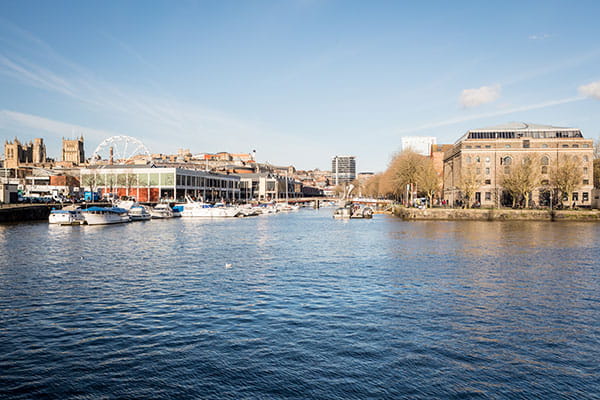
Bristol
A stunning city for student living with all the qualities to make you want to stay.

Sports, societies and activities
There is more to your experience here than study. Choose to make the most of it and try new things.

Health and Wellbeing
We provide support in the way you need it.

Campus and facilities
Discover our campuses and the wealth of facilities provided for our students.
