
BSc(Hons) Real Estate and Development
This course is open for applications
Accreditations and partnerships:
8th university in the UK for Building courses.The Sunday Times Good University Guide 2026
93% of Building graduates were in graduate-level employment or further study 15 months after graduating. The Sunday Times Good University Guide 2026
Study the built environment from concept to completion. BSc(Hons) Real Estate and Development brings together property valuation, management and development, with sustainability integral to how the built environment is planned, delivered and managed.
About
Why study real estate?
BSc(Hons) Real Estate and Development reflects the expanding scope of the modern property profession. Alongside core real estate disciplines, such as valuation, management and investment, the course develops knowledge of property development, planning and strategic land use. Sustainability is embedded throughout, recognising the sector's responsibility in addressing climate change, reducing carbon emissions and supporting long-term community needs.
The course prepares graduates for professional roles across real estate and development, providing the technical knowledge, commercial awareness and critical understanding required in a changing built environment.
Why UWE Bristol?
You'll study at Frenchay Campus, part of a vibrant university community with strong links to Bristol's thriving property and development sector. The course benefits from industry-informed teaching, professional practice and opportunities to engage with real-world challenges.
You'll learn alongside other built environment students during collaborative projects, reflecting how professionals work together in practice. Academic personal tutors, peer-assisted learning and an open-door policy ensure you're supported throughout your studies.
Where can it take me?
Graduates pursue careers across real estate and development in both public and private sectors. Roles include property and asset management, valuation, investment, land buying, development management and compulsory purchase. The course also provides a strong foundation for professional accreditation and long-term career progression.
Watch: Why I chose Real Estate
Entry
Typical offers
You will need to meet the following Level 2 requirements:
- GCSE: Grade C/4 in English and Mathematics, or equivalent.
In addition to the above Level 2 qualifications, you'll need to achieve the published tariff points from your Level 3 studies prior to entry. Below is an indicative list of the main qualification types. However, we will consider any Level 3 qualifications towards meeting our entry requirements.
- Tariff points: 120
- Contextual tariff: See our contextual offers page.
- English Language Requirement:
International and EU applicants are required to have a minimum overall IELTS (Academic) score of 6.0, with 5.5 in each component (or approved equivalent*).
*The University accepts a large number of UK and international qualifications in place of IELTS. You can find details of acceptable tests and the required grades you will need in our English language section. Please visit English language requirements. - A-level subjects: No specific subjects required.
- BTEC: No specific subjects required.
For information on required Guided Learning Hours please see our minimum entry requirements page.
- Access: No specific subjects required.
- Baccalaureate IB: No specific subjects required. We accept the IB Career-related Programme in conjunction with other Level 3 qualifications.
- Irish Highers: No specific subjects required.
- Welsh Baccalaureate: We accept tariff points achieved from the Advanced Skills Baccalaureate Wales in conjunction with other Level 3 qualifications.
- Cambridge Technical: No specific subjects required.
- T Levels: No specific subjects required.
Entry requirements
International applicants
If you're applying to UWE Bristol from another country or region, visit international study for tailored application information. If you're an international student and don't meet the academic requirements to study this course, you can qualify by completing preparatory study at our International College.
If you're applying to study at UWE Bristol and require additional support to meet our English language requirements, you may be able to attend one of our pre-sessional English courses. Read more about our pre-sessional English Programme.
Direct entry
If you have a Foundation Degree, Higher National Diploma or Certificate in a closely related subject, you may be able to join the course in the second year or be credited with certain modules.
Read more about entry requirements.
How to apply
Read more about undergraduate applications.
Read more about international applications and key international deadline dates.
For further information
- Email:
UK applicants
Admissions@uwe.ac.ukInternational/EU applicants
International@uwe.ac.uk - Telephone:
UK applicants
+44 (0)117 32 83333International/EU applicants
+44 (0)117 32 86644
Structure
Content
The optional modules listed are those that are most likely to be available, but they may be subject to change.
Year one
You'll study:
- Healthy Sustainable Communities
- Introduction to Building Construction
- Introduction to Valuations
- Law, Economics and Management.
Year two
You'll study:
- Real Estate Economics
- Development Appraisal
- Examination and Evaluation of Existing Buildings
- Investment Valuation
- Professional Practice for the Built Environment.
Plus, one optional module from:
- Land Tenure and Taxation
- Development, Practice and Law.
Placement year (if applicable)
If you study on the four year (sandwich) course, you'll spend a year away from the University on a work placement after Year two.
You'll also study the Work-based Research Project.
Final year
You'll study:
- Dissertation A
- International Property Management and Investment
- Applied Valuations and Development Appraisal
- Property Transactions and Technology
- Interdisciplinary Professional Practice*.
*Not available to study if you complete the sandwich placement year.
The University continually enhances our offer by responding to feedback from our students and other stakeholders, ensuring the curriculum is kept up to date and our graduates are equipped with the knowledge and skills they need for the real world. This may result in changes to the course. If changes to your course are approved, we'll inform you.
"The course reflected the latest industry trends, helping me apply my learning to real-world case studies. The knowledge I gained has enabled me to hit the ground running in my position as a Graduate Surveyor with Cushman & Wakefield." Jake, Real Estate* graduate (*now BSc(Hons) Real Estate and Development).
Learning and Teaching
You'll learn through a mix of lectures, tutorials and workshops, with around three hours of teaching per module each week. Learning is supported by independent study, group work, field trips and peer-assisted learning.
Teaching is designed to reflect professional practice, using real-world scenarios, projects and presentations. You'll receive regular feedback to support your academic and professional development, and benefit from close access to experienced, supportive staff.
See our glossary of teaching and learning terms.
Study time
Teaching typically takes place across three days per week, giving you flexibility for independent study, group work, part-time work or placements.
Assessment
Assessment methods reflect the diverse skills required in the property profession.
These include coursework, essays, reports, projects, presentations, role plays and seen or unseen examinations, both in-class and online.
Learn more about our assessments.
Fees
Full-time; Sandwich course
Supplementary fee information
Please note, the above tuition fees for home students are charged in the first academic year of study but may increase in subsequent years for both new and continuing students. This increase will track the tuition fee cap which is determined by government and is expected to increase in line with inflation. UWE will likely maintain its fees for new and returning home students at the maximum permitted level for each year of study.
The placement year fee will also increase when the fee cap changes so please use the above placement year fee for indication purposes only.
Your overall entitlement to funding is based on how long the course is that you're registered on. Standard funding is allocated based on the standard number of years that your course lasts, plus one additional year.
You'll apply for funding each year that you study and Student Finance will take into account how long the course is in each year that you apply. So if you register for the four year course and then transfer to the three year course, the number of years you can apply for funding will change. Student Finance will reassess your funding based on how many years you have been in study, not just those years for which you received student finance.
Always seek advice before taking any action that may have implications for your funding.
Additional costs
This refers to items you could need during your studies that aren't covered by the standard tuition fee. These could be materials, textbooks, travel, clothing, software or printing.
Features
Professional accreditation
This course is accredited by the Royal Institution of Chartered Surveyors (RICS). When you graduate, you need to spend two years in practice and pass an Assessment of Professional Competence (APC) to get full membership. The placement you do as part of this course may qualify as one year of your APC .
As a graduate, you'll also meet the academic requirements for membership of the Institute of Revenues Rating and Valuation (IRRV) and the European group of Valuers (TEGOVA).
This course is also recognised by the European Council of Real Estate Professions (CEPI).
Fieldwork
Field trips and site visits form an important part of the course, helping you connect theory with practice and gain insight into real development and real estate projects.
Examples include:
- Paradise Birmingham regeneration project - a mixed-use development revitalising urban space while retaining historic character
- Brabazon Filton student accommodation - a purpose-built scheme within the sustainable redevelopment of the former Filton Airport
- International trip to Rotterdam including site visits to urban regeneration projects, interacting with local practitioners and academics.
Study facilities
You'll study in modern learning spaces at Frenchay Campus, with access to individual and group study areas, bookable rooms and specialist facilities. The campus is designed to support collaboration between students and industry.
Learn more about UWE Bristol's facilities and resources.
Take a personalised virtual tour of the Construction, Property and Surveying facilities and experience what a typical day could look like here for you.
Personalised virtual tour
There's no need to visit us in person to explore our facilities and campuses. Take a personalised virtual tour and discover it all for yourself from wherever you are.
Take a virtual tourCareers
Careers / Further study
Our award-winning Careers Service supports you throughout your studies and beyond. You'll have access to career coaching, placements and internships, employer events, global opportunities and support for entrepreneurial activity.
This course prepares you for careers in real estate, property development and the wider built environment. Graduates work in areas such as property and asset management, valuation, investment, development management, land acquisition and compulsory purchase, across public and private sectors.
You'll graduate with the technical knowledge, critical thinking and professional skills needed to succeed in a changing property market and contribute to the delivery of sustainable, high-quality built environments.
Learn more about our graduate destinations.
Find out more about work experience and placements.
Watch: Welcome to the School of Architecture and Environment at UWE Bristol
Life
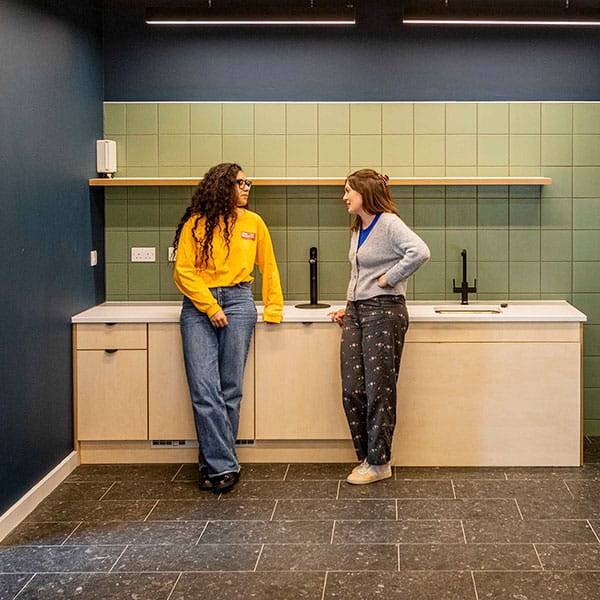
Accommodation
An excellent range of options for all of the Bristol campuses and the city centre.
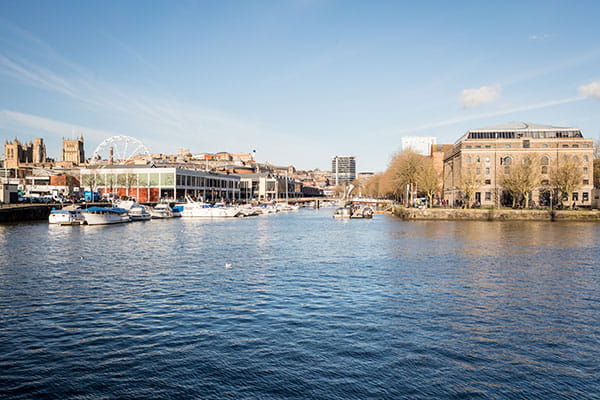
Bristol
A stunning city for student living with all the qualities to make you want to stay.

Sports, societies and activities
There is more to your experience here than study. Choose to make the most of it and try new things.

Health and Wellbeing
We provide support in the way you need it.

Campus and facilities
Discover our campuses and the wealth of facilities provided for our students.