Masters in Research (MRes) Social Research
This course is open for applications
Entry requirements for this course are indicative and will be published by 30 September 2026
Build advanced social research skills for academic or professional careers. This student-led MRes Social Research combines theory, practice and real-world research outputs, preparing you for PhD study or roles in government, consultancy and the third sector.
About
Why study this course?
The MRes Social Research offers a flexible path into research across fields like Climate Change, Education, Health, Management, Social Policy, and Digital Methods.
You'll build solid research skills, from understanding how knowledge is produced to learning advanced methods used in real research projects. Alongside the theory, there's a clear focus on professional skills. You'll learn how to evaluate evidence, assess impact and communicate research in ways that matter, including for policy and decision-making. This makes the course relevant not just for future PhD study, but also for working as a professional social researcher.
Why study at UWE Bristol?
At UWE Bristol, this social research training course is shaped around you and your interests. It's student-led, which means your assessments and research focus are closely linked to your own academic or professional goals. You'll work closely with staff who are active researchers and who regularly collaborate with policymakers, government bodies and third sector organisations. That real-world experience feeds directly into the teaching.
Learning is collaborative and discussion-based, creating a supportive environment where you can explore complex and sometimes challenging ideas together and be prepared to communicate facts that may challenge prevailing opinions or media narratives. This is underpinned by robust technical expertise and a reflective approach.
Where can it take me?
The course is designed to meet the skill requirements of the Southwest Doctoral Training Programme, a leading doctoral funding initiative, and this will aid your PhD applications. You'll gain advanced research skills and receive guidance from disciplinary experts through Programme pathways - ideal preparation for PhD study.
You'll also be equipped for professional social research careers in government departments, for example, water and energy policy, transport, social care and health services. Social research and analytical skills are also increasingly in demand across consultancies, research agencies, NGOs and charities, where social research is used to shape policy, processes and social outcomes.
Watch: Welcome to the School of Architecture and Environment at UWE Bristol
Entry
Entry requirements
We normally require an honours degree of 2:1 or above (or equivalent if it is a non-UK degree) in a relevant subject.
If you don't meet the above grade requirements but have at least 12 months relevant professional experience and/ or equivalent qualifications, we'll consider you on an individual basis. Shortlisted applicants will be invited to interview.
English Language Requirement
International and EU applicants are required to have a minimum overall IELTS (Academic) score of 6.5 with 5.5 in each component (or approved equivalent*).
*The University accepts a large number of UK and international qualifications in place of IELTS. You can find details of acceptable tests and the required grades you'll need in our English Language section.
Please be aware, that due to the nature of this course you're not able to sponsor dependants using the student route visa on the course.
For more information visit our Bringing your family - visas and immigration pages.
How to apply
Read more about international applications and key international deadline dates.
For further information
- Email: admissions@uwe.ac.uk
- Telephone: +44 (0)117 32 83333
Structure
Content
The optional modules listed are those that are most likely to be available, but they may be subject to change.
You'll study:
- Research Design and Methodologies
- Research in Context
- Advanced Research Topics
- Masters Project.
Plus either one or two relevant optional modules (depending on credit requirements)* from:
- Science and Society
- Creative Science Communication and Public Engagement
- Applied Science Communication: Online and Media Writing
- Professional Practice
- Climate Change and Climate Action: a multidisciplinary perspective
- Sustainable Development: Principles and Practice
- Introduction to Applied GIS
- Environmental Assessment
- Renewable Energy and Carbon Futures
- Sustainable Water Management
- Introduction to Global Public Health
- Public Health Policy, Politics and Economics
- Health Protection
- Health Promotion
- Epidemiology of Non-Communicable Diseases
- Anatomy of a Business
- Navigating Organisational Complexity
- Education Leadership, Management and Change
- Introduction to Race, Social Justice and Sustainability
- Digital Learning and Teaching
- Renewable Energy and Carbon Futures
- Public Health Policy, Politics and Economics
- Introduction to Race, Social Justice and Sustainability
- International Human Rights Law
- International Migration and Refugee Law and Policy.
*Module choice will also be subject to discussion with the Programme Leader, Pathway Leader and programme team.
This structure is for full-time students only. Part-time students study the same modules but the delivery pattern will be different.
The University continually enhances our offer by responding to feedback from our students and other stakeholders, ensuring the curriculum is kept up to date and our graduates are equipped with the knowledge and skills they need for the real world. This may result in changes to the course. If changes to your course are approved, we'll inform you.
Learning and Teaching
Teaching on the MRes Social Research is built around active, shared learning. You'll study core modules that combine research theory, practical methods and professional research skills, alongside a substantial independent research project.
You'll work closely with tutors and fellow students, developing ideas through conversation and collaboration. Individual supervision supports you through your research project, helping you build confidence as an independent researcher.
There's a strong emphasis on learning by doing. Tasks are designed to reflect real research practice, helping you understand not just how research works, but why it matters and how it's used in the real world.
See our full glossary of learning and teaching terms.
Assessment
Assessments on this course are coursework-based, through practical tasks that reflect the work social researchers do in professional and academic settings.
These include applied outputs such as research proposals, evaluations, policy-style briefs and public-facing research communications, as well as your final independent research project. This approach allows you to build a varied portfolio of work while developing skills that are directly relevant to future study or employment.
Assessments are designed to support your individual interests and ambitions, with guidance from subject specialists throughout. Feedback helps you refine your thinking, strengthen your research skills and grow in confidence as a researcher.
Fees
There is currently no published fee data for this course.
Supplementary fee information
Features
Study facilities
As an MRes student, you'll have access to a supportive research environment and industry-standard tools used in social research. Teaching is supported by specialist software and digital resources commonly used in professional research settings.
You'll also benefit from access to UWE Bristol's wider academic facilities, including library resources and study spaces that support independent and collaborative work.
Learn more about UWE Bristol's campus and facilities.
Careers
Careers / Further study
The MRes Social Research opens doors to a wide range of career paths where strong research and analytical skills are valued. Graduates often move into roles as professional social researchers, working in government departments, consultancies or third sector organisations.
Social researchers are increasingly in demand across government, where research and evaluation are central to policymaking. You could work on producing evidence, evaluating programmes or supporting decision-making at local or national level. Third sector organisations and NGOs also rely heavily on social research skills, particularly when applying for funding, working with communities or measuring impact.
Consultancies are another key destination for graduates. Large organisations increasingly embed social research into their work, meaning opportunities exist to contribute to projects that shape policy, infrastructure, services and social outcomes.
If you're interested in further study, this course is designed to prepare you for PhD-level research. It aligns closely with the skills required for the Southwest Doctoral Training Programme and supports strong applications for funded PhD opportunities.
Throughout the course, you'll develop transferable skills including critical thinking, communication, evaluation and evidence-based decision-making. These are valuable across a wide range of careers, particularly roles that involve research, analysis or policy work.
Award-winning careers service
Our award-winning careers service helps you develop your employment potential through career coaching, a vacancy service for internships, placements, jobs, global opportunities, volunteering and community activity plus support for entrepreneurial activity, and access to employer events.
Learn more about our graduate destinations.
Life

Postgraduate support
Our support includes access to fantastic facilities, study tools and career consultants, plus practical help to access everything from funding to childcare.
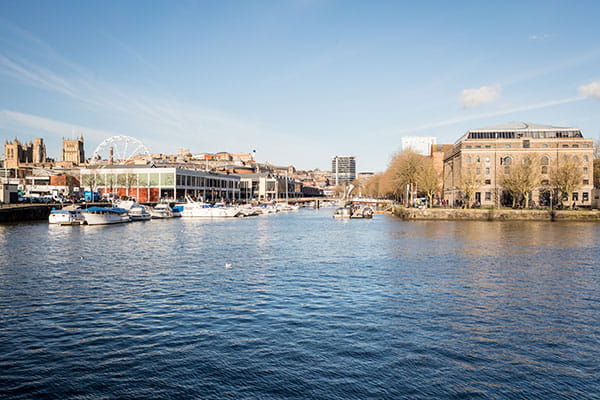
Bristol
A stunning city for student living with all the qualities to make you want to stay.

Sports, societies and activities
There is more to your experience here than study. Choose to make the most of it and try new things.

Health and Wellbeing
We provide support in the way you need it.

Campus and facilities
Discover our campuses and the wealth of facilities provided for our students.
