
BA(Hons) Culture, Media and Creative Industries
This course is open for applications
Launch your career in media communications, and the arts, creative and cultural industries by studying a unique blend of theory, practical media-making and professional industry practices. Innovative content and evolving research methods will ensure you develop the skills to work in this sector.
About
Why study Culture, Media and Creative Industries?
On our flexible, interdisciplinary BA(Hons) Culture, Media and Creative Industries you'll specialise in cultural theory, media practice work, the creative industries, or a blend of all three.
Understand how media communications shape, and are shaped by, culture and society, and you'll have the power to impact them.
You'll gain knowledge in key concepts, theories and debates relating to social justice, sustainability, power and representation within the context of media, culture and society.
Explore the historical and technological development of media communications practices and their change-making role in social movements and civic campaigns while critically analysing established media conventions.
Apply this critical understanding to your own media, culture and creative practices and go on to innovate and disrupt these growing global industries in your future career.
Why UWE Bristol?
Learn from experts in the creative and cultural industries with broad specialisms who are active in internationally recognised research, have extensive industry expertise or both. Through small class sizes, your lecturers will give you personalised guidance, shaping your creative practice and future creative career.
Work with our external partners in Bristol's creative industries, offering you strong links to key media-makers and cultural organisations. These include powerhouses like the Watershed, Pervasive Media Studio, Arnolfini and MShed's collection of museums, as well as small-scale innovative, independent producers and artists.
You'll also showcase your work to talent scouts and Bristol's creative professionals at our final year Degree Show, offering potential employment opportunities after graduation.
Where can it take me?
This course will suit you if you're interested in media communications, the arts and creative and cultural industries, regardless of your future career plans.
When you graduate, your skillset will prepare you for creative roles in broad media production contexts where effective communication, storytelling, media-making and industry knowledge are sought after.
Benefit from strong career prospects in both public and private sectors, from marketing and PR to charities and cultural organisations, such as museums.
Student showcase

Work by student Aditi Ganesh.

Work by student Elyssa Richards.
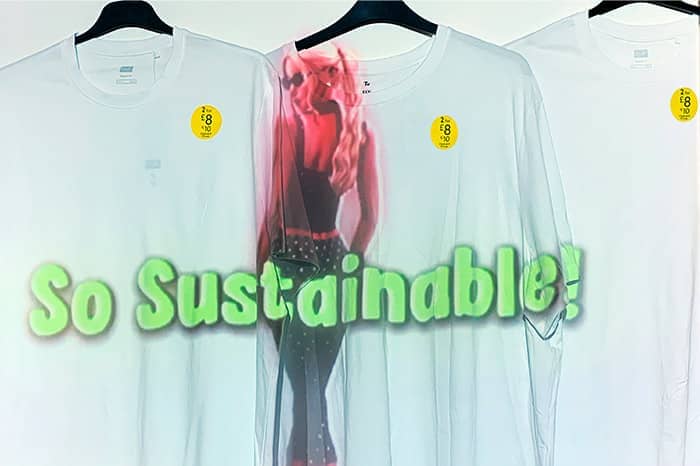
Work by student Abbie Lewis
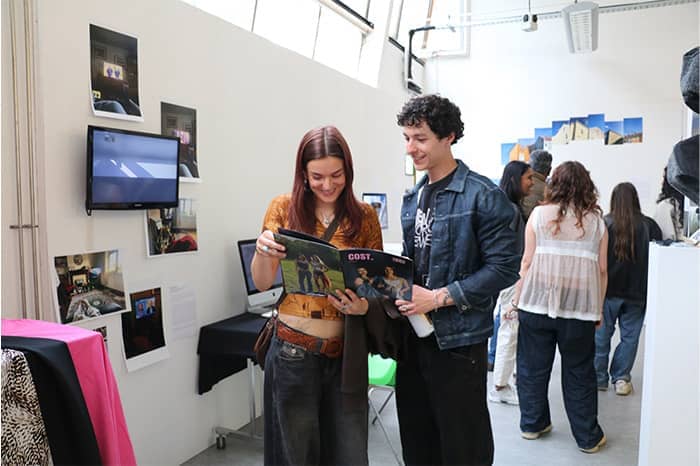
Degree Show 2026.
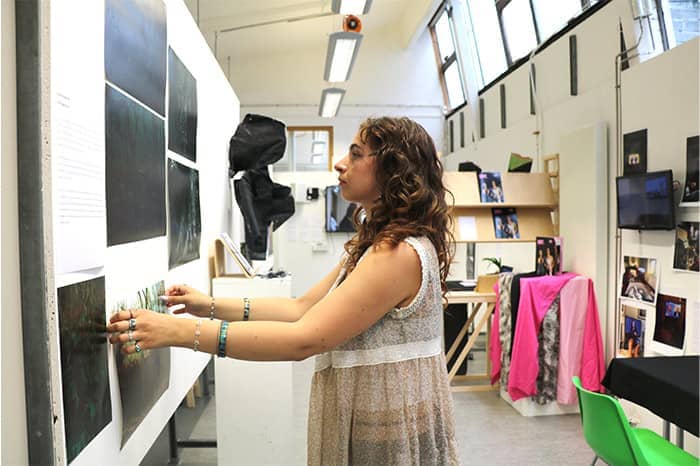
Degree Show 2026.
Entry
Typical offers
You will need to meet the following Level 2 requirements:
- GCSE: Grade C/4 in English, or equivalent.
In addition to the above Level 2 qualifications, you'll need to achieve the published tariff points from your Level 3 studies prior to entry. Below is an indicative list of the main qualification types. However, we will consider any Level 3 qualifications towards meeting our entry requirements.
- Tariff points: 112
- Contextual tariff: See our contextual offers page.
- A-level subjects: No specific subjects required.
- BTEC: No specific subjects required.
- Access: No specific subjects required.
- Baccalaureate IB: No specific subjects required. We accept the IB Career-related Programme in conjunction with other Level 3 qualifications.
- Irish Highers: No specific subjects required.
- Welsh Baccalaureate: We accept tariff points achieved from the Advanced Skills Baccalaureate Wales in conjunction with other Level 3 qualifications.
- Cambridge Technical: No specific subjects required.
- T Levels: No specific subjects required.
Entry requirements
Read more about entry requirements.
How to apply
Read more about undergraduate applications.
For further information
- Email:
UK applicants
Admissions@uwe.ac.ukInternational/EU applicants
International@uwe.ac.uk - Telephone:
UK applicants
+44 (0)117 32 83333International/EU applicants
+44 (0)117 32 86644
Structure
Content
The optional modules listed are those that are most likely to be available, but they may be subject to change.
Year one
You'll study:
- PR and Campaigns: Communicating for Change
- Culture in Theory and Practice
- Human Stories
- Applying Cultural Theory and Practice.
Year two
You'll study:
- Cultural Research in Practice
- PR and Campaigns: Professional Practices and Contexts
- Researching Culture and Everyday Life
- Human Futures.
Placement year (if applicable)
If you study on the four year (sandwich) course, you'll spend a year away from the University after year two, on a work placement.
You'll complete the Professional Development on Placement module.
See the Placements and Fees sections for more information.
Final year
You'll study:
- Humanities Research Project
- PR and Creative Campaigns Live Brief.
Plus, optional modules (the amount depending on credit requirement)* from:
- Media Project
- Sustainability, Ecologies and Ethics
- Events and Festivals for the Creative Industries
- Working in the Cultural Sector.
*The number of these modules that you take depends on whether you complete the sandwich placement year. If you do complete it, you'll study one of them. If you don't, then you'll study two.
This structure is for full-time students only. Part-time students study the same modules but the delivery pattern will be different.
The University continually enhances our offer by responding to feedback from our students and other stakeholders, ensuring the curriculum is kept up to date and our graduates are equipped with the knowledge and skills they need for the real world. This may result in changes to the course. If changes to your course are approved, we'll inform you.
This degree has given me a newfound confidence, and I've completely come out of my shell. The transformation has been helped by the supportive and nurturing environment and lecturers. Setting up my business, I've used lots of the creative skills and tools I've learnt during my time at UWE Bristol. Jenny, Media Communications graduate.
Learning and Teaching
Focusing on Bristol's creative industries, you'll test concepts, theories and ideas often using the city's media, culture and arts sector as a living brief.
Teaching is research-informed, and you'll learn through a mix of lectures, small group seminars, specialist and technical workshops, field trips, projects, placements, student-led research and live briefs.
Collaborate with research-active academic teaching staff, many of whom work closely with Bristol's media, culture and creative organisations. Some are also involved in research through UWE Bristol's Digital Cultures Research Centre.
Take part in research events, guest lectures and conferences and student-led and public-facing projects.
Gaining experience across various aspects of media communication and cultural theory in year one you'll then shape your degree through your module choices.
In your final year you'll produce a major practical project or dissertation to showcase your making or writing skills.
See our full glossary of learning and teaching terms.
Study time
On average you'll attend class activities for 10-12 hours a week over 24 weeks with additional time allocated for technical production workshops and working on group projects.
Outside class time we expect you to prepare course readings and complete writing and research exercises, essays, production exercises and projects.
Assessment
Assessments are comprised of group and individual work, including written case study or research essays, presentations, media-making projects and client live briefs.
Industry-facing assessments include portfolios containing your own selection of documents like press releases, blog posts or campaign strategies.
Media-making projects might include still and moving images, photo books, interactive video, digital design work and a practice-based portfolio containing a film, reflective workbook and verbal critique.
In your final year you'll choose between a written dissertation or media-making project to play to your strengths, whether that's academic writing, practical making or both.
See our full glossary of assessment terms.
Fees
Full-time; sandwich course
Part time course
Supplementary fee information
Please note, the above tuition fees for home students are charged in the first academic year of study but may increase in subsequent years for both new and continuing students. This increase will track the tuition fee cap which is determined by government and is expected to increase in line with inflation. UWE Bristol will likely maintain its fees for new and returning home students at the maximum permitted level for each year of study.
The placement year fee will also increase when the fee cap changes so please use the above placement year fee for indication purposes only.
Your overall entitlement to funding is based on how long the course is that you're registered on. Standard funding is allocated based on the standard number of years that your course lasts, plus one additional year.
You'll apply for funding each year that you study and Student Finance will take into account how long the course is in each year that you apply. So if you register for the three year course and then transfer to the four year course, the number of years you can apply for funding will change. Student Finance will reassess your funding based on how many years you've been in study, not just those years for which you received student finance.
Always seek advice before taking any action that may have implications for your funding.
Additional costs
This refers to items you could need during your studies that aren't covered by the standard tuition fee. These could be materials, textbooks, travel, clothing, software or printing.
Features
Placements
In the summer break of year two you'll take a compulsory work placement for up to 20 days or equivalent. You'll source the placement yourself with support from your course lecturers and UWE Bristol's Careers Service.
In previous years students have completed their work placement at companies such as the BBC, Sky Sports TV, the National Trust and Disney Productions.
You'll also get to work with external partners in your final year as part of the compulsory Creative and Cultural Industries Work Placement module.
If you choose the four-year (sandwich) course, you'll spend a year away from the University on a work placement after year two. Your placement will be at least 26 weeks long and relevant to your course.
You can choose to complete your sandwich year work placement abroad to gain international experience.
Get help to find placements and support throughout from department staff and our award-winning careers service.
Fieldwork
You'll explore the region through field trips that leverage Bristol's creative industries and the city's rich cultural, media and arts sector. This will inform and enhance your academic work at no additional cost to you.
You can also attend optional research trips to cultural events, art galleries, exhibitions or festivals to supplement your coursework-based field research.
In previous years students have taken field trips to the V&A and Wellcome Collection in London as well as more locally to MShed in Bristol.
As well as inspiring your own ideas and projects these visits could give you an opportunity to find out about jobs in the creative and cultural industries.
Study facilities
You'll be based at Frenchay Campus and have some classes at City Campus at Watershed and Arnolfini.
Learn in bespoke computing suites with creative media software and areas for moving and still image production.
Use HD video cameras, digital SLRs and software for photographic, video and web-based production on Apple Macs and PCs.
Our experienced technicians will build your production skills in our multimedia labs and familiarise you with emerging media platforms.
Learn more about UWE Bristol's facilities and resources.
Take a personalised virtual tour of the History, Film and Culture facilities and experience what a typical day could look like here for you.
Personalised virtual tour
There's no need to visit us in person to explore our facilities and campuses. Take a personalised virtual tour and discover it all for yourself from wherever you are.
Take a virtual tourCareers
Careers / Further study
Study Culture, Media and Creative Industries and you'll gain the industry expertise and experience, academic research and theory and media-making knowledge to boost your employability. You'll graduate with the transferable skills you need for a successful creative career in the private or public sector.
Gain in-demand skills with anticipated future growth, making you a desirable graduate in growing areas such as digital marketing, project management and digital content creation. These skills include analysis, collaboration, creativity, user experience, SEO, audio and video skills.
Develop a diverse range of skills in production (digital photo and video, sound design, interactive and online media production and software), campaigning, promotion, project management and presenting. You'll also build strong verbal and written communication skills, practice-based making skills and academic skills in critical thinking, research, argumentation and audience understanding.
Discover a vibrant mix of media arts, innovation and activism while engaging with Bristol's creative industries. Connecting with media communications, cultural and arts organisations will help you to build your professional network and seek potential employment opportunities after graduation.
You'll have several opportunities to gain industry experience through our final year work placement module and optional sandwich year. Work experience doesn't only make you more likely to graduate with a better degree - it also advances your industry knowledge and professional development, making you a sought-after graduate.
Build strong enterprise skills, self-reliance and confidence that'll give you the flexibility to adopt the latest digital media innovations in this future-facing field. You'll also reflect on global issues, considering sustainable solutions to the human impact on the environment.
Your transferable skills will be relevant across broad media production contexts including marketing, PR, community media, small to medium enterprises and the heritage, museum, arts and charity sectors.
Get inspired
Our award-winning careers service will develop your employment potential through career coaching and find you graduate jobs, placements and global opportunities.
We can also help find local volunteering and community opportunities, provide support for entrepreneurial activity and get you access to employer events.
Visit our employability pages to learn more about careers, employers and what our students are doing six months after graduating.
Watch: Welcome to the School of Arts at UWE Bristol
Life
Accommodation
An excellent range of options for all of the Bristol campuses and the city centre.
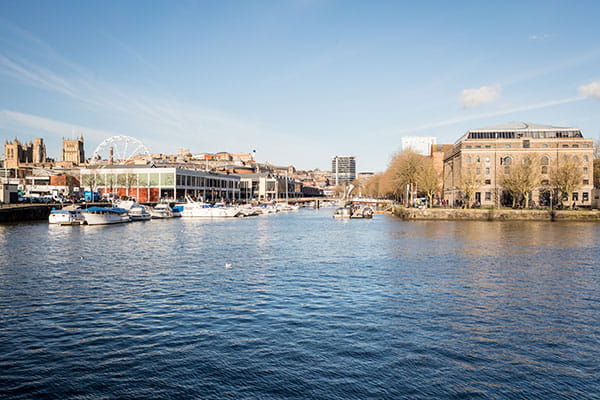
Bristol
A stunning city for student living with all the qualities to make you want to stay.

Sports, societies and activities
There is more to your experience here than study. Choose to make the most of it and try new things.

Health and Wellbeing
We provide support in the way you need it.

Campus and facilities
Discover our campuses and the wealth of facilities provided for our students.