
BA(Hons) Fashion Textiles
This course is open for applications
100% of BA(Hons) Fashion Textiles students are positive about the academic support on their course.National Student Survey, 2026.
Learn to create garments, accessories and textile collections for fashion and interiors through sustainably driven and digitally enabled design. Explore the full spectrum of fashion and specialise in one of three pathways: Fashion Design, Textile Design or Fashion Textile Futures.
About
Why study fashion textiles?
Fashion and textiles is a dynamic and influential creative field that brings together innovation, craftsmanship and commercial awareness. Today's fashion and textile designers are agile creatives with the skills to design responsibly and the vision to transform the future of the industry.
Why UWE Bristol?
Our industry-focused BA(Hons) Fashion Textiles develops your creative, technical and professional skills across both fashion and textile design. You'll study at City Campus; our creative powerhouse in Bristol, where you'll have access to dedicated studio spaces, specialist workshop facilities, and extensive library resources.
Develop studio, technical and digital skills in both fashion and textile design, translating 2D ideas into 3D through garment construction, textile print, knit, embroidery, pattern cutting and fashion futures.
Work with industry experts on live studio briefs, gain hands-on experience with an optional year in industry, or take part in international exchanges to places like Hong Kong or Berlin.
Showcase your work to talent scouts and potential employers at major events like Graduate Fashion Week, The British Fashion Council's Graduate Preview and the final year Degree Show.
Fashion Textiles students were shortlisted across multiple Graduate Fashion Week 2026 award categories including Fashion Innovation, Fashion Portfolio, Sportswear and Knitted Textiles.
Which of these courses is right for me?
We also offer our BA(Hons) Fashion Textiles with an integrated Foundation Year as preparation if you don't yet have the right qualifications to join at Year one.
Where can it take me?
Many of our graduates go on to secure successful careers with high profile designers and companies like Craig Green, Erdem, Matthew Williamson, COS and Victoria Beckham.
Some graduates set up their own businesses or go onto postgraduate study and research.
Follow UWE Fashion on Instagram.
The image above shows the fantastic work from one of our students (Alice Davis, 2023 Fashion Textiles graduate).
Student showcase

Technical sampling and design development by Jade Meinema.

'Along the Towpath' workwear collection by Jade Meinema.

'Stripes Stripes Stripes' textile collection by Emily Manion.

'Disonence' textile collection by Courtney Pitfield.

Design and toile development by Charlotte Edyvean.
Watch: Welcome to the School of Arts at UWE Bristol
Entry
Typical offers
You will need to meet the following Level 2 requirements:
- GCSE: Grade C/4 in English, or equivalent.
In addition to the above Level 2 qualifications, you'll need to achieve the published tariff points from your Level 3 studies prior to entry. Below is an indicative list of the main qualification types. However, we will consider any Level 3 qualifications towards meeting our entry requirements.
- Tariff points: 112
- Contextual tariff: See our contextual offers page.
- English Language Requirement:
International and EU applicants are required to have a minimum overall IELTS (Academic) score of 6.0 with 5.5 in each component (or approved equivalent*).
*The university accepts a large number of UK and International Qualifications in place of IELTS. You can find details of acceptable tests and the required grades you will need in our English Language section. Please visit our English language requirements page.
- A-level subjects: No specific subjects required.
- BTEC: No specific subjects required.
For information on required Guided Learning Hours please see our minimum entry requirements page.
- Access:
No specific subjects required.
- Baccalaureate IB:
No specific subjects required. We accept the IB Career-related Programme in conjunction with other Level 3 qualifications.
- Irish Highers: No specific subjects required.
- Welsh Baccalaureate: We accept tariff points achieved from the Advanced Skills Baccalaureate Wales in conjunction with other Level 3 qualifications.
- Cambridge Technical: No specific subjects required.
- T Levels: No specific subjects required.
Entry requirements
Selection process
We're looking for applicants who are curious, creative and eager to develop their practice, explore new ideas and contribute to a vibrant creative community.
- Applicants studying qualifications that we've identified as subject-relevant will be considered on the basis of their predicted or achieved grades, provided they meet our entry requirements.
- Applicants whose qualifications fall outside these subject-relevant areas will be asked to submit a digital portfolio. This helps us consider creative potential alongside academic achievement. For more details, please visit our selection page.
In some cases, we may also invite applicants to a short online discussion about their work and creative interests.
Our admissions approach is designed to be fair, inclusive and supportive. We recognise both academic achievement and creative potential, ensuring you have the opportunity to demonstrate your suitability for the programme in a way that reflects your individual strengths.
If you don't meet the entry requirements, you may be eligible for BA(Hons) Fashion Textiles (with Foundation Year).
International applicants
If you're applying to UWE Bristol from another country or region, visit the international study pages for tailored application information. If you're an international student and don't meet the academic requirements to study this course, you can qualify by completing one of our Art and Design foundation programmes.
If you're applying to study at UWE Bristol and require additional support to meet our English language requirements, you may be able to attend one of our pre-sessional English courses. Read more about our Pre-Sessional English Programme.
Read more about entry requirements.
How to apply
Read more about undergraduate applications.
Read more about international applications and key international deadline dates.
For further information
- Email:
UK applicants
Admissions@uwe.ac.ukInternational/EU applicants
International@uwe.ac.uk - Telephone:
UK applicants
+44 (0)117 32 83333International/EU applicants
+44 (0)117 32 86644
Structure
Content
You'll study:
Design Contexts
This module will introduce you to a range of research and creative methods used across different design disciplines. Through playful, collaborative and reflective experiences, you'll explore interdisciplinary ways of working, contexts for design, communication, group dynamics and co-creation. Indicative content includes drawing, writing and research for design, critical reflection, project and time management, professional ethics, presentation and exhibition. By experimenting with a range of practice and text based approaches, you'll develop creative problem-solving skills and a broader understanding of the interactive relationship between creator and user, and designer and client.
Introduction to Fashion Textiles
This practice and studio-based module will introduce you to fashion textiles and help you develop a core portfolio of subject-specific and interdisciplinary skills. You'll explore creative and critical approaches to fashion and textiles while becoming part of a collaborative studio culture. Through experimentation, research and making, you'll begin to understand the programme's wider design philosophy and test how ideas, materials and processes can be explored together. The module will build your confidence in developing, documenting and communicating creative and design work, providing foundations for later fashion textile study.
Design Studio 1 Developing Ideas through Form
This module will enable you to develop practical knowledge and skills in translating your ideas from 2D - 3D using a range of traditional hand, digital and experimental approaches to Pattern Cutting. Youll have the opportunity to apply your research in the generation and development of new ideas that explore new approaches to form, silhouette and proportion on the body. During this module you'll learn to how to professionally document your pattern cutting process, while building confidence in creative problem-solving and communicating the relationship between an idea and its physical form.
Design Studio 2 Design Methods
During this Studio module you'll explore and apply a range of creative design methods using 2D and 3D techniques, alongside skills in market research and client analysis. Following a full design methodology from research through to portfolio development you will synthesise all areas of your creative process to produce a coherent body of design work tailored to a selected market of your choice. Through reflection and feedback, you'll develop confidence in selecting suitable methods, documenting your development and making informed design decisions, establishing a foundation for more complex studio projects.
You'll study:
Design Studio 3 Industry Process
In this studio module, you'll develop your technical, creative and professional skills through taught studio sessions, advanced technical workshops and digital skills development. You'll build your understanding of market and client-focused research through primary research methods such as product analysis and in-store visits. You'll also develop an understanding of industry processes and protocols, applying these in the creation of industry-ready working drawings and tech packs. Throughout the module, you'll continue to develop and apply your pattern cutting skills, translating your 2D research into 3D samples and garments.
Design Studio 4 Design Innovation
This module is typically co-delivered as a live brief with an industry partner. You'll work on projects designed to build your skills and understanding in real world design contexts and will have the opportunity to develop innovative design work and/or creative outcomes that address for instance; accessibility, representation and/or sustainability. This module will give you the opportunity to explore user-centered design methods and to use creative problem solving through the design process to address your clients needs. You'll develop professional level presentation content such as Design Decks and Portfolios and will pitch your ideas to an audience.
Optional modules:
You'll study:
Either
- International Exchange*
Or
- Design Studio 5 Industry Practice**
- Design Futures.**
*Compulsory (and only available to study) if you participate in an International Exchange.
**Not available to study if you participate in an International Exchange.
Placement year (if applicable)
If you study on the four year (sandwich) course, you'll spend a year away from the University on a work placement after year two.
You'll study the Fashion Textiles Professional Development on Placement module.
See the Placements and Fees sections for more information.
You'll study:
Design Research Project
This module will help you connect design practice with deeper theoretical, contextual and research-based enquiry. You'll undertake an independent research project shaped by your own interests, exploring topics relevant to your design discipline through creative and critical analysis and investigation. The module will support the development of higher level research methods, project management, communication skills and professional awareness, while encouraging creative and analytical thinking. Through tutorials, workshops and independent study, you'll learn how to synthesise research, evaluate evidence and communicate findings effectively within design-led contexts.
Design Studio 6 Part 1 - Ideation and Development
During this module you will identify and develop your own individual research enquiry, synthesising your research interests, creative strengths and graduate ambitions in the development of an experimental body of practice-led research that will underpin the development of your creative outcomes in the next module. Studio teaching, tutorials and ongoing technical support will facilitate an increasingly independent approach to ideation, creative exploration and design development, and you'll have the opportunity to explore and test your concepts through a range of creative techniques, processes and materials. By the end of the module, you'll have a body of innovative research, ideation and design work that will underpin your development in the next module.
Graduate Development and Progression
This module will help you prepare for life after graduation through the development of professional skills aligned to one of three graduate destinations: industry and employment, postgraduate study and research, or enterprise development. The module is co-delivered with industry colleagues, and in addition to professional skills development, you'll work on new, externally facing design briefs that showcase and synthesise your subject expertise with your Graduate ambitions. Through discussion, research and reflective practice, you'll strengthen your communication, evaluative and professional planning skills while preparing for your preferred Graduate progression route.
Design Studio 6 - Part 2 Design and Realisation
This module will support you in realising a substantial self-directed project that showcases your unique approach to Fashion Textiles combined with the specialist creative, technical and academic skills you have developed on the programme. Working towards either Fashion, Textiles or Fashion Textile Futures Outcomes you'll design and realise your most innovative and ambitious ideas yet. Through studio-based learning, technical workshops and critical discussion, you'll apply experimental, problem-solving and reflective approaches throughout the design process. Working within a structured yet flexible framework, you'll develop and refine ideas through to a series of resolved outcomes which will form the basis of your Graduate Portfolio.
The optional modules listed are those that are most likely to be available, but they may be subject to change.
If you complete the sandwich placement year, the Final year module Design Studio 6 - Part 1 Ideation and Development, won't be available to study.
This structure is for full-time students only. Part-time students study the same modules but the delivery pattern will be different.
The University continually enhances our offer by responding to feedback from our students and other stakeholders, ensuring the curriculum is kept up to date and our graduates are equipped with the knowledge and skills they need for the real world. This may result in changes to the course. If changes to your course are approved, we'll inform you.
"My course offered fantastic facilities, workshops and equipment to help me exercise my creativity and develop as a young designer. I started interning after I graduated, where I had the chance to work at London Fashion Week. I now work as a Junior Designer at Superdry." Emilia, Fashion Textiles graduate
Learning and Teaching
This practice-based course offers learning in design studios and technical resource centres. You'll engage in individual projects and collaborative briefs, with on-campus studio sessions averaging two days a week.Teaching methods include studio teaching, Design tasks, technical workshops, lectures, seminars, and tutorials. You'll produce a range of outcomes, such as 2D Design Work, 3D garments, textile collections, technical sampling, sketchbooks, essays, reports, presentations, and CAD work.After induction into technical workshops, you'll be able to access resources independently and work on set briefs, creative tasks and projects.
You'll explore graduate opportunities, develop enterprise skills, and participate in live projects, industry briefs, competitions, and placements. In the final year, you'll develop a body of work tailored to your creative and professional interests.Guest lecturers and industry experts provide professional input. You'll get to showcase your work at high-profile events like our annual Degree Show, Graduate Fashion Week and London Fashion Week Digital.
See our full glossary of learning and teaching terms.
Study time
In a typical week in your first year, you could expect to be timetabled with academic and technical staff for an average of 12 hours, with the expectation that you'll also work on practice and assessment tasks through independent self-study for an additional 12-18 hours.
Assessment
There are no exams on this course and you'll be assessed through design-based course work, presentations, written assignments and research projects.
Learn more about assessments.
Fees
Full-time, sandwich course
Part time course
Supplementary fee information
Please note, the above tuition fees for home students are charged in the first academic year of study but may increase in subsequent years for both new and continuing students. This increase will track the tuition fee cap which is determined by government and is expected to increase in line with inflation. UWE Bristol will likely maintain its fees for new and returning home students at the maximum permitted level for each year of study.
The placement year fee will also increase when the fee cap changes so please use the above placement year fee for indication purposes only.
Your overall entitlement to funding is based on how long the course is that you're registered on. Standard funding is allocated based on the standard number of years that your course lasts, plus one additional year.
You'll apply for funding each year that you study and Student Finance will take into account how long the course is in each year that you apply. So if you register for the four year course and then transfer to the three year course, the number of years you can apply for funding will change. Student Finance will reassess your funding based on how many years you have been in study, not just those years for which you received student finance.
Always seek advice before taking any action that may have implications for your funding.
Additional costs
This refers to items you could need during your studies that aren't covered by the standard tuition fee. These could be materials, textbooks, travel, clothing, software or printing.
Features
Placements
Students who get work experience tend to graduate with better degrees. Experience also hones your skills, industry knowledge and professional network, making you a sought after graduate.
Professional practice is key to this course and you'll have an opportunity to do a work placement at every level to develop your professional skills. You'll also build your network as you progress through the course and learn how to promote and position yourself, and how build a compelling portfolio to take to employers.
If you choose the four year (sandwich) course, you'll spend a year away from the University on a work placement after Year two. Past students have completed Internships with fashion labels such as JW Anderson, Iris Van Herpen, Erdem, Vivienne Westwood and Helen Kirkham.
Get help to find your placement and support throughout from staff within the School and our award-winning careers service.
Study exchange
Broaden your perspective by taking part in our international or European exchange programme, spending a semester at one of our partner universities. Partner universities abroad.
Increase your confidence, intercultural communication skills and boost your employability.
Explore our study abroad pages to find out more.
Fieldwork
Go on regular trips to London and other major cities so you can source new materials and conduct research in galleries, museums and archives.
Visit Trade Shows, Archives and undertake In-Store visits to broaden your knowledge and inspire your creative development.
Study facilities
Learn at our City Campus, with access to industry-standard technical and creative resources.
Construct garments in our industry standard sample and sewing room and develop technical skills in knit and digital embroidery. Access printed textiles rooms with facilities for screen print, dyeing, fabric manipulation, embellishment and decoration, plus digital, photo and heat transfer printing.
Experiment with materials, alternative forms and wearables in our physical making studios. Bring 2D ideas to life in our print centre, using the latest equipment for screen printing, etching, digital printing and lithography.
A mix of traditional and hands-on learning environments helps you quickly take on essential knowledge and skills, standing you in good stead for your professional career.
Learn more about UWE Bristol's facilities and resources.
Take a personalised virtual tour of the Fashion facilities and experience what a typical day could look like here for you.
Personalised virtual tour
There's no need to visit us in person to explore our facilities and campuses. Take a personalised virtual tour and discover it all for yourself from wherever you are.
Take a virtual tourCareers
Careers / Further study
Our graduates go on to careers in industry, enterprise or further study, taking on roles such as fashion designer, textile designer, product developer, pattern cutter, studio manager or fashion buyer.
Take a look at how our graduates Amy and Michalis are changing the future of fashion.
You'll benefit from regular professional input from guest lecturers, past Industry speakers include Christopher Shannon, ASOS, Superdry, Richard Malone and COS.
As well as making sure that the course reflects industry, experts come in to present and deliver live briefs. Recent collaborative partners include Phoebe English, Bethany Williams and Workwear Solutions International.
Showcase your work at some of the UK's highest profile Graduate Events such as Graduate Fashion Week, British Fashion Council Graduate Preview Day and London Fashion Week Digital.
Read how one of our former students won the prestigious Venture Ready Award after setting up her sustainable fashion business, AKN JEANS.
Our Degree Show showcases our most exciting graduate work in art, design, filmmaking and media. We also encourage you to show work on and off-line throughout the course and will help you develop the skills to do this. See our showcase of student work from the BA(Hons) Fashion Textiles course at UWE Bristol.
Developing professional, research, enterprise and transferable skills - including collaboration, communication and project management - will equip you with the skills and confidence you need to progress into your preferred future. Whatever you choose to do, our team of subject experts are there to support you.
Have a look at some of our students' latest work in our 2023 yearbook, 2024 yearbook, 2025 yearbook and 2026 yearbook.
Get inspired
Our award-winning careers service will develop your employment potential through career coaching and help find you graduate jobs, placements and global opportunities.
We can also help find local volunteering and community opportunities, provide support for entrepreneurial activity and get you access to employer events.
Visit our Graduate destinations pages to learn more about careers, employers and what our students are doing six months after graduating.
Jade Jackson: Student Showcase
Hear from BA(Hons) Fashion Textiles graduate, Jade Jackson, about their Extended Study Project.
Life
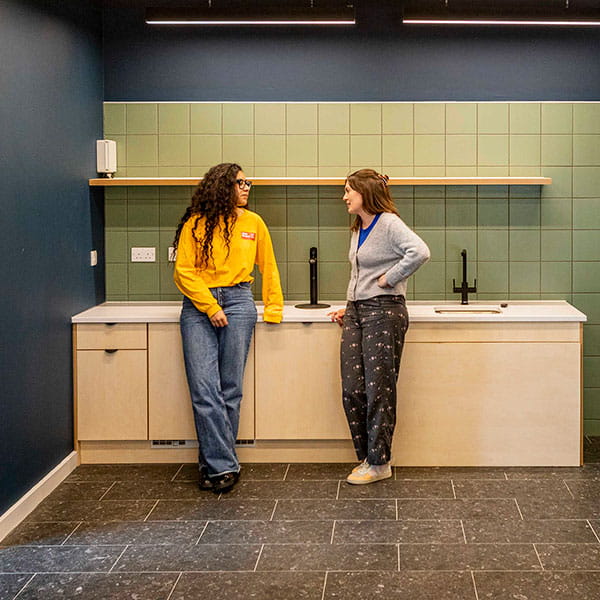
Accommodation
An excellent range of options for all of the Bristol campuses and the city centre.
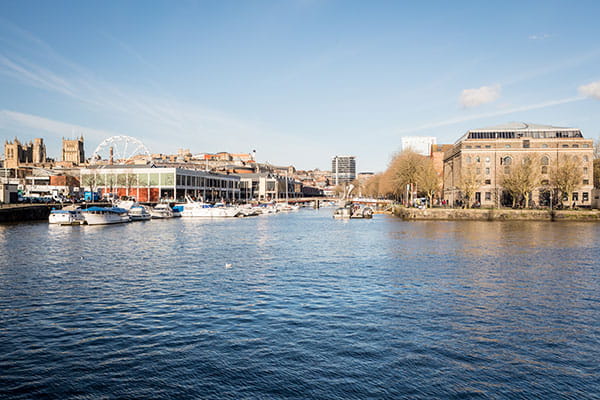
Bristol
A stunning city for student living with all the qualities to make you want to stay.

Sports, societies and activities
There is more to your experience here than study. Choose to make the most of it and try new things.
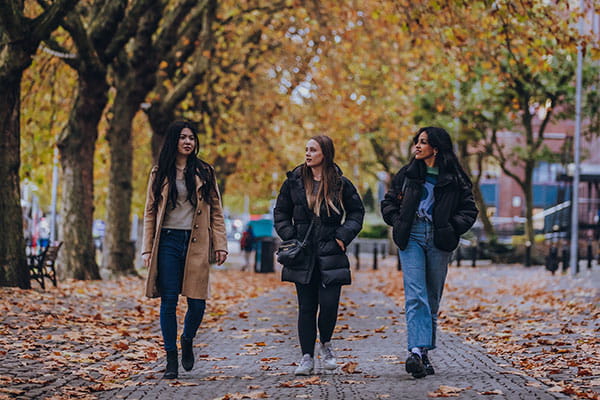
Health and Wellbeing
We provide support in the way you need it.
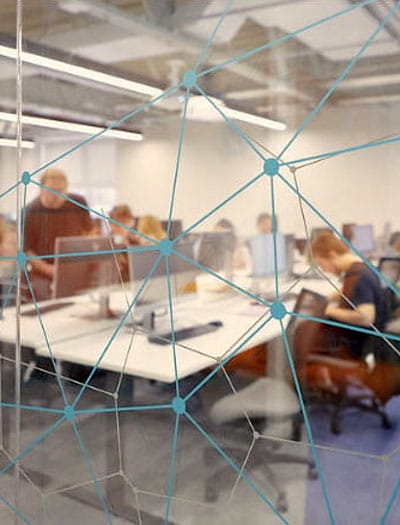
Campus and facilities
Discover our campuses and the wealth of facilities provided for our students.