
BA(Hons) Creative and Professional Writing
This course is open for applications
Study the worlds of creative and professional writing through fiction, non-fiction, screenplays, stage scripts, cultural criticism, publishing, and corporate copywriting. A degree in Creative and Professional Writing will allow you to explore your unique creative ambitions.
About
Why study creative and professional writing?
A degree in creative and professional writing will equip you with the skills and experience to succeed as a writer in one of the UK's fastest-growing sectors. BA(Hons) Creative and Professional Writing offers an industry-focused multi-disciplinary approach that helps you build the insight, habits, and knowledge to thrive in a writing career.
Why UWE Bristol?
BA(Hons) Creative and Professional Writing nurtures your identity as a writer, fuels creativity and sharpens critical thinking. You'll gain transferable skills to prepare you for a wide range of careers in which communication matters. You'll work on live briefs from real-world clients, gain confidence in your own voice and pursue personal projects that develop your craft as an author.
Our Creative and Professional Writing degree is part of the innovative New Humanities group - an exciting, contemporary approach to the arts and humanities. Join a dynamic academic community where you'll learn from experts in their field and benefit from globally recognised research in topics including Immersive Theatre and Creative Practice.
You'll learn by doing, taught by working writers. Our lecturers are prize-winning novelists, non-fiction authors, award-winning scriptwriters, and industry-leading copywriters. They know what it takes to sustain a writing career and are ready to help you do the same.
To build your profile, you'll have plenty of chances to get published through student media including Hub Radio and magazine, creative agency New Wave and our very own literary journal: Nova. Our strong industry links offer regular exposure to employers and paid opportunities. We're connected with Bristol's leading cultural organisations and commercial partners, including Watershed, Spike Island, and the Arnolfini, giving you access to a wide creative network.
And in your final year, the degree show offers you the opportunity to celebrate your work and connect with industry.
Where can it take me?
The real question is: how far do you want to go?
Our graduates thrive in publishing, media, marketing, PR, journalism, advertising, and communications. Some teach, work in charities, pursue postgraduate study or launch copywriting businesses. Others have leaned into their ambitions to author novels, screenplays, or non-fiction.
Whatever your path, a degree in BA(Hons) Creative and Professional Writing will develop the sharp thinking, strong writing, and powerful communication skills essential for a successful career.
"UWE Bristol has clearly one of the most forward-thinking creative writing courses in the country, with an eye on employability [and] also on the demands that are made of the 21st century writer if they are to thrive in the commercial climate." Matt Thorne, External Examiner.
Student showcase
Watch: Welcome to the School of Arts at UWE Bristol
Entry
Typical offers
You will need to meet the following Level 2 requirements:
- GCSE: Grade C/4 in English, or equivalent.
Level 3
In addition to the above Level 2 qualifications, you'll need to achieve the published tariff points from your Level 3 studies prior to entry. Below is an indicative list of the main qualification types. However, we will consider any Level 3 qualifications towards meeting our entry requirements.
- Tariff points: 112
- Contextual tariff: See our contextual offers page.
- A-Levels: No specific subjects required.
- T Levels: No specific subjects required.
- BTEC: No specific subjects required.
For information on required Guided Learning Hours please see our minimum entry requirements page.
- Access: No specific subjects required.
- International Baccalaureate: No specific subjects required. We accept the IB Career-related Programme in conjunction with other Level 3 qualifications.
- Cambridge Technical: No specific subjects required.
- Irish Highers: No specific subjects required.
- Welsh Baccalaureate: We accept tariff points achieved from the Advanced Skills Baccalaureate Wales in conjunction with other Level 3 qualifications.
- English Language Requirement:
International and EU applicants are required to have a minimum overall IELTS (Academic) score of 6.0 with 5.5 in each component (or approved equivalent*).
*The University accepts a large number of UK and International Qualifications in place of IELTS. You can find details of acceptable tests and the required grades you'll need in our English Language section. Please visit our English language requirements page.
Entry requirements
International applicants
If you're applying to UWE Bristol from another country or region, visit the international study pages for tailored application information. If you're an international student and don't meet the academic requirements to study this course, you can qualify by completing preparatory study at our International College.
If you're applying to study at UWE Bristol and require additional support to meet our English language requirements, you may be able to attend one of our pre-sessional English courses. Read more about our Pre-Sessional English Programme.
Read more about entry requirements.
How to apply
Read more about undergraduate applications.
Read more about international applications and key international deadline dates.
For further information
- Email:
UK applicants
Admissions@uwe.ac.ukInternational/EU applicants
International@uwe.ac.uk - Telephone:
UK applicants
+44 (0)117 32 83333International/EU applicants
+44 (0)117 32 86644
Structure
Content
You'll study:
Human Stories
This interdisciplinary module will explore the complex world of stories across creative writing, film, language, literature, history and media. You'll consider the personal, public and political importance of storytelling, investigating how narratives are created, communicated and interpreted within different disciplines. Through subject-specific and interdisciplinary learning activities, you'll recognise connections between different forms of storytelling. Along the way, you'll develop critical literacy and the skills needed to navigate and shape a world structured by stories, while examining the ethical dimensions of individual, collective and disciplinary practices.
The Fundamentals of Writing Fiction
This module will introduce the fundamental techniques of writing fiction and help you develop creative confidence through reading, practice and reflection. You'll study contemporary fiction from a writer's perspective across a range of forms and lengths, which may include novels, short stories or flash fiction for different audiences. Learning to read as a writer will help you recognise how published texts use craft techniques. Through regular writing and workshop practice, you'll develop your own creative work, respond constructively to feedback and build confidence in revising your fiction.
The Fundamentals of Non-fiction and Copy
This module will develop your writing across narrative non-fiction and copywriting through interactive workshops and seminars. You'll explore subjects that interest you, which could include a historical period, work of art, life story, personal event or scientific discovery, using research and interviews where appropriate. Topics will move from memoir and writing about the self to narrative accounts of the world and essays about ideas. Alongside this, you'll practise concise copywriting, develop your individual voice and learn how perspective, detail and narrative can shape effective communication.
The Fundamentals of Writing Scripts
This module will introduce the craft of writing scripts for audiences across stage, film, television, radio and digital platforms. Through practical experimentation, textual analysis and collaborative workshops, you'll explore dialogue, subtext, character development, voice, structure, theme and action-led storytelling. Published scripts from varied backgrounds, cultures and orientations will help you investigate how shared principles adapt across media. Round-table readings and constructive critique will support you in developing ideas through to completion, while strengthening your confidence in giving, receiving and applying feedback.
You'll study:
Human Futures
This module will invite you to explore possible human futures through creative practice, research and critical enquiry. You'll consider how social, cultural, technological and environmental change may influence the ways people live, work and relate to one another. By examining contemporary questions and speculative possibilities, you'll develop ideas that connect your subject practice with wider concerns. The module will encourage experimentation, collaboration and reflection, helping you communicate responses to complex issues and consider how creative work can contribute to imagining and shaping future worlds.
The Novelist's Workshop: Genre, Form and Editorial Techniques
This workshop-based module will develop your skills as a novelist through advanced study of structure, pace, plot, characterisation and dialogue. You'll analyse these elements from a writer's perspective and create original fiction for constructive discussion with others. Editorial analysis, rigorous editing and redrafting will help you make purposeful revisions and respond confidently to feedback. Through reading, writing and workshop participation, you'll become a more versatile communicator and problem-solver, while deepening your understanding of the techniques needed to shape and sustain effective fiction.
Writing for Stage, Screen, Audio and Digital Media
In this module, you'll explore writing for performance across stage, screen, audio and digital media. You'll examine the specific skills required by different forms, together with methods of commissioning, production and performance across the creative industries. Genre expectations, target audiences and collaborative processes will shape your experiments with varied formats and themes. By analysing scripts and significant works, you'll consider how audiences receive new writing. Practical work will help you match your individual creativity to the demands of different media and professional contexts.
Optional modules:
You'll study one module from:
- Poets and Cultural Commentators
- Ideation, Platforms and Commercial Writing.
Placement year (if applicable)
If you study on the four year (sandwich) course, you'll spend a year away from the University after Year two, on a work placement.
You'll complete the Professional Development on Placement module.
See the Placements and Fees sections for more information.
You'll study:
Humanities Research Project
The Humanities Research Project will give you the opportunity to undertake an extended, self-directed investigation within your chosen discipline. You'll develop a research proposal, refine your methodology and manage a substantial independent project while building skills in planning, organisation and scholarly enquiry. Opportunities for supervision, discussion and interdisciplinary exchange will support your development throughout the module. As your project progresses, you'll learn to communicate findings clearly, evaluate challenges critically and reflect on your personal learning journey, producing research that contributes to wider humanities knowledge and understanding.
A Career in Fiction
This module will introduce the professional world of fiction writing and the skills needed to develop a career within the industry. You'll investigate contemporary publishing conventions, explore how fiction is commissioned and consider the different forms of writing required of professional authors. Live briefs may involve creating both creative work and promotional materials, helping you understand how writing operates within commercial contexts. Alongside developing genre awareness, editorial skills and market knowledge, you'll strengthen your research, collaboration and critical reflection while gaining insight into how fiction reaches readers.
Optional modules:
You'll study modules (the amount depending on credit requirement)* from:
- The Working Scriptwriter
- Publishing from Commission to Print
- Text, Image, Other: Creative Writing and the Self
- The Professional Copywriter.
*The number of these modules that you take depends on whether you complete the sandwich placement year. If you do complete it, you'll study one of them. If you don't, then you'll study two.
The optional modules listed are those that are most likely to be available, but they may be subject to change.
This structure is for full-time students only. Part-time students study the same modules but the delivery pattern will be different.
The University continually enhances our offer by responding to feedback from our students and other stakeholders, ensuring the curriculum is kept up to date and our graduates are equipped with the knowledge and skills they need for the real world. This may result in changes to the course. If changes to your course are approved, we'll inform you.
Learning and Teaching
Learn through workshops, seminars, lectures, and one-to-one tutorials and independent study.
Sharpen your writing across different forms and various audiences. Build professional skills through live briefs, placements, and freelance work. Learn to promote yourself and explore opportunities in publishing, marketing, and design.
Research and creative practice are embedded in every module. You'll develop your own skills and collaborate with academics and partners shaping the field.
You'll be supported to launch creative initiatives like journals and writing groups. An Academic Personal Tutor will guide and support you throughout.
See our full glossary of learning and teaching terms.
Study time
Each week, you'll have around 12 hours of scheduled contact time through workshops, seminars, lectures, project work, and tutoring. It's a varied mix designed to support your learning and keep you engaged.
Outside of contact time, you'll be expected to spend at least 12 hours on independent study including reading, researching, and working on assignments to deepen your understanding and prepare for assessments.
Assessment
You'll be assessed through your creative and reflective writing, independent projects, examinations, and oral presentations. You'll graduate with a portfolio of writing to showcase your skills to employers.
Learn more about assessments.
Meet the teaching team
The staff profiles shown reflect the teaching team for this course at the time of publication. Teaching staff may change depending on your year of entry.
Fees
Full-time, sandwich course
Part time course
Supplementary fee information
Please note, the above tuition fees for home students are charged in the first academic year of study but may increase in subsequent years for both new and continuing students. This increase will track the tuition fee cap which is determined by government and is expected to increase in line with inflation. UWE Bristol will likely maintain its fees for new and returning home students at the maximum permitted level for each year of study.
The placement year fee will also increase when the fee cap changes so please use the above placement year fee for indication purposes only.
Your overall entitlement to funding is based on how long the course is that you're registered on. Standard funding is allocated based on the standard number of years that your course lasts, plus one additional year.
You'll apply for funding each year that you study and Student Finance will take into account how long the course is in each year that you apply. So if you register for the four year course and then transfer to the three year course, the number of years you can apply for funding will change. Student Finance will reassess your funding based on how many years you've been in study, not just those years for which you received student finance.
Always seek advice before taking any action that may have implications for your funding.
Additional costs
This refers to items you could need during your studies that aren't covered by the standard tuition fee. These could be materials, textbooks, travel, clothing, software or printing.
Features
Placements
Work experience is valuable if you're entering the creative industries. It hones your skills, industry knowledge, and professional network, making you a sought-after graduate.
Opt for the four-year (sandwich) course, and you'll spend your third year on a work placement, stepping out of the classroom and into the real world. Your placement will last a minimum of 26 weeks and will be directly relevant to your course, giving you valuable insight and hands-on experience.
Our award-winning careers service will guide and support you to help you in finding the right placement.
Find out more about our work experience and placements.
Study facilities
You'll study at Frenchay Campus, housing a well-equipped library with an extensive collection of books, journals, DVDs and digital resources. Whether you prefer quiet study, group work or creative inspiration, there's a space to suit your style.
Build practical skills in blogging, editing and desktop publishing using industry-standard tools like WordPress and Adobe InDesign.
Gain easy access to lecture slides, core readings and assignment guidance through our Blackboard Ultra Virtual Learning Environment (VLE).
Learn more about UWE Bristol's campus and facilities.
Take a Virtual Tour of the English and Creative Writing facilities and see what's on offer here for you.
Writing project
Undertake an extended creative writing project in your final year, to explore ideas that inspire you, strengthen your individual style and build your confidence as a writer. Feedback from tutors will help you develop, and assess, your writing from a professional standpoint.
Learn vital entrepreneurial and project management skills for a freelance career in the creative and cultural industries. Access volunteering opportunities and internships with local cultural organisations.
Get involved
Bristol is a major creative hub for the arts, and our staff have strong relationships with local organisations and event organisers. We'll encourage you to showcase your entrepreneurship and creativity by developing your own writing portfolio and collaborating with students in subjects like graphic design and marketing.
Build your portfolio
Develop your news sense, working with UWE Bristol student media, including the Hub Radio and Hub Voice student magazine. Literary magazine Nova, published by our students, gives you the opportunity to showcase your creative writing. You can also bring creative screenplays to life in collaboration with our Filmmaking and Drama and Acting students in the School of Arts.
Socialise and learn
Supplement your studies with trips to cultural events and visits from highly experienced industry professionals. We'll also encourage you to set up your own social and creative enterprises, such as blogs, zines and writing groups.
Personalised virtual tour
There's no need to visit us in person to explore our facilities and campuses. Take a personalised virtual tour and discover it all for yourself from wherever you are.
Take a virtual tourCareers
Careers / Further study
Prepare for an exciting future in the cultural and creative industries. Tailoring what and how you study, you can shape the course towards your chosen career path.
You'll graduate with an impressive blend of subject and trade-specific writing expertise, and a range of highly transferable skills. You could establish a career in a wide range of professions including the arts, creative media, and marketing.
You'll also be equipped for a career in publishing, editing, digital content creation, festival and cultural event management, and teaching.
Get inspired
Our award-winning careers service can help develop your employment potential through career coaching and help you to find graduate jobs, placements and global opportunities.
We can also help find local volunteering and community opportunities, provide support for entrepreneurial activity, and get you access to employer events.
Visit our Employability pages to learn more about careers, employers and what our students are doing six months after graduating.
Learn more about our graduate destinations.
Start your dream career at UWE Bristol
Life
Accommodation
An excellent range of options for all of the Bristol campuses and the city centre.
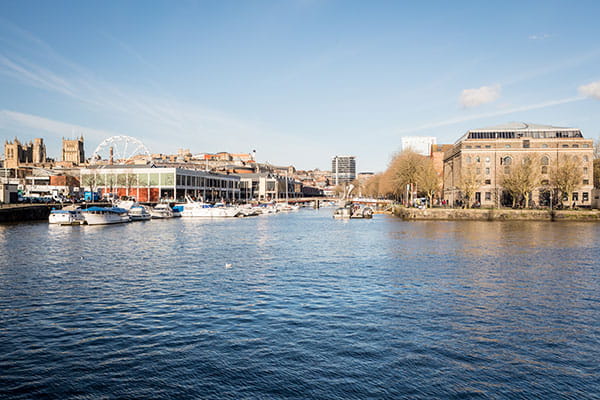
Bristol
A stunning city for student living with all the qualities to make you want to stay.

Sports, societies and activities
There is more to your experience here than study. Choose to make the most of it and try new things.

Health and Wellbeing
We provide support in the way you need it.

Campus and facilities
Discover our campuses and the wealth of facilities provided for our students.