
BA(Hons) Education
This course is open for applications.
90% of Education students are satisfied with the teaching of their course overall.The Sunday Times Good University Guide 2026
Make yourself highly employable on this future-facing education degree, which is informed by principles of sustainability and can be adapted to your interests. Develop specialist knowledge and skills in the areas of Special Educational Needs and Disabilities (SEND) and Digital Learning.
About
Why study education?
How and where people learn, and what influences that learning, is constantly evolving. With advances in digital technology creating new learning tools and experiences, it's an interesting time to work in this field.
Learning isn't just something that takes place in schools. Designing and improving how learning happens has relevance in all areas of work and society, so graduates are prepared for employment across diverse sectors and roles.
Why UWE Bristol?
Study our BA(Hons) Education and you'll examine education for all ages, in both formal and informal settings, including schools, workplaces, communities and wider society. Benefit from Bristol's diverse education community, with many organisations pushing boundaries using the latest teaching and learning innovations.
Explore the role of education as a positive force for change in society and develop your understanding of the design and improvement of learning in different contexts, informed by principles of sustainability. Digital Learning and SEND are important specialist threads within the course, offering you strong transferable skills and an awareness of professional practice that's sought after by employers.
Gain work-based learning experiences, with UK or international work experience opportunities. You'll also have the flexibility to tailor your modules and assessments to your interests, keeping your learning relevant to your chosen career path.
Where can it take me?
By the end of your education degree, you'll have gained strong transferable skills, SEND and Digital Learning awareness and knowledge of making learning accessible for all. You'll be equipped to make a positive difference across a range of educational settings, with the skillset to get you noticed by employers.
You could find work in formal or informal education settings, creative or cultural organisations, or industry or local government as an education, digital education or inclusion specialist. You could also go on to teacher training or a master's in education, or a chosen specialist area.
Watch: Welcome to the School of Education and Childhood at UWE Bristol
Entry
Typical offers
You will need to meet the following Level 2 requirements:
- GCSE: Grade C/4 in English, or equivalent.
Level 3
In addition to the above Level 2 qualifications, you'll need to achieve the published tariff points from your Level 3 studies prior to entry. Below is an indicative list of the main qualification types. However, we will consider any Level 3 qualifications towards meeting our entry requirements.
- Tariff points: 104
- Contextual tariff: See our contextual offers page.
- A-Levels: No specific subjects required.
- T Levels: Pass (A*-C) in any subject.
- BTEC: No specific subjects required.
For information on required Guided Learning Hours please see our minimum entry requirements page.
- Access:
No specific subjects required.
- International Baccalaureate:
No specific subjects required. We accept the IB Career-related Programme in conjunction with other Level 3 qualifications.
- Cambridge Technical: No specific subjects required.
- Irish Highers: No specific subjects required.
- Welsh Baccalaureate: We accept tariff points achieved from the Advanced Skills Baccalaureate Wales in conjunction with other Level 3 qualifications.
- English Language Requirement:
International and EU applicants need a minimum overall IELTS (Academic) score of 6.0, with 5.5 in each component (or approved equivalent*).
*The University accepts a large number of UK and international qualifications in place of IELTS. You can find details of acceptable tests and the required grades in our English language section. Please visit our English language requirements page.
Entry requirements
In addition to the qualifications listed above, apprenticeships will be considered on an individual basis.
If you don't meet the entry requirements of this course, you may be eligible for the BA(Hons) Education (with Foundation Year). Please contact the programme leader if you want to discuss your options or have further questions.
Before you start your course, you'll be required to complete:
- an enhanced Disclosure and Barring Service (DBS) check*
- a health check.*
*All information will be treated in confidence and only taken into account when absolutely necessary.
Read more about professional checks.
International applicants
If you're applying to UWE Bristol from another country or region, visit the international study pages for tailored application information. If you're an international student and don't meet the academic requirements to study this course, you can qualify by completing preparatory study at our International College.
If you're applying to study at UWE Bristol and require additional support to meet our English language requirements, you may be able to attend one of our pre-sessional English courses. Read more about our pre-sessional English Programme.
Read more about entry requirements.
How to apply
- Read more about undergraduate applications.
- Read more about international applications and key international deadline dates.
For further information
- Email:
UK applicants
Admissions@uwe.ac.ukInternational/EU applicants
International@uwe.ac.uk - Telephone:
UK applicants
+44 (0)117 32 83333International/EU applicants
+44 (0)117 32 86644
Structure
Content
You'll study:
Education, Society and Inclusivity
In this module, you'll examine the role of education in society and consider how educational practices can promote or restrict inclusion, equity and social justice. You'll explore sociological perspectives on educational inequality across formal and informal settings, including the influence of history, politics and policy. Themes will include curriculum and pedagogical traditions, human rights, educational achievement, disability and special educational needs, sustainability, and structures shaped by ethnicity, gender and class. Through critical discussion, you'll consider the educator's role and the potential for education to contribute to social transformation and change.
Learning Journeys
This module will help you understand how you and others learn, while encouraging you to reflect on your own learning journey. You'll explore psychological theories of learning and learner development, considering how different contexts influence experiences and progress. You'll examine approaches to reflective practice and use these to identify what supports or challenges your development as a learner. By connecting theory with personal experience, you'll build the skills to plan meaningful actions for future learning. The module will support your development as an independent, reflective and successful lifelong learner.
Becoming an Educator
In this module, you'll explore what it means to be an educator across a range of contemporary contexts. Building on your existing knowledge and experience, you'll examine theories of learner development and effective teaching, and begin to evaluate the relationships between them. You'll consider different pedagogical practices, philosophical perspectives, government policy and current issues in education. Inclusive practice will be central as you develop and justify appropriate educational responses for varied settings and structures. You'll also build an understanding of safeguarding requirements while reflecting on professional practice, employability and future career development.
Exploring Digital Learning
This module will introduce you to learning technologies through both practical experience and critical exploration. You'll develop technical skills in workshops and examine how digital tools are used across different educational contexts. Topics will include government digital strategy, mobile learning, gamification, extended reality, generative AI and large language models, online learning and MOOCs. You'll consider real education-technology solutions alongside ethical questions and the need for accessible, inclusive digital learning. Through case studies, hands-on activities and professional perspectives, you'll reflect on how technology can shape education, teaching and learning.
You'll study:
Becoming a Researcher
This module will introduce the theories, philosophies and methodologies that underpin educational and professional research. You'll explore the distinction between research and practice, examine different research traditions and consider the ethical frameworks that guide responsible enquiry. Topics may include reflexive practice, research methodologies and methods relevant to your field of study. Through engagement with these ideas, you'll begin to develop your identity as a researcher, critically reflect on your own position and prepare for future research projects within your professional context.
Inclusive Digital Learning Design
This module will explore how digital technologies can be used to design inclusive and effective learning experiences. You'll investigate the relationship between pedagogy, learner needs and digital solutions while developing skills in planning, designing, developing and evaluating learning resources. Topics may include digital literacies, mediated learning tools, problem-solving approaches and strategies for meeting diverse learning needs. Through practical engagement with a range of technologies, you'll learn how to evaluate existing solutions and create innovative learning designs that support accessibility, participation and learner success.
Meeting Diverse Needs
In this module, you'll explore approaches to supporting the diverse needs, aspirations and interests of learners across educational contexts. You'll examine theory, policy and practice related to inclusion, diversity and intersectionality, considering how barriers to learning can be addressed through inclusive approaches. The module will encourage engagement with research and lived experience, helping you understand the perspectives of different learners. By evaluating environments, partnerships and practical strategies, you'll develop the knowledge and skills needed to create responsive and enabling educational experiences.
Educational Policy
This module explores how educational policy is developed, interpreted and translated into practice. You'll examine the policy-making process, the stakeholders involved and the different ways policy is framed within public and political discourse. Through critical engagement with policy analysis, you'll consider how educational agendas influence learning environments, professional practice and outcomes for learners. The module encourages you to evaluate the impact of policy within specific contexts while developing your understanding of the relationship between policy, implementation and educational change.
Education in Practice
This module will provide the opportunity to apply educational theory within a practice-based learning environment while developing the knowledge, skills and attributes needed for professional practice. You'll engage with reflective practice models to help evaluate your experiences and consider how learning and teaching theories operate in real educational settings. Areas of exploration may include pedagogical approaches, diverse learner experiences, curriculum in practice and professional development. Throughout the module, you'll strengthen your reflective capabilities and consider future career pathways within education.
You'll study:
Education Project
This module will enable you to design, develop and critically reflect on an education-focused research project in an area that interests you. You'll identify a research focus or question, explore philosophical approaches and methodologies, consider ethics, select methods, work with participants and present and write up your findings. Drawing on educational theory, research and policy, you'll learn to recognise and respond to moral and ethical issues. Your outcome may be a traditional dissertation or practice-based or practice-led work, supporting reflection on practice, employability and career development.
International Comparative Education
Taking a global perspective, this module will examine beliefs, policies and practices in education across different cultures and societies. You'll explore how national comparisons of educational outcomes are produced and used, critically assessing the strengths and limitations of comparative measures. Alternative ways of understanding the purposes, practices and outcomes of education will broaden your analysis. The module will consider supranational organisations and help you evaluate education's relationship with societal challenges, enabling you to develop a critically informed international perspective on educational practice and outcomes.
Lifelong Learning
This module will explore learning across the lifespan and the varied settings, purposes and experiences associated with lifelong education. You'll critically consider how social, cultural, economic and policy contexts can shape participation, opportunity and educational practice. The module will encourage you to examine different understandings of learning and to connect theory with contemporary issues and professional contexts. Through engagement with research and debate, you'll develop your ability to analyse educational experiences, evaluate evidence and form reasoned perspectives on the role of lifelong learning in individuals' lives and wider society.
Debates in Education
This module will introduce key contemporary debates in education and support you to examine contrasting perspectives critically. You'll explore how policy, research, values and social contexts shape educational questions and professional practice. Topics will enable you to consider the purposes of education, experiences of learners and the implications of different approaches to change, inclusion and improvement. Through reading, discussion and analysis, you'll learn to evaluate evidence, recognise assumptions and construct reasoned arguments. The module will strengthen your confidence in communicating an informed position on complex educational issues.
Year one
You'll study:
- Becoming an Educator
- Education, Society and Inclusivity
- Exploring Digital Learning
- Learning Journeys
- Guided Studies*.
Year two
You'll study:
- Becoming a Researcher
- Education in Practice
- Educational Policy
- Inclusive Digital Learning Design
- Meeting Diverse Needs
- Guided Studies*.
Placement Year (if applicable)
If you study on the four-year (sandwich) course, you'll spend a year away from the University on a work or study placement after Year two. The placement year can be undertaken in the UK or internationally.
You'll complete a placement learning module.
See the Placements and Fees sections for more information.
Final Year
You'll study:
- Debates in Education
- Education Project
- International Comparative Education
- Lifelong Learning**
- Guided Studies*.
*Only available in exceptional circumstances and with the agreement of the Programme Leader.
** Not available to study if you complete the placement year.
The University continually enhances our offer by responding to feedback from our students and other stakeholders, ensuring the curriculum is kept up to date and our graduates are equipped with the knowledge and skills they need for the real world. This may result in changes to the course. If changes to your course are approved, we'll inform you.
"On my course, I spoke to our College's Lead for Employability and Enterprise, who was a helpful contact. We spoke about the different sectors I could work in after graduating, which started my interest in Career Development, where I'm now pursuing a career." Susanna, Education graduate.
Learning and Teaching
On our BA(Hons) Education, you'll learn through formal lectures, seminars, workshops and work-based learning, as well as collaborative, online and virtual learning. You'll also participate in tutor and student-led study groups, simulations, role play, live briefs and project work.
You'll explore a broad range of contemporary approaches to learning and teaching in diverse educational settings. These include schools, universities, virtual environments, community learning settings, museums, art galleries and industry.
You'll learn to be enterprising, by exploring innovative practice models and hearing from a broad range of guest speakers. You'll also craft your skills as a researcher, working with innovative academics and partners in the field.
Internationalisation is embedded throughout the course, enabling you to develop a more globalized perspective on education,and on yourself as an educator, through exciting international learning experiences.
To find out more, see our full glossary of learning and teaching terms.
Study time
You'll have at least 12 hours of contact with your tutors each week, which may include some online or virtual contact, to suit the context of what you're studying.
You'll need to be motivated and able to learn independently and collaboratively. We'll give you the help and resources you need to study well on your own and with others.
Assessment
We use a range of assessments across our BA(Hons) Education, designed to enhance your learning and support your future employability. We do not use written exams as part of our formal assessments.
Learn more about assessments.
Meet the teaching team
The staff profiles shown reflect the teaching team for this course at the time of publication. Teaching staff may change depending on your year of entry.
Fees
Full-time; Sandwich course
Supplementary fee information
Please note, the above tuition fees for home students are charged in the first academic year of study but may increase in subsequent years for both new and continuing students. This increase will track the tuition fee cap which is determined by government and is expected to increase in line with inflation. UWE Bristol will likely maintain its fees for new and returning home students at the maximum permitted level for each year of study.
The placement year fee will also increase when the fee cap changes so please use the above placement year fee for indication purposes only.
Additional costs are for items you could need during your studies that aren't covered by the standard tuition fee. These could be materials, textbooks, travel, clothing, software or printing.
Find out more about available scholarships and bursaries which if you're eligible, can offer financial support during your study.
Features
Placements
Work experience hones your skills and knowledge, making you a sought-after graduate.
As well as shorter work-based projects and briefs throughout, you can opt to do a longer workplace experience in a school or other organisation in Year two. This could be in the UK or overseas.
Benefit from our close links with over 250 schools, and with cultural and business organisations across the city and region.
If you choose the four-year (sandwich) course, you'll spend a year away from the University on a work or study placement after Year two.
You'll get help to find a placement and support throughout from staff within the School and our award-winning Careers Service.
Fieldwork
During your studies there are opportunities for international travel. Current partnerships involve links with projects in Gambia and Finland.
Fieldwork also includes visits to industry and assignments in and around Bristol throughout your education degree.
Study facilities
Our modern, purpose-built facilities include high-quality teaching rooms, model contemporary classrooms, excellent IT facilities, equipment that can be loaned out, and open learning areas.
You'll make use of the latest digital tools and spaces, including design studios, PC labs and virtual reality technologies.
You may also spend time at our City Campus sites, including the Pervasive Media Studio at Watershed, gaining experience of industry-leading creative and technical facilities.
Learn more about UWE Bristol's facilities and resources.
Take a personalised virtual tour of the Education and Teaching facilities and experience what a typical day could look like here for you.
Personalised virtual tour
There's no need to visit us in person to explore our facilities and campuses. Take a personalised virtual tour and discover it all for yourself from wherever you are.
Take a virtual tourCareers
Careers / Further study
Education, and how it is evolving, is a major area of interest across many fields. On our BA(Hons) Education, the skills you develop will open the door to many potential careers.
The diversity of your learning experiences will enable you to build valuable graduate skills such as adaptability, creativity, collaboration and digital skills.
As a graduate from an education degree, you could work in an education-related role in a creative or cultural organisation, or in learning and development in a business context.
You could go onto a postgraduate teaching qualification and become a qualified teacher in the UK or overseas. You'll be guaranteed an interview for our PGCE Primary and Early Years courses.
Get inspired
You could also go onto postgraduate study, such as a Master's in Education.
Our award-winning careers service will develop your employment potential through career coaching and help find you graduate jobs, placements and global opportunities.
We can also help find local volunteering and community opportunities, provide support for entrepreneurial activity and get you access to employer events.
Visit our Employability pages to learn more about careers, employers and what our students are doing six months after graduating.
See also
BA(Hons) Education at UWE Bristol
Learn more from the Programme Leader about our BA(Hons) Education.
Life
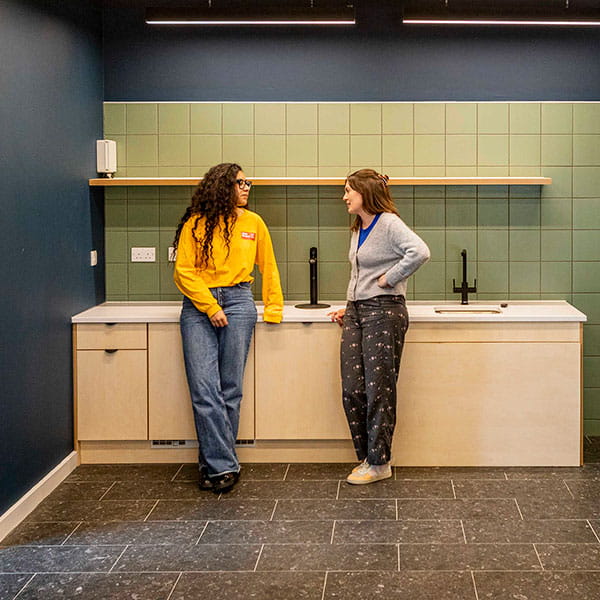
Accommodation
An excellent range of options for all of the Bristol campuses and the city centre.
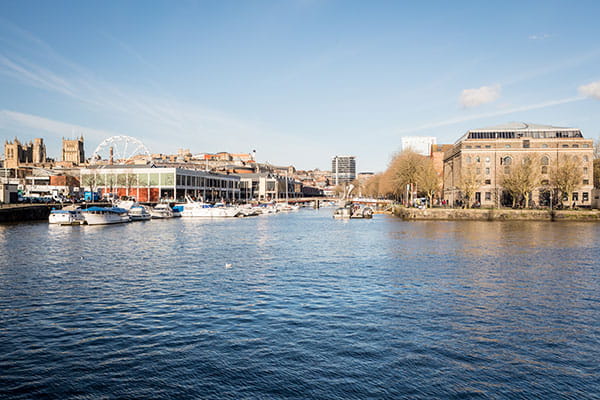
Bristol
A stunning city for student living with all the qualities to make you want to stay.

Sports, societies and activities
There is more to your experience here than study. Choose to make the most of it and try new things.

Health and Wellbeing
We provide support in the way you need it.

Campus and facilities
Discover our campuses and the wealth of facilities provided for our students.