Doctor of Education (EdD International)
Please note we are no longer offering this course to new applicants.
Advance your research skills with our flexible Doctor of Education (International). Equivalent to a PhD, it allows you to use the title 'Dr'. It combines in-person teaching with remote research, empowering you to lead enquiry in your professional context and drive change in educational practice.
About
Why study Doctor of Education (International)?
The Doctor of Education (International) is split into two parts: the taught element (Part 1) and the doctoral research and thesis (Part 2). The PGDip Educational Research (International) covers the compulsory taught Part 1.
The PGDip Educational Research (International) comprises four modules (120 credits at Level 7) and is delivered full-time and face-to-face during one academic year at UWE Bristol, UK. Students must complete and pass all four modules to achieve the PGDip Educational Research (International), at which point they will be guaranteed entry onto Part 2 of the Doctor of Education (International).
Part 2 of the Doctor of Education (International) comprises the doctoral research and thesis and will be undertaken part-time through flexible distance learning, which can fit around your other commitments. Candidates will have between two and four years to complete Part 2.
Why UWE Bristol?
Our Doctor of Education (International) is rooted in key and contemporary academic research. You'll join our thriving global postgraduate research community, enriched by cultural activities. Guided by expert researchers, you'll benefit from dedicated academic support and opportunities to present your work at a research conference.
This EdD blends taught and research elements, with interactive teaching delivered through seminars and workshops led by multiple tutors. Your learning and assessments are grounded in real-world practical research tasks, supported by independent enquiry. As your research progresses, you'll have your findings peer-reviewed by recognised experts in the field.
International students offered a place on this course are eligible to apply for accommodation on campus for Part 1. Full details can be found on our Accommodation webpages.
Where can it take me?
Our Doctor of Education (International) is aimed at professionals from many areas of educational practice. These include education leaders, teachers from all sectors, lecturers from colleges and universities, and policy and education professionals working in specialist fields.
By completing a higher qualification, you'll develop advanced research skills tailored to your professional context, enhancing your career potential as a published researcher. You'll lead original enquiry that contributes new knowledge to your field and offers practical recommendations to improve educational practice relevant to your own institution.
Entry
We are pleased to confirm that our New students webpages are now available for students starting this course in September 2026. Here you can find links to useful information about registering, course start dates, arriving on campus what to expect before and when you arrive.
We automatically send a message via your Welcome website plus an email to notify you once your Preparing to Study information is available. It is important that you regularly check your Welcome website for new messages.
Typical offers
- English Language Requirement:
International and EU applicants are required to have a minimum overall IELTS (Academic) score of 7.0 (or approved equivalent*).
*The University accepts a large number of UK and international qualifications in place of IELTS. To find details of acceptable tests and the required grades please visit English language requirements.
If you meet the academic requirements but require additional support to take your language skills to the required level, you may be able to attend one of our pre-sessional English courses. Students who successfully complete the pre-sessional course can progress onto their chosen degree course without retaking an IELTS or equivalent.
English language support
If you meet the academic requirements but require additional support to take your language skills to the required level, you may be able to attend one of our pre-sessional English courses. Students who successfully complete the pre-sessional course can progress onto their chosen degree course without retaking an IELTS or equivalent.
Read more about our Pre-Sessional English Programme.
Entry requirements
Participants will normally hold a Master's degree and will have a minimum of four years' experience in a relevant professional area.
Structure
Content
This course is organised into two parts, the taught element (Part 1) and the thesis (Part 2).
Part 1 involves the four modules and is delivered face-to-face during one academic year. You must pass all four modules to progress to Part 2.
Part 1
Taught modules, on campus:
- International Comparative Education
- Preparing for Doctoral Study
- Theorising Education
- Approaches to Educational Research.
Part 2
Research/distance learning:
- Doctoral Thesis.
Learning and Teaching
You'll undertake independent research culminating in the submission of written work (normally in the form of a thesis). Guiding you throughout your study and successive milestones will be your supervision team led by a Director of Studies. After you submit, your thesis will be the subject of an oral examination (viva voce).
There are two aspects to research supervision: support for the substantive theme of your research (for example, leading education, developing pedagogies that promote language development, policy training, social bases for pupil efficacy) and support for the methodological challenges you face (for example, is it appropriate to use a survey, or how do I handle the ethics of observing the work of my colleagues?).
We can offer remote supervision across a diverse range of subject interests and research methodologies. Examples of recent projects have included case study; evaluation; grounded theory; discourse analysis; social theory; action research; interpretative sociology; life history research; feminist approaches; questionnaire design; narrative research; and focus group work.
Features
Study facilities
The School of Education and Childhood on Frenchay Campus has excellent facilities and resources for learning and teaching. Its modern, purpose-built facilities feature high-quality teaching rooms equipped with the latest technology, excellent IT resources, and a dedicated open learning area.
Our Education and Childhood Research Groups (ECRG) hold regular face-to-face and online seminars with a variety of staff and postgraduate students from across the University, and national and international speakers.
The programme includes a wide range of personal and professional development opportunities, which are delivered in various formats including workshops and an online Resources Library.
Find out more about the facilities and resources UWE Bristol has to offer.
Take a personalised virtual tour of the Education and Teaching facilities and experience what a typical day could look like here for you.
Fees
For information about fees, please see our Graduate School fees and funding pages.
Life

Support during your degree
Support at every stage of your doctorate, from supervision and research resources to community and representation.
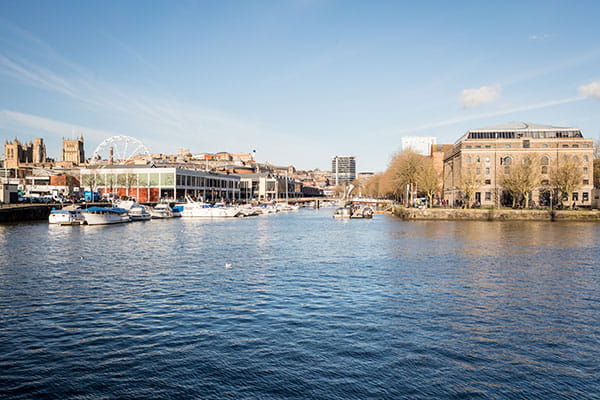
Bristol
A stunning city for student living with all the qualities to make you want to stay.

Skills development for researchers
Helping you build the skills, confidence and community needed to complete your doctorate.

Health and Wellbeing
We provide support in the way you need it.

Campus and facilities
Discover our campuses and the wealth of facilities provided for our students.