MA Wildlife Filmmaking
This course is open for applications
Accreditations and partnerships:

100% of MA Wildlife Filmmaking students are in graduate-level employment 15 months after graduating. Graduate Outcomes Survey 2023/24, published 2026.
100% of MA Wildlife Filmmaking students are satisfied with the quality of their course overall.Postgraduate Taught Experience Survey, 2026.
UWE Bristol's MA Wildlife Filmmaking is ideal if you want to learn how to tell intelligent, engaging stories about natural history. This world-leading course has been co-designed with producers, directors and production managers from the BBC's renowned Natural History Unit.
About
Why study this course?
Study a uniquely designed industry-led curriculum alongside a purposefully small group of peers. You'll enjoy hands-on experience of professional film equipment, develop high-level production management skills, and gain contemporary insight into crafting natural history narratives.
In our collaborative culture, you'll develop communication and production skills to engage diverse audiences and have access to talks and events from across the creative industries. You'll be encouraged to develop a distinctive, personal approach to documentary, with students in the past pursuing diverse genres - from observational and behavioural to expedition and experimental films.
Why UWE Bristol?
As a creative student you'll be perfectly placed studying in Bristol, an UNESCO City of Film, widely recognised as the global capital of natural history production. Our academic partnership with the BBC's Natural History Unit means you'll have opportunities to frequently meet with professional programme makers, giving you industry insight and knowledge.
We've established ourselves as part of the city's thriving production community. Where possible you'll receive direct editorial input on your filmmaking from an industry-based mentor, alongside expert input from our sector-leading academics and technical staff.
Where can it take me?
You'll graduate with a globally recognised qualification and have a broad range of career options available to you regionally, nationally and internationally.
Equipped with essential skills and specialized knowledge, our graduates are well-prepared for entry-level roles in the wildlife production industry. Most find positions with the BBC or independent production companies in Bristol, across the UK, and internationally. Some graduates also pursue independent funding to create their own future productions.
Our students have been nominated, and won, major emerging talent awards including at BAFTA, Wildscreen, Royal Television Society, Jackson Hole and the International Wildlife Film Festival. Graduation films have been included in BBC broadcasts and in commercial distribution, selling to broadcasters globally.
Our students won the BAFTA Student Award for Best Documentary in two consecutive years. In 2025, Nikki Dodd won for her film, 'One Last Farm', which documents Bristol's last working farm and its fight to survive. BAFTA Student award winner and alum, Nyal Mueenuddin's film, 'When the Floods Come', won in 2024 and documents the stories of people affected by flooding near the River Indus in Pakistan.
To see examples of work produced by our recent MA Wildlife Filmmaking graduates, visit our UWE Showcase site.
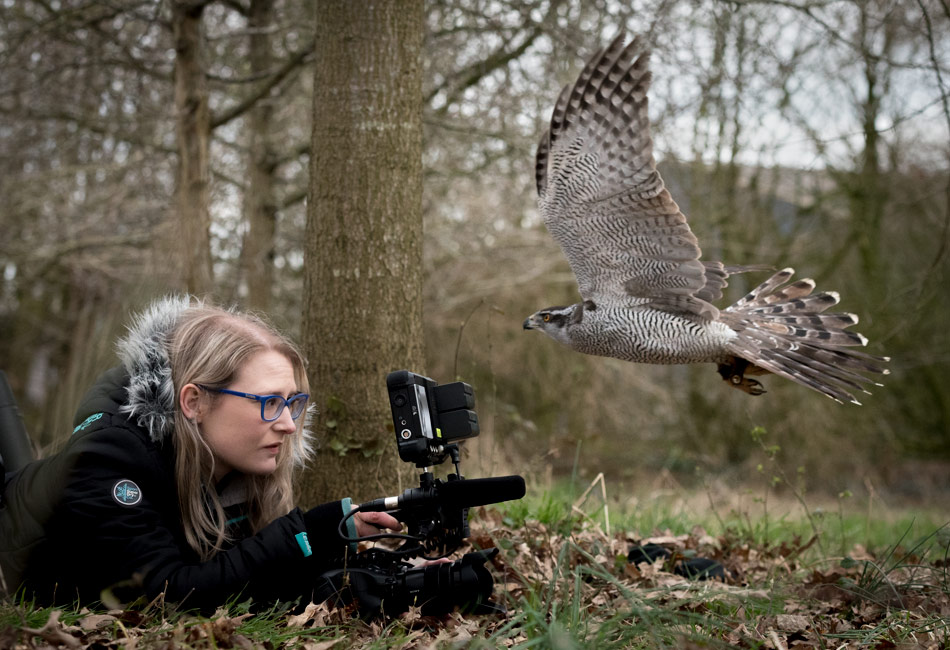
The image above shows the fantastic work from one of our students (Tom Campbell, Wildlife Filmmaking graduate).
Watch: Welcome to the School of Arts at UWE Bristol
Entry
Entry requirements
We normally require an honours degree of 2:1 or above but applicants with other qualifications or relevant professional experience are also encouraged to apply and will be considered on an individual basis.
Previous media skills may be helpful but are not essential. We're looking for highly motivated individuals who can demonstrate their ability to come up with documentary ideas and the potential to develop their technical, editorial and organisational skills.
International applicants
If you're applying to UWE Bristol from another country or region, visit the international study pages for tailored application information.
Selection process
Applicants will be asked to provide the following for review: An online portfolio which should be a selection of work that reflects your abilities, your creative process, and your interest in the course. We'd like to see samples of something you've made. This could be film, photography, written, illustrations or another creative form. You should caption your work so that we're clear about its context and your role in its creation.
Shortlisted applicants will be invited to an online interview. The interview will focus on ideas you have for film, what you have watched and review some of the sample work you've submitted with your application.
Deferrals
We don't accept deferrals for this course.
English Language Requirement
International and EU applicants are required to have a minimum overall IELTS (Academic) score of 6.5 with 5.5 in each component (or approved equivalent*).
*The University accepts many UK and International qualifications in place of IELTS. To find details of acceptable tests and the required grades please visit English language requirements.
English language support
If you meet the academic requirements but require additional support to take your language skills to the required level, you may be able to attend one of our pre-sessional English courses. Students who successfully complete the pre-sessional course can progress onto their chosen degree course without retaking an IELTS or equivalent.
Read more about our pre-sessional English Programme.
How to apply
The deadline for applications for this course is Friday 23 January 2027.
Interviews are scheduled to take place between mid-March and end of April 2027. If you're invited to interview, we usually aim to give you a minimum of one week's notice.
Please note that due to high demand, this programme may close earlier than advertised as we have limited places. We're unable to allow applicants holding offers to defer their entry.
If you have any questions after the deadline, please contact the Programme Leader. Just click on their name at the top of this page to find their contact details.
Read more about postgraduate applications.
For further information
- Email: Admissions@uwe.ac.uk
- Telephone: +44 (0)117 32 83333
Structure
Content
You'll study:
Creative Professional Contexts
You'll explore the character and conventions of the creative economy, refining your professional skills, experience, and identity to prepare you to succeed in a complex cultural landscape.
Critical Collaboration
You'll explore and connect arts research and discourse. You'll proactively collaborate with your peers, and develop and present bold, change-making creative proposals.
Final Major Project
You'll realise your creative project in a supportive community of interdisciplinary practice, technical expertise and academic criticality.
Stories on Screen: The Natural World
You'll dive into the key pre-production, production, and post-production practices in natural history documentary filmmaking. You'll be encouraged to find a compelling story for a clearly identified audience.
Professional Production Practice
You'll build up and demonstrate your capacity to complete final pre-production documentation to industry standards - ultimately developing your own comprehensive, coherent filming plan.
You'll study a practical, production-based course carefully sequenced to deliver a dynamic student journey over three intensive terms.
In the first term, you'll be introduced to pre-production, production, and post-production practices in natural history documentary filmmaking. You'll be encouraged to find a compelling story for a clearly identified audience, and with this project in mind you'll explore and contextualise production management, editorial development, and technical filmmaking skills.
At the end of the first term, you'll explore and connect arts research and discourse across a community of postgraduate peers. This will result in the presentation of bold, change-making proposals for the cultural industries.
The second term focuses on your capacity to complete pre-production documentation. An industry-standard presentation, and bespoke technical and craft training, will help you to identify and complete final preparations before production.
The term concludes with the realisation of a comprehensive and coherent filming plan. This leads into the third term, where you'll have the opportunity to realise your ideas within a supportive community of interdisciplinary practice, technical expertise, and academic criticality when completing your final project.
You'll present your film to the public at our MA Film Festival.
Throughout the year, you'll develop your understanding of enterprise within the creative industries and develop knowledge of the contemporary character and conventions of the creative economy. You'll have the opportunity to refine your professional skills, attributes and identity in preparation to succeed in an uncertain and complex cultural landscape.
The University continually enhances our offer by responding to feedback from our students and other stakeholders, ensuring the curriculum is kept up to date and our graduates are equipped with the knowledge and skills they need for the real world. This may result in changes to the course. If changes to your course are approved we'll inform you.
Learning and Teaching
Taught by a team with industry expertise across natural history and documentary practice, you'll learn to understand and push filmmaking boundaries through technical and theoretical input. You'll study through a combination of practice-oriented lectures, seminars, workshops, and tutorials, and you'll also benefit from events with industry experts.
Informal discussion with the BBC and independent production companies will push your developing practice forward. You'll be expected to demonstrate flexibility to attend industry events and festivals alongside scheduled classes.
All School of Arts MA courses actively encourage cross-disciplinary discussion and multi-disciplinary interaction across our diverse community of postgraduate artists, filmmakers, and designers. This ensures you'll bring different perspectives to your creative practice.
See our glossary of teaching and learning terms.
Study time
This is a full-time course, which starts in September and runs for three terms over 12 months. Learning and teaching sessions typically take place over three days per week, variable across the academic year. Outside of your contact hours, you'll have the opportunity to access the available resources.
Assessment
You'll be assessed through a range of methods designed to mirror professional practices in the wildlife film industries. Completing this course requires evidence that you can comply with strict health and safety and ethics processes for all production activities.
For example, all final module films and all overseas productions will need your tutor's approval and in some instances UWE Bristol's executive approval too. You'll be evaluated through presentation, portfolio, practical work and written reflection with ongoing feedback from tutors.
You'll spend your last term producing a distinctive short-form film, screened publicly to showcase your skills and ability to plan and deliver a production to industry standards. You may choose to travel overseas to film for your final project, but many well-received films have been made here in the UK.
Learn more about our assessments.
Fees
Full time course
Supplementary fee information
The additional costs listed are those that students could reasonably expect to incur during their studies and are for items not covered by the standard tuition fee. These could be materials, text books, travel, clothing, software or printing.
Students will need a laptop and external hard drives during the course to manage media files during filming and to edit remotely if required. If you're planning to purchase these items specifically for the course, we recommend waiting until you have joined, so you can get advice on the most suitable specifications for your equipment.
Find out more about funding and scholarships.
Read about postgraduate funding.
Features
Study facilities
Studying at Bower Ashton offers a base for our City Campus students, connecting teaching and learning with a range of renowned creative and cultural organisations in Bristol.
Develop your skills in our filmmaking studios and digital media laboratories, including industry-standard production studios and workshops, a location filming equipment store, and a student production hub. Access specialist post-production facilities, including digital production labs for editing and colour grading suites.
Take a personalised virtual tour of the Filmmaking, Animation and Photography facilities and experience what a typical day could look like here for you.
Learn more about UWE Bristol's facilities and resources.
Study in Bristol
With many of our graduates already working in the BBC and in the independent sector in Bristol and beyond, we have established ourselves as part of the production community here in the city.
Our BBC Natural History Unit Partnership is unique and so is our location, bringing opportunities for engagement, collaboration and ultimately employment - the BBC highly values the talent, fresh ideas and enthusiasm of our students.
Your final project
As part of the Professional Production module, you'll create your own short-form film (approximately 12-minute duration) together with industry standard deliverables. This project will showcase your skills and abilities for planning and completing a production to industry standard.
Previous students have produced a wide range of films across documentary genres, from observational and behavioural to expedition and experimental. We encourage you to produce distinctive films with impact.
Careers
Careers / Further study
For over a decade, our MA Filmmaking graduates have been very successful in securing careers with natural history production companies in the UK and overseas. Many remain in Bristol, and alumni now include junior researchers to senior producers in all major production companies based here.
Our BBC Natural History Unit Partnership is unique and so is our location, bringing opportunities for engagement, collaboration and ultimately employment. The BBC highly values the talent, fresh ideas and enthusiasm of our students.
Our award-winning Careers Service helps you develop your employment potential through career coaching, a vacancy service for internships, placements, jobs, global opportunities, volunteering and community activity plus support for entrepreneurial activity, and access to employer events.
Learn more about our graduate destinations.
Life

Postgraduate support
Our support includes access to fantastic facilities, study tools and career consultants, plus practical help to access everything from funding to childcare.
Bristol
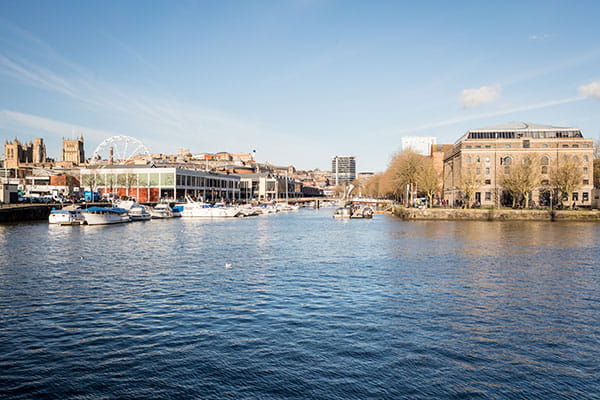
A stunning city for student living with all the qualities to make you want to stay.

Sports, societies and activities
There is more to your experience here than study. Choose to make the most of it and try new things.

Health and Wellbeing
We provide support in the way you need it.

Campus and facilities
Discover our campuses and the wealth of facilities provided for our students.
