
BSc(Hons) Environmental Science (with Foundation Year)
This course is open for applications
Accreditations and partnerships:

95 % of Geography and Environmental Science students are satisfied with the teaching of their course overall.The Sunday Times Good University Guide 2026
90% of Geography and Environmental Science graduates were in graduate-level employment or further study 15 months after graduating.The Sunday Times Good University Guide 2026
Accredited by the Institution of Environmental Sciences (IES), this course prepares you for a career tackling some of today's most important environmental challenges.
About
Why study environmental science?
The environment we live in is changing rapidly. Solving and managing the problems caused by environmental change is increasingly important.
Drawing on a variety of scientific fields, environmental scientists can help us to unpick the challenges we're up against and put forward the urgent solutions our planet needs.
Why UWE Bristol?
BSc(Hons) Environmental Science brings together knowledge from a variety of fields to give you a deep understanding of the environmental challenges facing the world today.
Through a practical, hands-on approach that runs through all the modules, you'll gain exposure to the skills and technology employed at the forefront of environmental science.
Carry out your own investigations in our specialist labs, and use the latest mapping software in our dedicated computer suite.
Learn to analyse and interpret complex data, and pioneer environmentally sound, scientifically robust, practical solutions.
You'll be based in Bristol, a hub for environmental innovation and opportunity, where you can tap into diverse projects and collaborations.
Undertake work placements, volunteering roles, field-based work and residential trips in natural and urban environments, in the UK and abroad.
Go on inspiring expeditions to the threatened forests of Madagascar or diving on the coral reefs of Cuba.
If you choose the sandwich course option, you'll get to spend your third year working with a public or private sector employer in this country, Europe or further afield, applying your knowledge to current environmental issues.
Where can it take me?
Our graduates take their skills into internationally-renowned organisations such as the International Union for Conservation of Nature (IUCN).
Others go into industry, working with employers such as Thames Water, the Environment Agency, Wessex Water, Atkins or charities like the Woodland Trust.
Some become film-makers, or take part in conservation projects around the world, everywhere from the Seychelles to Panama.
You could also continue studying to MSc or PhD level.
Watch: Welcome to the School of Applied Sciences at UWE Bristol
Entry
Typical offers
You will need to meet the following Level 2 requirements:
- GCSE: Grade C/4 or above in English, Mathematics and Double Science, or equivalent.
In addition to the above Level 2 qualifications, you'll need to achieve the published tariff points from your Level 3 studies prior to entry. Below is an indicative list of the main qualification types. However, we will consider any Level 3 qualifications towards meeting our entry requirements.
- Tariff points: 56
- Contextual tariff: See our contextual offers page.
- English Language Requirement:
International and EU applicants are required to have a minimum overall IELTS (Academic) score of 6.0 with 5.5 in each component (or approved equivalent*).
*The University accepts a large number of UK and international qualifications in place of IELTS. You can find details of acceptable tests and the required grades you'll need in our English language section. Please visit our English language requirements page. - A-level subjects: No specific subjects required.
- EDEXCEL (BTEC) Diploma: No specific subjects required.
- Access: No specific subjects required.
- Baccalaureate IB: No specific subjects required. We accept the IB Career-related Programme in conjunction with other Level 3 qualifications.
- Irish Highers: No specific subjects required.
- Welsh Baccalaureate: We accept tariff points achieved from the Advanced Skills Baccalaureate Wales in conjunction with other Level 3 qualifications.
- Cambridge Technical: No specific subjects required.
- T Levels: No specific subjects required.
Entry requirements
If you exceed the entry requirements you may be eligible for BSc(Hons) Environmental Science.
International applicants
If you are an international student your recommended route of study for this degree is through our International College, which upon successful completion to the required level and with good attendance, guarantees entry to Year one of the degree.
Read more about entry requirements.
How to apply
Read more about undergraduate applications.
Read more about international applications and key international deadline dates.
For further information
- Email:
UK applicants
Admissions@uwe.ac.ukInternational/EU applicants
International@uwe.ac.uk - Telephone:
UK applicants
+44 (0)117 32 83333International/EU applicants
+44 (0)117 32 86644
Structure
Content
You'll study:
Biology in Practice
You'll gain essential skills including data analysis, use of academic texts, independent and group working and the communication of science through lab reports and assessments. You'll learn practical techniques used in the lab and the field.
Chemistry in Practice
You'll cover core chemical principals, theories and calculations, along with key practical techniques and procedures used in a chemistry laboratory. You'll also learn fundamental scientific skills including data analysis and confidence in mathematics.
Skills for Science
You'll cover the physical principles underlying various aspects of science relevant to your future studies and the mathematical skills that are necessary to understand and solve scientific problems.
Investigating and Communicating Science
You'll develop your understanding of essential concepts of science theory, practice and communication and develop a toolkit of skills for degree-level study.
You'll study:
The Earth
You'll be introduced to Earth System Science covering the core physical science concepts that are necessary for the study of Ecology and Environmental Science, gaining understanding of how these components interact to shape Earth's climate, landscapes, and ecosystems.
Field Skills
You'll study key concepts that aspiring environmental scientists, ecologists, and conservation scientists need to have experience in for field work, developing your understanding of how to design and carry out field studies and to present, analyse and interpret data.
Life on Earth
You'll examine the plants, animals and micro-organisms that make up life on earth, looking at how the living world is structured and how organisms interact with one another and their own environment.
Environment and Society
You'll examine scientific, political, economic, ecological and social concepts and perspectives behind current global environmental challenges. You'll be introduced to the broad range of interdisciplinary skills and knowledge required to understand and find solutions for global environmental challenges.
You'll study:
Environmental and Field Techniques
You'll develop practical skills in field research, field techniques and data analysis in addition to understanding the limitations of these approaches and being introduced to contemporary environmental technologies.
Ecology
You'll explore the basic principles and key concepts of ecology (the interrelationships between living organisms and their environment) and human impacts on key habitat types.
Environmental Resilience
You'll evaluate global environmental challenges from a social-ecological perspective, aligning closely with the United Nation's Sustainable Development Goals (SDGs). You'll develop analytical and data analysis skills for examining environmental impacts at a local scale.
Optional modules:
You'll study four modules from:
- Atmosphere and Climate
- Earth Science
- Hydrology to Oceanography
- Plant Growth and Survival
- The Microbial World.
Placement year (if applicable)
If you study on the four year (sandwich) course, you'll spend a year away from the University on a work placement after Year two.
You'll complete the Professional Practice in Applied Sciences module.
See the Placements and Fees sections for more information.
You'll study:
Sustainable Futures
You'll use the skills and knowledge you've gained so far to develop evidence-based solutions to global environmental sustainability challenges and to critically evaluate current and proposed future practice.
Energy, Carbon and Climate
You'll critically assesses the current state of the Earth's climate and how carbon emissions are driving global environmental change. You'll evaluate future alternatives and opportunities for energy conservation and supply, for a transition to a low carbon economy.
Research Dissertation Project
You'll undertake an independent research project under the guidance of an academic supervisor, developing your skills and knowledge in contemporary scientific research.
Optional modules:
You'll study optional modules (the number depending on credit requirements)* from:
- Environmental and Ecological Consultancy
- Marine Ecosystems
- Environmental Forensics
- Remote Sensing and Geographical Information Systems (GIS)
- Global Forest Systems
- Science Communication
- Sustainable Food Production
- Environmental Microbiology
- Expedition to a Biodiversity Hotspot.
*If you complete the sandwich placement year you'll study three of these modules. Otherwise, you'll study four of them.
The optional modules listed are those that are most likely to be available, but they may be subject to change.
You normally need to pass your foundation year (Year zero) before going into Year one.
This structure is for full-time students only. Part-time students study the same modules but the delivery pattern will be different.
The University continually enhances our offer by responding to feedback from our students and other stakeholders, ensuring the curriculum is kept up to date and our graduates are equipped with the knowledge and skills they need for the real world. This may result in changes to the course. If changes to your course are approved, we'll inform you.
Learning and Teaching
Get a strong grounding in each topic in lectures, seminars and tutorials. Then enrich and deepen your understanding through laboratory workshops, fieldwork exercises and case studies.
Learn about everything from geology to climate science. Study the problems and solutions linked to our changing environment. Develop the science communication skills to help you stand out from other environmental graduates.
Learn in diverse environments with regular fieldwork and residential field trips (where possible).
Benefit from teaching linked with world-class environmental research.
You'll learn from field leaders, working in areas such as the conservation of bird's nest ferns in rainforests, the decontamination of water in Third World countries and the use of plants to measure radiation levels.
Carry out your own research project, working with an academic supervisor in your chosen area of interest.
Identify and develop the skills you'll need for your ideal career.
Receive one-to-one guidance and feedback from our team of environmental science specialists.
See our full glossary of learning and teaching terms.
Assessment
We'll assess your work using a mix of coursework and exams including unseen, open-book and practical exams, essays, practical reports, individual and group projects, oral and visual presentations, case-study analysis, taxonomic collections and problem-solving exercises.
We use different types of assessment to reflect the range of theoretical concepts, knowledge and practical skills we cover on the course.
Learn more about assessments.
Fees
Full-time; Sandwich course
Indicative Additional Costs
Supplementary fee information
Please note, the above tuition fees for home students are charged in the first academic year of study but may increase in subsequent years for both new and continuing students. This increase will track the tuition fee cap which is determined by government and is expected to increase in line with inflation. UWE Bristol will likely maintain its fees for new and returning home students at the maximum permitted level for each year of study.
The placement year fee will also increase when the fee cap changes so please use the above placement year fee for indication purposes only.
Your overall entitlement to funding is based on how long the course is that you're registered on. Standard funding is allocated based on the standard number of years that your course lasts, plus one additional year.
You'll apply for funding each year that you study and Student Finance will take into account how long the course is in each year that you apply. So if you register for the five year course and then transfer to the four year course, the number of years you can apply for funding will change. Student Finance will reassess your funding based on how many years you have been in study, not just those years for which you received student finance.
Always seek advice before taking any action that may have implications for your funding.
Additional costs
Additional costs are for items you could need during your studies that aren't covered by the standard tuition fee. These could be materials, textbooks, travel, clothing, software or printing.
Features
Professional accreditation
Accredited by the Institution of Environmental Sciences (IES), this course provides you with the tools to succeed in your future career.
Placements
Students who go on work experience tend to graduate with better degrees. Experience also hones your skills, industry knowledge and professional network, making you a sought after graduate.
If you choose the five year (sandwich) course, you'll spend a year away from the University on a work placement after Year two.
We'll encourage you to apply for placements, a paid summer vacation internship and volunteering roles, through our links with industry, government organisations, consultancies and conservation groups.
Our students work with leading employers, such as the RSPB, Plymouth Marine Laboratory, the Environment Agency, MoD, Kew Gardens and Tongariro Natural History Society in New Zealand.
You'll get help to find a placement and support throughout from staff within the School and our award-winning careers service.
Fieldwork
Fieldwork is an essential part of studying and understanding environmental issues, so you'll spend a significant part of your time doing fieldwork.
As well as going on short local trips in and around Bristol, with its rich variety of urban and natural environments, we arrange UK and international residential visits each year (where possible). You'll have the opportunity to go to places like Devon, Cornwall, Wales, Madagascar and Cuba.
Study facilities
Benefit from our well-equipped analytical and computer laboratories, glasshouse and dedicated field centre.
Learn more about UWE Bristol's facilities and resources.
Take a personalised virtual tour of the Environmental Science facilities and experience what a typical day could look like here for you.
Personalised virtual tour
There's no need to visit us in person to explore our facilities and campuses. Take a personalised virtual tour and discover it all for yourself from wherever you are.
Take a virtual tourCareers
Careers / Further study
Environmental issues impact at local, national and international levels, and our students go on to make a valuable contribution in many different areas.
Past students have worked as pollution scientists, water quality experts and environmental managers with organisations including The Environment Agency, Wessex Water and DEFRA.
Some find roles as environmental consultants, working on renewable energy, waste management or the consequences of climate change. Others go into environmental education in schools, field studies organisations or postgraduate study.
As a graduate, you'll be eligible to apply for a range of postgraduate courses at UWE Bristol, which will give you advanced knowledge and support your career development. These include MSc Forensic Science, MRes Applied Sciences, MSc Sustainable Food Systems, MSc Health Technology, MSc Science Communication, MSc Applied Wildlife Conservation and MSc Conservation Leadership.
Get inspired
Our award-winning careers service will develop your employment potential through career coaching and find you graduate jobs, placements and global opportunities.
We can also help find local volunteering and community opportunities, provide support for entrepreneurial activity and get you access to employer events.
Visit our employability pages to learn more about careers, employers and what our students are doing six months after graduating.
Find out what being a water quality scientist involves.
See also:
UWE - careers in environmental management
The Guardian - what to do with a degree in environmental science
Watch: How to be a... space exploration scientist
Life

Accommodation
An excellent range of options for all of the Bristol campuses and the city centre.
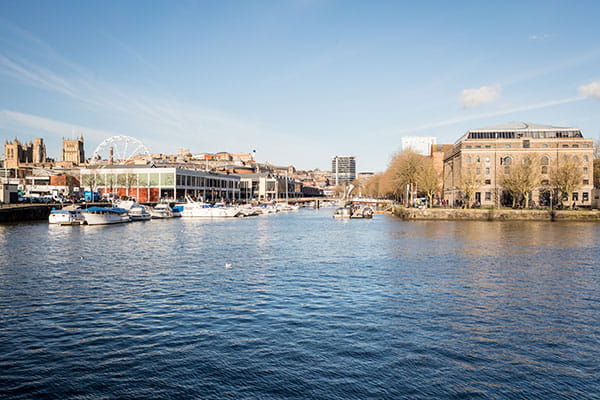
Bristol
A stunning city for student living with all the qualities to make you want to stay.

Sports, societies and activities
There is more to your experience here than study. Choose to make the most of it and try new things.

Health and Wellbeing
We provide support in the way you need it.

Campus and facilities
Discover our campuses and the wealth of facilities provided for our students.