BSc(Hons) Geography
This course is open for applications
Accreditations and partnerships:


5th university in the UK for Geography courses.Guardian University Guide 2026
100% of BSc(Hons) Geography students are positive about the academic support on their course.National Student Survey, 2026.
The BSc(Hons) Geography course at UWE Bristol is professionally focused, combining theory with real-world application so you'll graduate confident and career-ready.
About
Teaching includes lectures, seminars, practical labs, workshops and extensive fieldwork, all designed to give you strong applied and experiential learning. You'll also benefit from excellent academic support and a close, collaborative learning community.
Why study a geography degree?
As environmental challenges like climate change, ecosystem endangerment, and energy availability worsen, those in government, science and industry are looking for new ways to manage them.
Developing your skills and knowledge in this field will help you become part of this growing industry. You'll also gain analytical and communication skills sought by employers across a wide range of industries.
Why UWE Bristol?
Our BSc(Hons) Geography degree gives you a clear understanding of today's major environmental and geographical issues, including climate change, tectonics, rivers, coasts, ecosystems and sustainable resource use. You'll study the science behind the physical environment and learn how to manage it responsibly.
This course is highly practical, with modules connected to real-world issues. You'll learn in modern labs and develop skills in fieldwork, mapping, environmental assessment, statistics and GIS. You can also build experience through field trips and a work placement, with options for a placement year or study abroad.
The course is accredited by the Institution of Environmental Sciences (IES), the Chartered Institute of Water and Environmental Management (CIWEM) and the Royal Geographical Society (RGS).
Where can it take me?
The applied nature of this course means you'll build strong, practical employability skills and a solid understanding of the causes, impacts and solutions to environmental change. Graduates progress into a wide range of careers, both within environmental and geographical professions and across other sectors, using the broad transferable skills gained at UWE Bristol.
Student showcase
Hear from Geography student, Holly, about how her time on the course has developed her confidence.
Hear from Geography student, Callum, about why he chose to study at UWE Bristol.
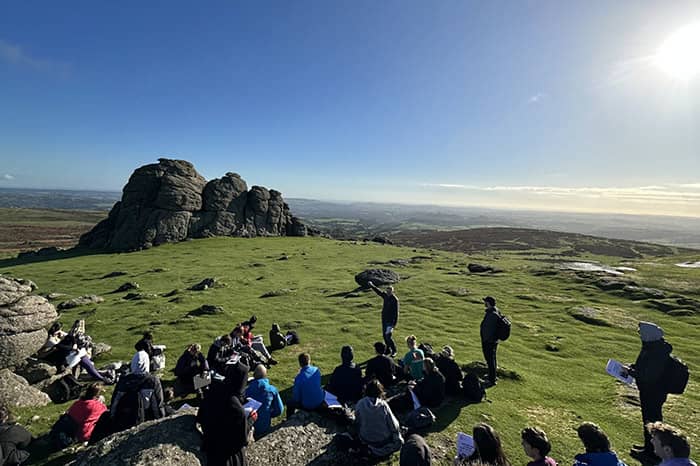
Students on Haytor, Devon, exploring landscape evolution as part of the Year 1 Field Study in Physical Geography module.
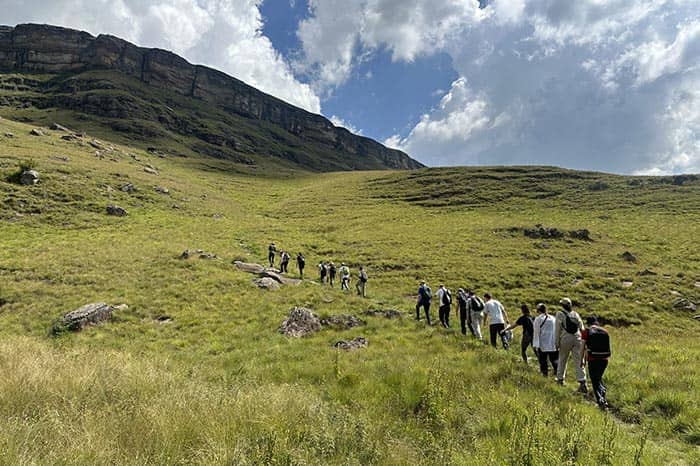
Students hiking in the Drakensberg National Park, South Africa, as part of the Year 3 Advanced Geographical Expedition module.
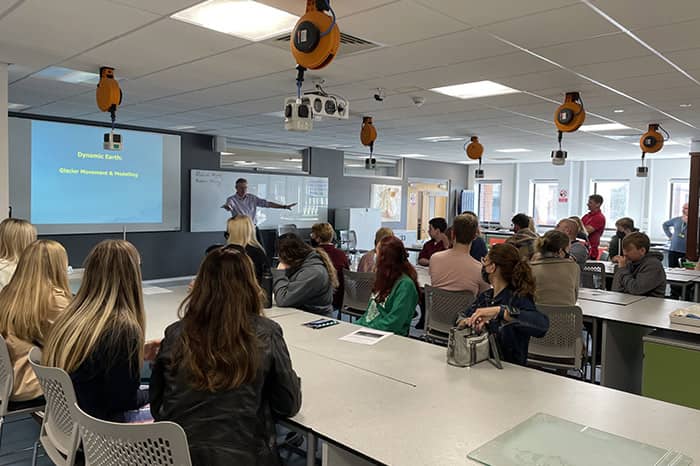
Students completing a practical session in our physical geography laboratory.
Watch: Welcome to the School of Architecture and Environment at UWE Bristol
Entry
Typical offers
You will need to meet the following Level 2 requirements:
- GCSE: Grade C/4 in English and Mathematics, or equivalent.
In addition to the above Level 2 qualifications, you'll need to achieve the published tariff points from your Level 3 studies prior to entry. Below is an indicative list of the main qualification types. However, we will consider any Level 3 qualifications towards meeting our entry requirements.
- Tariff points: 112
- Contextual tariff: See our contextual offers page.
- English Language Requirement:
International and EU applicants are required to have a minimum overall IELTS (Academic) score of 6.0 with 5.5 in each component (or approved equivalent*).
*The University accepts a large number of UK and international qualifications in place of IELTS. You can find details of acceptable tests and the required grades you'll need in our English language section. Please visit our English language requirements page.
- A-level subjects: No specific subjects required.
- BTEC: No specific subjects required.
For information on required Guided Learning Hours please see our minimum entry requirements page.
- Access: No specific subjects required.
- Baccalaureate IB: No specific subjects required. We accept the IB Career-related Programme in conjunction with other Level 3 qualifications.
- Irish Highers: No specific subjects required.
- Welsh Baccalaureate: We accept tariff points achieved from the Advanced Skills Baccalaureate Wales in conjunction with other Level 3 qualifications.
- Cambridge Technical: No specific subjects required.
- T Levels: No specific subjects required.
Entry requirements
International applicants
If you're applying to UWE Bristol from another country or region, visit the international study pages for tailored application information. If you're an international student and don't meet the academic requirements to study this course, you can qualify by completing preparatory study at our International College.
If you're applying to study at UWE Bristol and require additional support to meet our English language requirements, you may be able to attend one of our pre-sessional English courses. Read more about our Pre-Sessional English Programme.
Read more about entry requirements.
How to apply
Read more about undergraduate applications.
Read more about international applications and key international deadline dates.
For further information
- Email:
UK applicants
Admissions@uwe.ac.ukInternational/EU applicants
International@uwe.ac.uk - Telephone:
UK applicants
+44 (0)117 32 83333International/EU applicants
+44 (0)117 32 86644
Structure
Content
The optional modules listed are those that are most likely to be available, but they may be subject to change.
Year one
You'll study:
- An Introduction to Geographic Information Systems and Remote Sensing
- Dynamic Earth
- Environmental Challenges
- Field Study in Physical Geography
- Contemporary Global Issues.
Year two
You'll study:
- Applied Geographic Information Systems (GIS)
- Professional Development
- Researching Physical Geography.
Plus, four optional modules from:
- Climate Change: Challenges for the 21st Century
- Ecology
- Environmental Assessment
- Meteorology
- Understanding Coastal Dynamics
- Understanding River Dynamics.
Placement year (if applicable)
If you study on the four year (sandwich) course, you'll spend a year away from the University on a work placement or study year abroad after Year two.
Depending on which you choose, you'll either complete the Placement or Study Abroad module.
See the placements and fees sections for more information.
Final year
You'll study:
Either
- Extended Independent Project*.
Or
- Independent Project and Professional Experience*.
*If you complete the four year (sandwich) course, these modules won't be available to study, so only the Independent Project module will be available.
Plus, three optional modules from:
- Advanced Geographical Expedition**
- Biogeography and Conservation
- Advanced GIS and Remote Sensing Applications
- Hazard and Disaster Management
- Managing Rivers and Coasts
- Water and Energy Futures.
**If you study this module it'll involve an additional cost on top of the course tuition fee.
The University continually enhances our offer by responding to feedback from our students and other stakeholders, ensuring the curriculum is kept up to date and our graduates are equipped with the knowledge and skills they need for the real world. This may result in changes to the course. If changes to your course are approved, we'll inform you.
Learning and Teaching
Learn through a blend of lectures, seminars, group work, laboratory classes, fieldwork, and practical work, such as IT and GIS skills and develop key analytical, communication and business skills that will help you succeed in the workplace. You'll also hear from visiting professionals to understand industry challenges and explore career paths.
You'll be taught by staff with consistently high National Student Survey satisfaction scores, who are active researchers or industrial consultants and up to date with developments in the field. You'll also be supported throughout your Geography degree by your Academic Personal Tutor (APT) - a member of the core physical geography teaching team - who'll support your learning and professional development through 1 to 1 meetings.
Find out more about our approach to learning and teaching.
Meet fellow geographers and campaign on environmental issues in our thriving Geography Society.
See our full glossary of learning and teaching terms.
Study time
Lectures, workshops, lab practicals, and seminars, group project work and tutoring account for 12 hours of contact time each week.
You'll be expected to spend at least twice as much time working independently on tasks that will contribute towards your assessments.
Assessment
BSc(Hons) Geography modules offer a range of assessment methods and styles. Your knowledge and understanding will be assessed using coursework assessment methods, including essays, practical portfolios, technical reports and management plans (e.g. environmental management plans), research proposals, research projects, and presentations.
You'll complete most coursework individually but there are some group assignments.
Support is available if you have difficulties with numeracy, IT, literacy and study skills.
Fees
Full-time; Sandwich course
Supplementary fee information
Please note, the above tuition fees for home students are charged in the first academic year of study but may increase in subsequent years for both new and continuing students. This increase will track the tuition fee cap which is determined by government and is expected to increase in line with inflation. UWE will likely maintain its fees for new and returning home students at the maximum permitted level for each year of study.
The placement year fee will also increase when the fee cap changes so please use the above placement year fee for indication purposes only.
Your overall entitlement to funding is based on how long the course is that you're registered on. Standard funding is allocated based on the standard number of years that your course lasts, plus one additional year.
You'll apply for funding each year that you study and Student Finance will take into account how long the course is in each year that you apply. So if you register for the four year course and then transfer to the three year course, the number of years you can apply for funding will change. Student Finance will reassess your funding based on how many years you have been in study, not just those years for which you received student finance.
Always seek advice before taking any action that may have implications for your funding.
Additional costs
This refers to items you could need during your studies that aren't covered by the standard tuition fee. These could be materials, textbooks, travel, clothing, software or printing.
For this course, the cost of the optional Advanced Geographical Expedition module will be an additional cost and is not covered by the tuition fee.
Features
Professional accreditation
This course is accredited by the Institution of Environmental Sciences (IES).
Once you become a free IES student member you may then use StMIEnvSc after your name, signalling professional commitment.
This course is also accredited by the Chartered Institution of Water and Environmental Management (CIWEM), and the Royal Geographical Society (RGS).
Placements
If you choose the four year (sandwich) course, you'll spend a year away from the University on a work or study abroad placement after Year two.
Past students' work placements have involved recycling in Chile, ecological management in Australia, and flood risk management in the UK.
You'll get help to find your placement and support throughout from school staff and our award-winning careers service.
Study year abroad
You'll have the opportunity to apply to study overseas at international partner institutions. Available opportunities can be found on the study abroad pages. The study year abroad is not a paid placement.
Fieldwork
Field trips are an important part of this course and will include residential trips:
Year one
Explore themes including rivers, coasts, woodland ecology and landform evolution, recently based on Dartmoor, Devon.
Year two
Develop your physical geography research, analytical thinking and presentation skills. Previously, we've carried this out on the Brittany coastline, studying coastal processes and management, heritage management, and long-term environmental change.
Final year
You may choose a two-week advanced overseas expedition, recently in Lanzarote, Iceland, China and South Africa, covering a range of geographical and environmental management topics.
Day-long field trips around the Bristol region also support many year-two and final-year optional modules.
Study facilities
Learn in modern, well-equipped facilities, including our physical geography laboratories.
Investigate historic environments, test water quality and soil mechanics in our earth science and environmental change labs.
Use open-access computing suites and collaborate in our dedicated Project Room.
Conduct spatial enquiry and analyse data using industry-standard geographic information systems (GIS) and statistical software.
This mix of traditional and creative environments helps build essential knowledge and real-world professional skills.
Learn more about UWE Bristol's campus and facilities.
Take a personalised virtual tour of the Geography and Environmental Management facilities and experience what a typical day could look like here for you.
Personalised virtual tour
There's no need to visit us in person to explore our facilities and campuses. Take a personalised virtual tour and discover it all for yourself from wherever you are.
Take a virtual tourCareers
Careers / Further study
Studying a geography degree can lead to a range of careers. Choose from opportunities in environmental consultancy, GIS consultancy, river and coastal management, conservation and government, as well as finance, education and research.
Past students have gone on to work for a wide range of employers, including the Environment Agency, Ordnance Survey, Ecotricity, Skanska, Ministry of Defence, UK Hydrographic Office, Buro Happold, Natural Resource Wales, Atkins, Jacobs, NHS, Santander, and Natural England.
If you're interested in teaching geography at secondary school level, BSc(Hons) Geography is a good foundation for a postgraduate teaching qualification.
You'll also be well equipped to continue your studies and pursue a postgraduate masters qualification in a relevant field.
Get inspired
Our award-winning careers service will develop your employment potential through career coaching and help to find you graduate jobs, placements and global opportunities.
We can also help find local volunteering and community opportunities, provide support for entrepreneurial activity and get you access to employer events.
Visit our employability pages to learn more about careers, employers and what our students are doing six months after graduating.
See also:
Prospects - career options with a degree in geography.
The Guardian - what to do with a degree in environmental science or physical geography.
Life
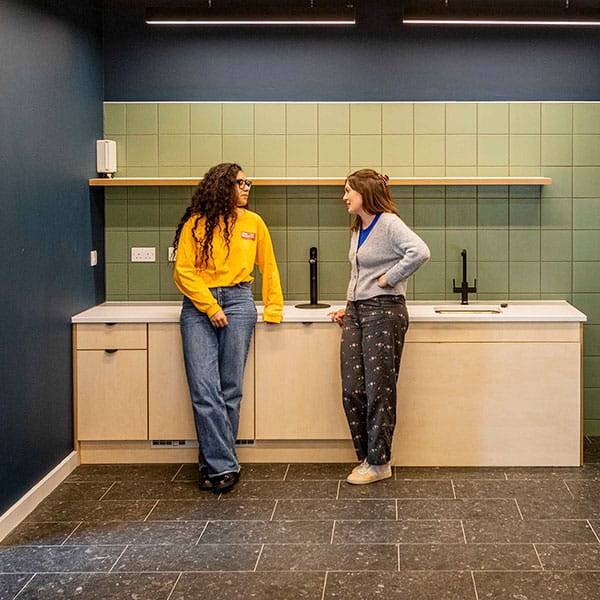
Accommodation
An excellent range of options for all of the Bristol campuses and the city centre.
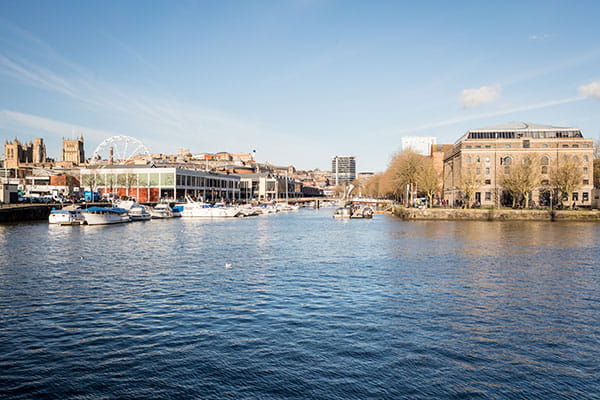
Bristol
A stunning city for student living with all the qualities to make you want to stay.

Sports, societies and activities
There is more to your experience here than study. Choose to make the most of it and try new things.

Health and Wellbeing
We provide support in the way you need it.

Campus and facilities
Discover our campuses and the wealth of facilities provided for our students.