MSc Building Information Modelling (BIM) in Design Construction and Operations
Please note this course is closed to new applications for September 2026 entry.
This course remains open for applications for January 2027 entry.
Accreditations and partnerships:

100% of MSc Building Information Modelling (BIM) in Design, Construction and Operations students are satisfied with the quality of their course overall.Postgraduate Taught Experience Survey, 2026.
This course is accredited by RICS and CIOB, helping you deepen your industry understanding and earn important professional recognition. Thanks to strong connections with employers and a valuable placement, you'll graduate with skills that are highly regarded both in the UK and abroad.
About
Our MSc Building Information Modelling (BIM) programme is designed for those who want to lead at the intersection of digital technology, digital construction, design and asset management.
It's suited to both aspiring practitioners and experienced professionals who want to enhance their knowledge of digital workflows and information management and drive more sustainable and digitally enabled decisions across the built environment.
Why study Building Information Modelling (BIM)?
The construction sector is undergoing rapid digital transformation. BIM is at the heart of this change, enabling more efficient, coordinated and sustainable project delivery. Countries worldwide are adopting BIM, with many making it a legal requirement. The UK is a recognised leader, setting standards through ISO 19650, which shapes BIM use internationally.
This MSc takes a holistic, lifecycle-based approach. Rather than focusing solely on design modelling. You'll explore how BIM and related digital technologies are applied across design, construction, operations and maintenance. Sustainability is embedded throughout, demonstrating how digital information can support environmentally responsible and resource-efficient decision-making.
Why UWE Bristol
This MSc Building Information Modelling programme is accredited by both the Royal Institution of Chartered Surveyors (RICS) and the Chartered Institute of Building (CIOB), giving you recognised professional standing and a clear first step towards chartered status. Learning is shaped by real industry needs through strong employer links, research expertise and teaching informed by the latest digital practice.
A major highlight is the industry placement [unpaid], where you'll work with Tier-one contractors, international firms or other built-environment organisations on a real BIM project.
Where can it take me?
You'll graduate with skills valued across the UK and internationally, opening doors in digital construction, information management, consultancy and sustainability roles. You'll build confidence working across disciplines and be ready to contribute to a more digital, efficient and sustainable built environment.
Watch: Welcome to the School of Architecture and Environment at UWE Bristol
Entry
Entry requirements
We normally require an honours degree of 2.2 or above.
If you do not meet the above grade requirements but have at least 12 months relevant professional experience and/or equivalent qualifications, we'll consider you on an individual basis.
English language support
If you meet the academic requirements but require additional support to take your language skills to the required level, you may be able to attend one of our pre-sessional English courses. Students who successfully complete the pre-sessional course can progress onto their chosen degree course without retaking an IELTS or equivalent.
Read more about our Pre-Sessional English Programme.
Personal Statement
You are required to complete a personal statement for this course. Please read the personal statement guidance carefully and make sure that you answer the questions on the postgraduate application form within the personal statement tabs, keeping to the advised word count.
English Language Requirement
International and EU applicants are required to have a minimum overall IELTS (Academic) score of 6.5 with 5.5 in each component (or approved equivalent*).
*The University accepts a large number of UK and international qualifications in place of IELTS. You can find details of acceptable tests and the required grades you'll need in our English language section.
How to apply
Read more about international applications and key international deadline dates.
For further information
- Email: admissions@uwe.ac.uk
- Telephone: +44 (0)117 32 83333
Structure
Content
You'll study:
Construction Law, Procurement and Project Management
In this module, you'll develop an in-depth understanding of construction law, procurement and project management, and how these disciplines interact to support the successful delivery of construction projects. You'll explore legal instruments, standard form contracts, procurement approaches and industry best practice, alongside key project management concepts such as feasibility, value and risk management, project organisation and project control. You'll learn how to evaluate legal and commercial risks, assess project viability, develop strategic frameworks for project delivery, and apply effective approaches to teamworking, conflict management and performance monitoring within complex construction environments.
Dissertation
In this module, you'll undertake an in-depth independent research project on a topic relevant to your programme of study. With support from an academic supervisor, you'll develop and investigate your own research question, drawing on appropriate research methods and analytical approaches. You'll explore topics such as research design, literature review, qualitative and quantitative data collection and analysis, ethics, risk management, and the validity and reliability of research. Through the process of planning, conducting and communicating a substantial piece of research, you'll develop advanced skills in critical analysis, evaluation and academic inquiry.
BIM in Design Coordination
In this module, you'll explore how Building Information Modelling (BIM) supports design coordination and collaborative working during the design phase of construction projects. You'll develop both theoretical knowledge and practical skills in BIM frameworks, standards and processes, including the application of industry guidance such as the ISO 19650 series. Topics may include design information workflows, interoperability, collaborative practices and the use of BIM to address construction, safety, environmental and maintenance considerations. You'll also learn how to apply BIM tools and emerging technologies to coordinate design information, support decision-making and manage multidisciplinary design teams effectively.
BIM in Construction Operations
In this module, you'll explore how Building Information Modelling (BIM) supports and transforms construction operations. You'll examine how BIM integrates people, processes and technologies to improve collaboration, automate workflows and enhance project performance. Topics may include construction scheduling and logistics, site utilisation planning, phase planning, constructability analysis, clash detection and scenario forecasting. Through the application of BIM tools and processes to realistic project scenarios, you'll learn how to plan, evaluate and communicate construction activities, solve complex construction challenges and support informed decision-making within multidisciplinary project teams.
BIM in Business and Practice
In this module, you'll explore the strategic use of Building Information Modelling (BIM) and digital technologies within organisations across the built environment sector. You'll examine how digital transformation can support business objectives, develop evidence-based BIM business cases, and design transition roadmaps for implementing new technologies. Topics may include organisational strategy, digital transformation, BIM best practice, research-informed decision making and professional communication. Through independent project work and the analysis of real-world challenges, you'll learn how to evaluate emerging technologies, justify digital solutions and support innovation and improved organisational performance.
BIM in Operation and Maintenance
In this module, you'll explore how Building Information Modelling (BIM) supports the operation and maintenance of built assets throughout their lifecycle. You'll develop an understanding of how BIM can be integrated with operations and maintenance (O&M) and facilities management (FM) practices for both existing and newly built facilities. Topics may include BIM standards and asset management frameworks, asset information models, stakeholder engagement, reality data capture and digitalisation, and emerging technologies such as digital twins, artificial intelligence and the Internet of Things. You'll learn how to evaluate and develop BIM-enabled strategies that improve asset performance, data management and decision-making in real-world operational environments.
Low/zero Impact Buildings
In this module, you'll explore the principles, technologies and strategies used to design and deliver low and zero-impact buildings. You'll examine how highly efficient buildings can reduce environmental impact through passive design solutions, renewable technologies and sustainable materials. Topics may include building environmental performance, sustainability analysis, carbon footprint assessment, BIM 6D, and sustainability standards and frameworks such as Part L, EPC ratings, BREEAM and WELL. You'll learn how to evaluate emerging technologies, assess building performance, and apply digital tools and sustainability principles to support informed decision-making in the design, construction and operation of sustainable buildings.
This course structure is for full-time students only. Part-time students study the same modules but the delivery pattern will be different.
The University continually enhances our offer by responding to feedback from our students and other stakeholders, ensuring the curriculum is kept up to date and our graduates are equipped with the knowledge and skills they need for the real world. This may result in changes to the course. If changes to your course are approved we'll inform you.
Learning and Teaching
Our BIM Master's uses a variety of teaching methods to build your knowledge and practical skills while keeping learning engaging and connected to real practice. Teaching includes lectures, seminars, workshops, guest speakers from industry and occasional site visits or field trips. You'll take part in technology-focused activities using relevant BIM software and hardware, fully supported by academic staff.
Independent learning is key, with resources available through UWE Bristol's Virtual Learning Environment, alongside reading lists, tutor guidance and self-directed study.
Teaching is strongly practice-based. Project-focused assessments mirror real industry scenarios and current challenges in the built environment. Industry engagement runs throughout the course through the placement project, guest lectures, tech demonstrations, site visits and events. Class discussions and assessments develop your critical thinking, while research-informed teaching helps you justify decisions and build strong, evidence-based arguments.
See our full glossary of learning and teaching terms.
Study time
Full-time (one year, including dissertation): 40 teaching days, with 15 hours taught over 2 days and 30 hours of independent learning a week, respectively.
Part-time (two years including dissertation): 30 teaching days in the first year, and 10 in the second year, taught over 1 day per week. 14 hours a week of independent study.
Part-time students study the same modules with a different delivery pattern and can combine study with work, although being in work is not a requirement of the course.
Full-time students, any accompanying job should not exceed 16 hours per week to allow you sufficient study time.
We provide tutorial support between teaching blocks.
Assessment
Our BIM Master's uses a range of assessments, including portfolios with practical and research elements, individual and group presentations, reports and a dissertation. As a practice-led course, many assessments are project-based, allowing you to work on realistic BIM scenarios that reflect industry challenges. These individual and group projects help you develop collaborative workflows, problem-solving and critical thinking in contexts that mirror professional practice.
Presentation assessments test your ability to explain and justify new skills to peers and industry audiences, while project-based reports require you to analyse briefs and propose evidence-based solutions.
Your dissertation is a fully research-led project supported by a dedicated supervisor. Across all modules, you'll receive structured guidance and be expected to integrate appropriate research into your work, strengthening your analytical and professional decision-making skills.
See our full glossary of assessment terms.
Fees
Full time course
Part time course
Supplementary fee information
For information on fees, managing your money and determining your fee status, please go to our fees and funding pages.
For information about funding options visit our postgraduate funding and scholarships pages.
Additional costs
Additional costs are for items you could need during your studies that aren't covered by the standard tuition fee. These could be materials, textbooks, travel, clothing, software or printing.
Features
Professional accreditation
MSc BIM is accredited by the Royal Institute of Chartered Surveyors (RICS), which is your first step toward becoming a chartered surveyor. UWE Bristol is also a Chartered Institute of Building (CIOB) Accredited Centre (2022-2027), and the course provides full academic exemption, enabling progression to CIOB Chartered Membership after 3-5 years' relevant experience.
Placements
A valuable feature of this course is the industry placement project, providing a non-paid placement opportunity with a professional company on a dedicated BIM-related brief. Placements are sourced and supported by the course team to ensure fair access and strong alignment with current industry practice. Throughout your placement, you'll receive academic guidance, helping you apply your learning in real-world contexts, gain meaningful industry insight and strengthen your employability.
You'll work with Tier-one contractors, international firms and other built-environment organisations to deliver a BIM Organisational Strategy and BIM Implementation Plan with genuine business value. This applied project bridges theory and practice, reflecting how BIM is used across design, construction, operations and maintenance.
You'll also complete an independent dissertation on a BIM-related topic of your choice, under expert academic supervision.
Fieldwork
Our teaching is centred on real practice, with project-based assessments that mirror genuine industry scenarios and current challenges in the built environment. You'll engage directly with industry through the placement project, guest lectures, tech demonstrations, site visits and events, ensuring your learning reflects professional realities. Class discussions and assessments build your critical thinking, while research-informed teaching helps you justify decisions and develop strong, evidence-based arguments.
Study facilities
You'll have access to industry-standard BIM and digital construction software, including Autodesk Revit, Tandem, Construction Cloud (ACC), Navisworks, Rhino and ArcGIS. Specialist CAD, BIM, GIS and computer graphics staff are available, plus an open learning area with scanners, digital cameras and interactive whiteboards. Industry partnerships with Revizto, Solibri and TwinView provide exposure to emerging tools. Extensive online journals, databases, computer support, and a dedicated Project Room are available through the UWE Bristol library for collaborative work.
Learn more about UWE Bristol's facilities and resources.
Take a personalised virtual tour of the Construction, Property and Surveying facilities and experience what a typical day could look like here for you.
Careers
Careers / Further study
This MSc Building Information Modelling programme is designed to prepare the next generation of BIM and digital built-environment leaders, ready to work with technical professionals across project teams, organisations and strategic initiatives. Graduates are highly relevant to employers in architecture, engineering, construction, consultancy and operations, where demand for BIM expertise continues to grow as digital approaches become standard practice.
Graduates from our BIM Master's are increasingly sought after across a range of career pathways, including roles such as BIM Manager, BIM Coordinator, BIM Designer, Digital Construction Manager and BIM Information/Digital Engineer. These positions involve shaping digital processes, coordinating multidisciplinary workflows and driving digital strategy throughout project lifecycles.
Beyond technical and leadership roles in industry, the course also supports opportunities in training, consultancy, research and higher education, where BIM and digital delivery expertise are central to innovation and organisational development. Some graduates choose to transition into specialist advisory roles or even establish their own BIM service practices, contributing to the evolution of professional standards and practice.
Our award-winning careers service helps you develop your employment potential through career coaching, a vacancy service for internships, placements, jobs, global opportunities, volunteering and community activity plus support for entrepreneurial activity, and access to employer events.
During your studies, we'll support you in finding employment through close industrial contacts, career events, and recruitment fairs.
Life

Postgraduate support
Our support includes access to fantastic facilities, study tools and career consultants, plus practical help to access everything from funding to childcare.
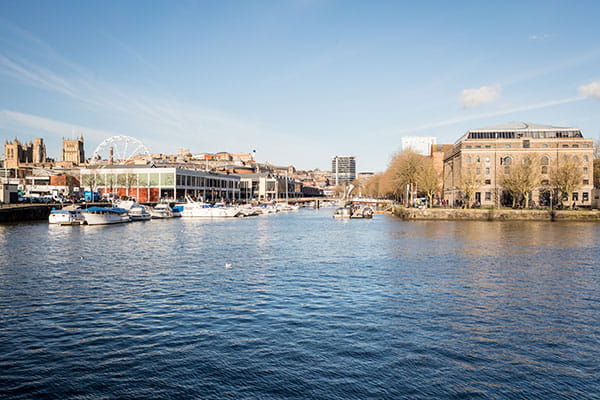
Bristol
A stunning city for student living with all the qualities to make you want to stay.

Sports, societies and activities
There is more to your experience here than study. Choose to make the most of it and try new things.

Health and Wellbeing
We provide support in the way you need it.
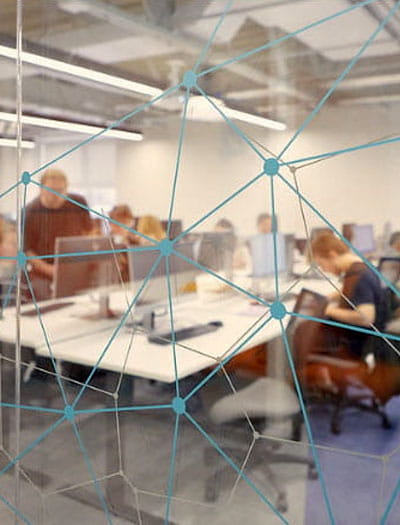
Campus and facilities
Discover our campuses and the wealth of facilities provided for our students.
