BSc(Hons) Professional Policing (with Foundation Year)
This course is open for applications
UWE Bristol are regional pioneers of the national transformation in police education. We are licensed by the College of Policing to offer the pre-join BSc(Hons) Professional Policing (with Foundation Year). This course will prepare you to apply for a role in one of 43 UK police forces.
About
Why study Professional Policing?
Police education is in the early stages of a national transformation, recognising the complex and challenging role of today's police officers. This transformation aims to equip future employees with the skills they need for success in modern policing, including communication, digital fluency and critical thinking.
As an aspiring regional hub of police education, UWE Bristol are early adopters of this cultural change. Our pioneering BSc(Hons) Professional Policing (with Foundation Year) is designed to address the changing needs of the sector and places a strong focus on improving equality, diversity and inclusivity in policing. Completing this degree will be your first step towards working for the police.
Why study at UWE Bristol?
Study at the forefront of the national transformation of recruitment and training in the policing sector. You'll learn to apply an evidence-based approach to Professional Policing, supported by research-led teaching, bespoke facilities and specialist staff from practice.
You'll also benefit from our strong professional connections with Avon and Somerset Constabulary. Take advantage of exciting opportunities to collaborate with police officers in practice and interact with local police forces through mentoring, shadowing and ride along activities. By the time you graduate, you'll have the academic knowledge required to become a police officer.
Where can it take me?
Aimed at those who aren't already employed by a police force, this course is one of three accredited routes to become a Police Constable that UWE Bristol offers. Our BSc(Hons) Professional Policing (with Foundation Year) will prepare you to apply for a response officer role in any national force area.
We welcome applications from a range of prospective students, from school leavers interested in policing or criminology, to armed forces employees seeking a career change. We also encourage those looking to work in non-operational policing roles to apply.
Entry
Typical offers
You will need to meet the following Level 2 requirements:
- GCSE: Grade C/4 in English and Mathematics, or equivalent.
In addition to the above Level 2 qualifications, you'll need to achieve the published tariff points from your Level 3 studies prior to entry. Below is an indicative list of the main qualification types. However, we will consider any Level 3 qualifications towards meeting our entry requirements.
- Tariff points: 48
- Contextual tariff: See our contextual offers page.
- English Language Requirement:
International and EU applicants are required to have a minimum overall IELTS (Academic) score of 6.0 with 5.5 in each component (or approved equivalent*).
*The university accepts a large number of UK and International Qualifications in place of IELTS. You can find details of acceptable tests and the required grades you will need in our English Language requirements. - A-level subjects: No subjects required.
- EDEXCEL (BTEC) Diploma: No subjects required. For information on required Guided Learning Hours please see our minimum entry requirements page.
- Access:
No subjects required.
- Irish Highers: No subjects required.
- Welsh Baccalaureate: We accept tariff points achieved from the Advanced Skills Baccalaureate Wales in conjunction with other Level 3 qualifications.
- Cambridge Technical: No specific subjects required.
- T Levels: No specific subjects required.
Entry requirements
We're unable to accept applications from international/EU students who require a Student Route visa.
The Professional Policing degree at UWE Bristol (accredited by the College of Policing) is one of the recognised routes into policing and provides all the knowledge and theory required for successful graduates to pursue a career in the police service.
Those wishing to undertake an operational role as a police officer can use this qualification to make an application and if successful will be upskilled with a short practical course when their employment commences.
Those looking to pursue other careers within and beyond the Police, will find that many of the theoretical knowledge and skills developed on this course will be useful. For example, students will develop a grounding in team working communication and leadership skills as well as policing specific attributes such as an investigative mindset, interviewing and decision making.
Please go to How to apply to join the police for more information.
Read more about entry requirements.
How to apply
Read more about undergraduate applications.
Read more about international applications and key international deadline dates.
For further information
- Email: Admissions@uwe.ac.uk
- Telephone: +44 (0)117 32 83333
Structure
Content
You'll study:
Essentials of Academic Practice
This module will help you understand the expectations of higher education and develop the academic skills needed for your chosen social science pathway. Indicative content will include researching, organising and presenting ideas for essays, reports and case studies, alongside academic style, referencing and avoiding plagiarism. You'll develop reading, note-making, summarising, analysis and evaluation skills, and learn how to locate reliable books and journal articles. Planning, time management, reflection, oral presentation, examination preparation, academic use of information technology and collaborative teamwork will build your confidence as an independent learner.
Exploring the Social World and the Problems of Crime
This module will introduce you to key issues and theoretical approaches spanning sociology and criminology. Indicative topics will include identity and culture in social life, digital media and online cultures, education, social exclusion and inequality. You'll examine crime, deviance and social problems in relation to class, gender and ethnicity, alongside social, cultural and legal understandings of crime. The module will also provide opportunities to explore the profiling of dangerous and risky offenders and criminal justice institutions, helping you develop your understanding of the social world through social science ideas and research.
From Plato to Nato
Through philosophy and political science, this module will introduce tools for understanding the contemporary world. You'll explore foundations of Western philosophical thought through classical texts, considering knowledge, being, the self, ethics, justice, education, beauty, politics and the state. The module will also examine the contemporary political and international order, including states and the international system. Themes such as climate change, terrorism, poverty, war and peace, culture, religion and security will help you reflect on connections between philosophical concepts, real political systems and current societal issues.
Psychology, Policing and Society
This module will introduce psychological research, theories and models alongside key topics in policing. It will typically include perspectives in psychology and selected themes from developmental, cognitive, social, humanistic and differential psychology. You'll also explore principles of investigative practice, community policing, contemporary challenges and evidence-based policing. Through these connected areas, you'll develop critical thinking and ethical approaches to building an evidence base. Group work and guided activities will strengthen your academic reading and writing, information searching, presentation software skills, planning, time management and collaboration.
You'll study:
Core Policing Functions: Legislation and Powers
In this module, you'll explore the legislation and policy governing police powers and how these can be used lawfully to prevent and detect crime. The National Decision Model will support your understanding of discretion, ethics, recording, accountability and the justification of decisions. You'll examine links between legislation, Authorised Professional Practice and the Code of Ethics, alongside informal options that may avoid unnecessary criminal justice involvement. Key policing functions will include response policing, roads policing, custody, public order, and stop and search powers, policies and guidance.
Principles of Equality, Diversity and Inclusivity
This module will explore equality, diversity, inclusion and ethics in policing, both within the workplace and in public service. You'll examine the Equality Act 2010, human rights, protected characteristics and the policing Code of Ethics, considering how these frameworks can challenge bias and discrimination. Historical and recent cases will help you evaluate lessons and recommendations for improving police responses. The module will also consider ethical leadership, professional conduct, and the reporting, recording and investigation of incidents and hate crimes within a modern policing context.
Policing Structure, Culture and the Evidence-Based Approach
This module will introduce the history, culture, roles and responsibilities of the UK police service, with particular attention to the Police Constable and the standards governing professional practice. You'll examine why police powers must be exercised fairly and without bias, and consider links between police culture and personal behaviour. The module will also introduce Evidence Based Policing, including hot-spots policing, problem-solving approaches and What Works evidence. You'll explore crime-prevention theory, technology, human behaviour and communication with the public, considering how evidence can shape future policing practice and policy.
Investigating Volume, Priority and Complex Crime
This module will develop your understanding of crime and incident types, investigations and ethical police decision-making. Through an end-to-end approach, you'll progress from identifying incidents and conducting initial enquiries to handling evidence, dealing with suspects and preparing a prosecution. You'll examine legislation, codes of practice, investigative powers, information and intelligence, and Authorised Professional Practice. Scenarios may range from anti-social behaviour, hate crime and public order to roads policing, radicalisation, serious and organised crime, and terrorism. Proportionality, legality, accountability and necessity will guide your developing practice.
You'll study:
Analysing Trends in Serious and Organised Crime
Serious and organised crime presents complex policing challenges across local and national contexts. This module will examine links between serious and organised crime and other criminality, including activity facilitated through road networks and across borders. You'll study operational issues, relevant legislation, policy and guidance on prevention and disruption, considering how criminal justice responses have changed over time. By interpreting the evidence base and applying practical research methods to a policing problem, you'll develop skills for evidence-led investigation and future independent research.
Protecting Victims, Witnesses and the Public
This module will examine how crime affects victims and witnesses and how policing can support and protect them while managing risk from offenders. You'll explore legislation, codes of practice and guidance relating to victim rights, obtaining best evidence and support before, during and after proceedings. The module will also consider frameworks for offender management, the relationship between victimisation and offending, and multi-agency approaches to public safety. Attention to police culture, social diversity, procedural justice and ethics will help you understand how confidence and protection are maintained.
Revealing Risk and Vulnerability
This module will explore vulnerability, risk, intervention and prevention within operational policing. Focusing on real-world cases and national policing priorities, you'll examine factors that can place people at risk of harm and consider how vulnerability may develop across different circumstances. The module aims to foster professional curiosity and strengthen your understanding of safeguarding and harm reduction. Drawing on policing practice and relevant evidence, you'll consider how effective interventions can improve outcomes for individuals and communities while supporting public safety and wellbeing.
Core Policing Functions: Communities and Partnerships
This module will develop your understanding of community policing and partnership working. Building on earlier study of evidence-based policing, you'll explore how communities respond to actual and perceived risks and how collaborative approaches can support safer places to live and work. The module will compare historical and contemporary approaches to community policing, examining the role of police officers within communities and wider partnership networks. Through engagement with theory, policy and practice, you'll gain insight into the challenges and opportunities associated with community-focused policing and problem-solving.
Optional modules:
Placement year (if applicable)
If you study on the four year (sandwich) course, you'll spend a year away from the University on a work placement after Year two.
You'll study the Social Sciences Placement Year module.
See the Placements and Fees sections for more information.
You'll study:
Digital Policing
This module will explore how digital technologies are transforming contemporary policing. You'll examine the opportunities and challenges created by data, digital communication, surveillance technologies and online investigations. The syllabus may include emerging forms of crime, intelligence gathering, evidence management, legitimacy, ethics and public trust. By considering policy developments and practical applications, you'll develop an understanding of how policing is adapting to increasingly digital environments and how technology shapes relationships between police organisations, communities and wider society.
Evidence Based Research Project
This module will support you in designing and conducting an evidence-based research project. You'll develop skills in literature searching, research design, ethical decision-making, data collection and analysis, applying appropriate methods to a topic of your choice. The module will encourage critical evaluation of evidence and provide opportunities to communicate findings clearly and effectively. Through independent enquiry, you'll strengthen your ability to investigate complex issues, justify methodological choices and produce research that contributes meaningfully to professional and academic discussions.
Policing Threats
This module will examine a range of contemporary threats relevant to policing and public safety. You'll explore the nature, causes and implications of issues that may include organised crime, terrorism, cybercrime, vulnerability and emerging risks. The syllabus will consider intelligence, prevention, partnership working and strategic responses to complex challenges. Drawing on current policy and research, you'll develop your ability to assess threats, evaluate responses and understand how policing organisations adapt to changing social, technological and security environments.
Ethical Reform: Creating Change in Policing and Criminal Justice
Using real-life case studies, this module will examine how social, political and strategic change shapes policing and criminal justice. You'll critically explore how different communities have experienced policing, and how legislation, policy, accepted practice and performance standards can influence legitimacy and public confidence. Topics will include police reform, workforce and financial pressures, changing demand, digitally enabled crime, vulnerability and extremism. You'll evaluate investigative findings and performance evidence, using ethical frameworks and evidence-based approaches to develop fair, proportionate and innovative responses to change.
Optional modules:
You'll study one module from:*
- Green Criminology: Environment, Crime and Justice
- Missing People: Lost Identities and Social Harm
- Operational Policing
- Risk and Risk Management
- Terrorism: History, Myths and Policy.
*If you complete the sandwich placement year, you won't study any of these modules.
The optional modules listed are those that are most likely to be available, but they may be subject to change.
You normally need to pass your foundation year before going into Year one.
This structure is for full-time students only. Part-time students study the same modules but the delivery pattern will be different.
The University continually enhances our offer by responding to feedback from our students and other stakeholders, ensuring the curriculum is kept up to date and our graduates are equipped with the knowledge and skills they need for the real world. This may result in changes to the course. If changes to your course are approved, we'll inform you.
Learning and Teaching
Learn through a blend of online and face-to-face teaching, including lectures and seminars. Your teaching will be supported by hands-on practical activities to prepare you for policing in the real world.
You'll be taught by policing experts with a wealth of experience working in the police force and criminal justice system. At key points in the course, you'll also be taught in tandem with our operational policing colleagues, enabling you to learn the latest industry developments from professionals in practice.
Through integrating with criminology students and police apprentices you'll benefit from our diverse learning community. This includes simulated learning in our bespoke simulation suite, which opened in 2022/23. Fully equipped with domestic and commercial spaces, you'll apply your skills to different mock settings.
You'll also experience scheduled days of cultural emersion, where you'll visit local charities and community groups, offering insight into community policing and working with the public.
See our full glossary of learning and teaching terms.
Study time
The course requires students to attend weekly classroom-based teaching which is enhanced with online learning, simulation and immersive activities to familiarise learners with the operational policing context. Students will also spend time working independently and in groups on study tasks, to prepare seminar tasks and to engage with relevant literature and legislation. The course structure is almost entirely compulsory as it follows the National Policing Curriculum.
Assessment
From the start, you'll be assessed through a range of practice-oriented methods that reflect policing in the real world. All assessments will be based on typical types of work or skills that you'll experience in a professional policing environment.
Our assessment methods include: sitting multiple-choice exams based on the same tests that police officers take, reflecting on simulated learning experiences, creating blogs or podcasts to explain aspects of police work to different types of audience, and developing an evidence-based policing mindset through a research project.
Through our professional links, experts working in the criminal justice system will set you live briefs. These activities will test your creative problem solving, enabling you to create your own solutions to solve real practical challenges.
Fees
Full-time; Sandwich course
Part time course
Supplementary fee information
Please note, the above tuition fees for home students are charged in the first academic year of study but may increase in subsequent years for both new and continuing students. This increase will track the tuition fee cap which is determined by government and is expected to increase in line with inflation. UWE Bristol will likely maintain its fees for new and returning home students at the maximum permitted level for each year of study.
The placement year fee will also increase when the fee cap changes so please use the above placement year fee for indication purposes only.
This refers to items you could need during your studies that aren't covered by the standard tuition fee. These could be materials, textbooks, travel, clothing, software or printing.
Features
Professional accreditation
We are licensed by the College of Policing (CoP) to offer the Pre-join Degree in Professional Policing.
Study facilities
Learn hands-on skills in our bespoke crime scene science and policing space on Frenchay Campus, developed to meet the increased demands of our growing professional policing courses.
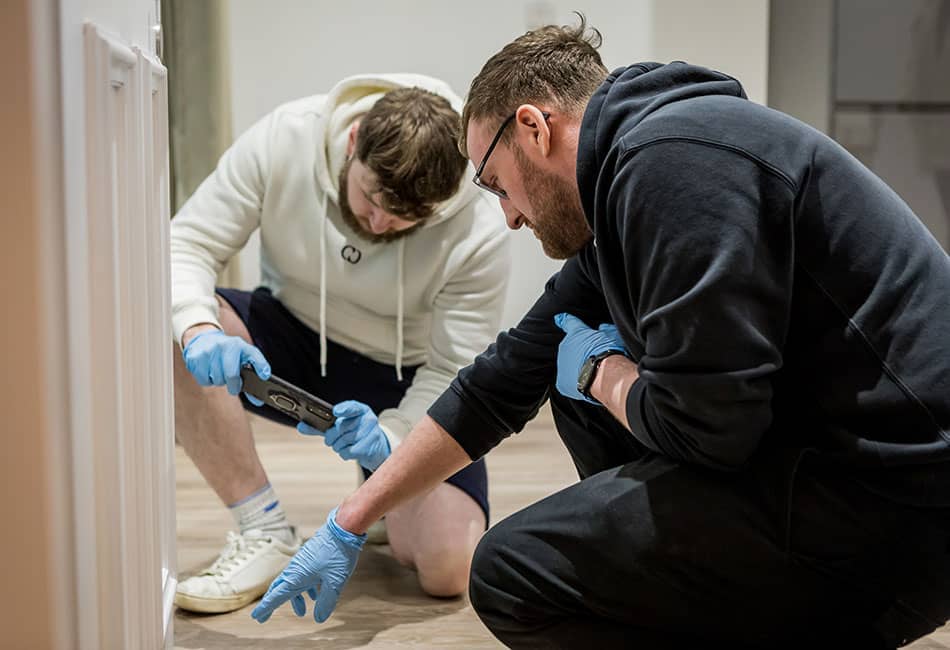
You'll study in our four interactive learning rooms, complete with video and audio links to purpose-built breakout rooms. Here you'll develop the practical policing skills needed for professional practice, such as suspect interviewing and documenting and processing a crime scene.
Plus, you'll have access to a whole floor dedicated to simulations, which features a mock living and business space, including a mock flat and post office. Apply your skills and test your knowledge in a safe learning environment so you're ready to tackle complex crime scenes in the real world.
Learn more about UWE Bristol's facilities and resources.
Take a personalised virtual tour of the Psychology, Sociology and Criminology facilities and experience what a typical day could look like here for you.
Personalised virtual tour
There's no need to visit us in person to explore our facilities and campuses. Take a personalised virtual tour and discover it all for yourself from wherever you are.
Take a virtual tourCareers
Careers / Further study
As an established and respected provider of policing education, UWE Bristol offers three licensed police entry routes. Our Professional Policing degree will provide you with knowledge relevant to policing roles, ahead of completing the operational training you'll need for employment in the police force.
Through studying a range of core subjects, from counter terrorism to response policing, you'll delve into the complex role of a Police Officer. Gain the academic skills and knowledge you'll apply to professional practice, such as research, communication and problem solving.
By the end of the course, you'll graduate with a professional policing degree that's licensed by the College of Policing. This accreditation will enable you to apply for roles in any national police force area in the UK, within five years of graduation.
Subject to local vetting procedures, if you're successful in finding employment within the police force, you'll learn the hands-on aspects of policing on the job. You'll develop your practical skills once you're in the role, enabling you to apply the theory you've learned through your degree.
By studying Professional Policing, you'll be qualified to enter various other careers within the criminal justice sector and beyond. While many of our graduates will go on to become a police officer, you could also take on a role as police staff, work in prisons or for another criminal justice agency, charity or social enterprise.
Benefit from a range of professional opportunities throughout your policing degree. Thanks to UWE Bristol's established industry links with Avon and Somerset Constabulary, you'll have a chance to collaborate with other police officers in practice. These connections present potential opportunities for placements, summer internships, voluntary policing work and mentoring, supporting your progression throughout your learning journey.
Get inspired
Our award-winning careers service will develop your employment potential through career coaching and find you graduate jobs, placements and global opportunities.
We can also help find local volunteering and community opportunities, provide support for entrepreneurial activity and get you access to employer events.
Visit our employability pages to learn more about careers, employers and what our students are doing six months after graduating.
Read about careers with Avon and Somerset Police.
Life

Accommodation
An excellent range of options for all of the Bristol campuses and the city centre.

Bristol
A stunning city for student living with all the qualities to make you want to stay.

Sports, societies and activities
There is more to your experience here than study. Choose to make the most of it and try new things.

Health and Wellbeing
We provide support in the way you need it.

Campus and facilities
Discover our campuses and the wealth of facilities provided for our students.