BA(Hons) Animation (with Foundation Year)
Please note that new student recruitment to this course has been suspended for the September 2027 intake. Applications for 2028 should be made through UCAS from September 2027.
91% of Animation and Game Design students are satisfied with the teaching of their course overall.Guardian University Guide 2026
8th university in the UK for Filmmaking, Film production, Animation, and Photography courses. Guardian University Guide 2026
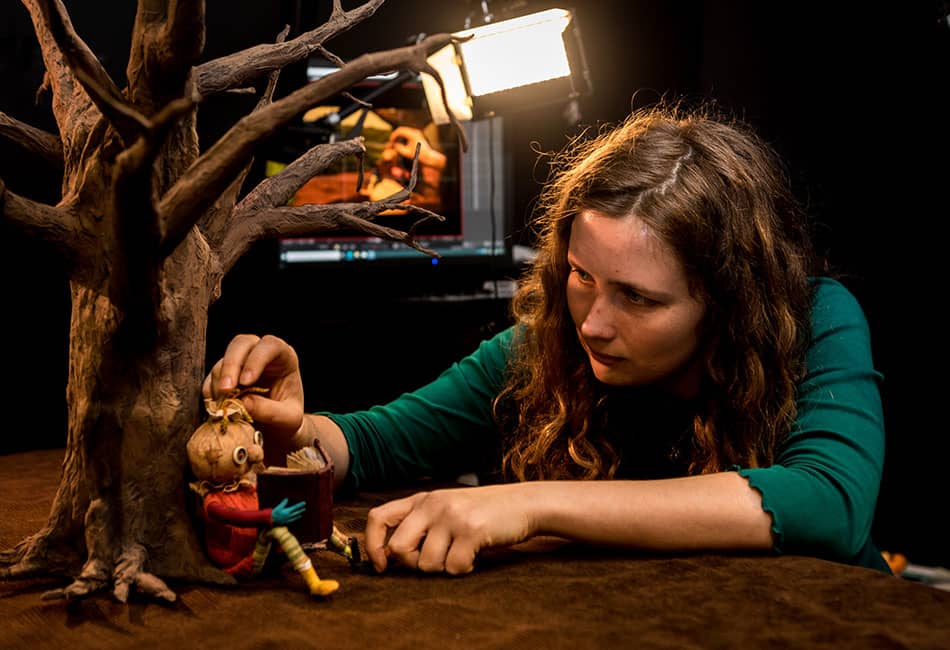
Study in a studio environment with professional-standard facilities and the focus on the real-world skills you need to succeed in your career.
About
Why study animation?
Animation is a broad creative subject that offers opportunities to all kinds of creatives, including storytellers, designers, artists, technologists and performers.
It reaches audiences young and old right across the globe. It educates, entertains and informs. It shows us things we could never see with our own eyes; buildings not yet built, the workings of a heart, a dying star.
It can help us visualise the dynamics of an unfolding news event, place long-extinct creatures into your very hands, and breathe life into those that have never existed.
Why UWE Bristol?
BA(Hons) Animation is based at Bower Ashton Studios, part of our City Campus. Our new animation studio spaces and facilities include digital media studios, production studios and fabrication workshops, offering both traditional tools and the latest technology.
Studying this in Bristol means you'll be based in a centre of animation production excellence in Europe, with our animation courses forming an integral part of the city's success.
This practice-based production degree not only develops your creative flair but also provides you with highly sought-after technical skills.
Learn through making using industry-standard equipment. Practical work is balanced by theoretical study, work experience and research activities, all designed to prepare you for work in a commercial environment. Live briefs, work-based placements and networking events support your transition into professional practice.
Join a long-established, highly creative animation community in which students are known and valued for their individual creative flair. You'll be taught by a team with extensive commercial animation experience, with regular contributions from commercial practitioners. This, coupled with our strong links with the UK's major animation companies, will ensure you benefit from professional expertise throughout the course.
Our City Campus is a creative powerhouse. It spans Bristol and is made up of Bower Ashton and renowned contemporary arts centres Spike Island, Arnolfini and Watershed.
Be a part of Bristol's vibrant arts and cultural scene and make friendships that continue long after graduation, developing into partnerships, startups and larger businesses.
Showcase your work through our online presence, regular networking events like BAM (Bristol Animation Meetup) and Anim Inspo and our final year Degree Show to impress talent scouts and potential employers.
Focus on the avenues that most interest you, and graduate with an impressive portfolio of work.
See some of the work our students produced over the past few years, including a recent project with Avon and Somerset Police.
Where can it take me?
Animation is a growing sector that extends way beyond traditional TV based media, one that will continue to need a wide range of creatives of all kinds.
Our graduates have gone on to form careers in the animation industry, graphic design, computer games, illustration and so on, both throughout the UK and across the world.
Some choose further study at master's level, including our own MA in Animation.
Animation student showreel
A showcase of student work from the BA(Hons) Animation course at UWE Bristol.
Entry
Typical offers
You will need to meet the following Level 2 requirements:
- GCSE: Grade C/4 in English, or equivalent.
In addition to the above Level 2 qualifications, you'll need to achieve the published tariff points from your Level 3 studies prior to entry. Below is an indicative list of the main qualification types. However, we will consider any Level 3 qualifications towards meeting our entry requirements.
- Tariff points: 72
- Contextual tariff: See our contextual offers page.
- English Language Requirement:
International and EU applicants need to have a minimum overall IELTS (Academic) score of 5.5, with 5.5 in each component (or approved equivalent*).
*The University accepts a large number of UK and international qualifications in place of IELTS. You can find details of acceptable tests and the required grades in our English language section. Please visit English language requirements.
- A-level subjects: No specific subjects required.
- EDEXCEL (BTEC) Diploma: No specific subjects required. For information on required Guided Learning Hours please see our minimum entry requirements page.
- Access:
No specific subjects required.
- Baccalaureate IB:
No specific subjects required. We accept the IB Career-related Programme in conjunction with other Level 3 qualifications.
- Irish Highers: No specific subjects required.
- Welsh Baccalaureate: We accept tariff points achieved from the Advanced Skills Baccalaureate Wales in conjunction with other Level 3 qualifications.
- Cambridge Technical: No specific subjects required.
- T Levels: No specific subjects required.
Entry requirements
We're looking for applicants who are curious, creative and eager to develop their practice, explore new ideas and contribute to a vibrant creative community.
- Applicants studying qualifications that we've identified as subject-relevant will be considered on the basis of their predicted or achieved grades, provided they meet our entry requirements.
- Applicants whose qualifications fall outside these subject-relevant areas will be asked to submit a digital portfolio. This helps us consider creative potential alongside academic achievement. For more details, please visit our selection page.
In some cases, we may also invite applicants to a short online discussion about their work and creative interests.
Our admissions approach is designed to be fair, inclusive and supportive. We recognise both academic achievement and creative potential, ensuring you have the opportunity to demonstrate your suitability for the programme in a way that reflects your individual strengths.
If you exceed the entry requirements, you may be eligible for BA(Hons) Animation.
International applicants
If you're applying to UWE Bristol from another country or region, visit the international study pages for tailored application information.
Read more about entry requirements.
How to apply
Read more about undergraduate applications.
Read more about international applications and key international deadline dates.
For further information
- Email:
UK applicants
Admissions@uwe.ac.ukInternational/EU applicants
International@uwe.ac.uk - Telephone:
UK applicants
+44 (0)117 32 83333International/EU applicants
+44 (0)117 32 86644
Structure
Content
You'll study:
Core Studies in Art, Media and Design
This module will provide a supportive introduction to university-level creative study through active and playful engagement with traditional, digital and virtual tools, processes and equipment. You'll experiment with materials, technologies and approaches to making, learning how sources of inspiration and influence can develop themes, ideas and concepts. Structured project briefs will introduce research, creative production and documentation, while reflective and evaluative activities will build your analytical and critical thinking skills. You'll work in an interdisciplinary studio environment and learn how to access university academic, wellbeing and disability support.
Building Creative Skills
Building on earlier creative study, this module will support you to undertake longer projects with greater independence and scope for discovery. You'll develop ideas through drawing, research, experimentation and visual storytelling, documenting your progress from initial concepts to a range of creative outcomes. Collaborative activities will help you reflect on your contribution, while a more self-directed investigation will encourage you to explore personally meaningful themes. You'll consider audience, client or viewer, investigate appropriate ways to present project work, and strengthen your planning, decision-making, reflective practice and creative independence.
Foundation Project
In this module, you'll plan, organise and complete a major project in your chosen creative specialism. Beginning with a proposal negotiated with staff, you'll develop an extended body of work that applies the skills and confidence gained across the course. Research, seminar discussion and critique will help you connect your practice with relevant professional and disciplinary contexts. As your project develops, you'll consider audience, client or viewer, select suitable materials and technical processes, and refine your outcome for exhibition, screening, publication or online distribution. You'll also explore sustainable making and relevant health and safety considerations.
Disciplinary Projects
This module will introduce you to the cultures, environments and foundational skills of your chosen creative discipline. Through programme-specific teaching, you'll explore core concepts and ways of thinking, investigating and making that will prepare you for study at the next level. A short project will give you opportunities to connect research with creative practice and develop original work using approaches appropriate to your subject. You'll document your ideas and progress visually, add reflective and analytical commentary, and build confidence through discussion, critique and one-to-one guidance within your disciplinary community.
You'll study:
Creative Contexts
This module will introduce the knowledge, research practices and professional skills expected across the creative industries. You'll deepen your understanding of the aesthetic and formal qualities of your chosen craft while exploring industry roles, activities and processes. Indicative content includes critical reflective writing, teamwork, collaboration, project and time management, professional ethics, responsibility, presentation and health and safety. Broad, open briefs will allow you to develop outcomes that reflect your discipline while working with cross-disciplinary perspectives, strengthening transferable skills and supporting your developing career aspirations.
Ideas, Design, Storytelling
This module will explore how ideas can be developed and communicated through design and storytelling. You'll investigate narrative structure, audience, context and visual language, considering how sequence, character, image, sound or interaction can shape meaning. Through research and practical experimentation, you'll generate concepts, test different approaches and refine a coherent response. The module will strengthen your ability to communicate an idea clearly, make purposeful creative decisions and reflect on how storytelling techniques can support engaging design outcomes across a range of media and formats.
Character Animation
This module will introduce the principles and techniques used to create animated characters. You'll explore how design, movement, timing, performance and expression can communicate personality and intention. Through drawing, observation and practical animation exercises, you'll investigate pose, gesture, weight, body mechanics and character interaction. You'll learn to develop ideas through planning and experimentation, use feedback to refine movement and make purposeful creative choices. The module will build your confidence in combining technical control with performance-led storytelling to create engaging character animation.
Animation Foundations
This module will establish foundational skills and principles for animation practice. You'll explore movement, timing, spacing, rhythm and sequence through practical exercises using appropriate analogue and digital techniques. Observation, drawing and experimentation will help you understand how images create the illusion of movement and how visual choices affect communication. You'll learn to plan, test and refine animated ideas, organise production processes and reflect critically on outcomes. These experiences will provide a technical and creative base for developing more complex animation and storytelling work.
You'll study:
Collaborative Projects
This collaborative module will extend your understanding of film production through the development of a film for a defined audience and purpose. You'll draw on historical and contextual animation studies while using innovative approaches to create and refine ideas. Areas of study will include story, sequential construction, design, sound, music, recorded performance and animation processes. Working with production roles and pipelines will develop your decision-making, negotiation and project management skills. You'll also examine audiences, dissemination and ethical considerations while communicating ideas visually, verbally and in writing.
The Animation Business
In this module, you'll explore the business and professional environments surrounding animation practice. You'll investigate how creative work connects with audiences, production structures, organisations and commercial opportunities. Research into professional activity will help you understand different roles, working models and possible career directions. You'll consider how to communicate your specialist interests and skills within relevant contexts, while developing greater awareness of employment, enterprise and freelance possibilities. Through reflection and informed enquiry, you'll be better placed to make purposeful decisions about your future animation practice.
Optional modules:
You'll study modules (the amount depending on credit requirement) from:
- Animation Practitioner*
- Creative Futures*
- International Exchange.**
*Not available to study if you participate in the International Exchange.
**Compulsory (and only available to study) if you participate in the International Exchange.
You'll study:
Creative Research Project
This module will enable you to design and complete an independent research project focused on a subject relevant to your creative specialism. Building on previous learning, you'll identify an area of personal interest and develop a project that strengthens your critical, creative and analytical thinking. Supported by supervision and project-planning activities, you'll investigate research methods, evaluate ideas and manage a substantial piece of work from conception to completion. The module also encourages reflection on professional aspirations, helping you develop transferable skills and specialist knowledge relevant to creative industries and future employment.
Studio: Pre-production
This module centres on the pre-production stages of an independent animation project, helping you transform creative ideas into a viable production plan. You'll research, develop and refine concepts that align with your interests and professional aspirations while exploring appropriate methods, workflows and timelines. Supervision, workshops and critical discussion will support creative risk-taking and informed decision-making. By planning the research, development and production stages of your project, you'll build the organisational and creative foundations needed for successful project delivery.
Studio: Production
This module focuses on the production phase of an independent animation project. Building on earlier planning and development work, you'll create substantial practical outcomes that demonstrate advanced artistic, technical and production skills. Supervision and structured project planning will support the progression of your work while encouraging critical thinking, creativity and professional awareness. Throughout the module, you'll refine your approach to production processes and strengthen your understanding of how animation practice, innovation and career development connect within contemporary creative industries.
Studio: Post-production
This module will support you in bringing an independent animation project to completion through advanced post-production, evaluation and refinement. You'll develop substantial creative work that reflects your aims and specialist interests while applying appropriate production methods and workflows. Critical reflection plays an important role as you evaluate your project against artistic intentions, professional expectations and future ambitions. Supported by specialist supervision, you'll strengthen your ability to manage complex creative projects and communicate the value of your work within contemporary animation practice.
The optional modules listed are those that are most likely to be available, but they may be subject to change.
You normally need to pass your foundation year before going into Year one.
The University continually enhances our offer by responding to feedback from our students and other stakeholders, ensuring the curriculum is kept up to date and our graduates are equipped with the knowledge and skills they need for the real world. This may result in changes to the course. If changes to your course are approved, we'll inform you.
Learning and Teaching
Learn through a mix of lectures, seminars, practical workshops, projects and tutorials. European and international visits and field studies are key experiences on offer within the school.
Creativity is central to the course, which covers ideas, story and design. Explore contemporary production processes and methods as well as fundamental principles of animation you can apply within classical 2D, 2D digital, stop frame and computer (CG) animation.
Develop your creative and technical craft skills in animation, writing, directing, design and production to underpin your individual creative development.
Study narrative structures, short form writing, cinematography, production design, directing and sound design, while working on productions in small teams to advance your chosen specialism. You'll also get complimentary access to Soundsnap's online sound library throughout the course.
Craft your skills as a researcher, working with academics and partners helping to shape new thinking in the field.
Test your ideas and concepts in a professional environment to prepare for a major self-directed final production piece. Hone your professional practice and entrepreneurial mindset, by working on live projects, competitions, and through collaborative work with other creative individuals and institutions.
Engage with our industry partners such as Aardman Animations, Sun and Moon, Rumpus and Hello Charlie to get an inside track on industry trends. You'll get to interview industry contacts and pitch your portfolio to an industry panel.
Many animators work on a freelance basis, so we'll cover areas such as how to set up your own studio, find clients, promote yourself and run your own business. There are also workshops available on topics such as contracts, business plans, tax and quoting.
In Year three, you'll have the choice of working on a traditional dissertation or using a different medium to present your work, such as a visual essay or film.
See our full glossary of learning and teaching terms.
Get involved
Look forward to plenty of opportunities to network, exhibit, get known and collaborate in Bristol and beyond.
Work opportunities for students will be published throughout the course and are a great way to build your CV and experience before you graduate.
You can also enter your creative work into international animation festivals and competitions to gain experience and promotion opportunities. Our students have won the regional Royal Television Society awards for animation in eight out of the past nine years, and won a national award in 2019.
Study time
In a typical week in your first year, you could expect to be timetabled with academic staff for an average of 12 hours, with the expectation that you'll also work on practice and assessment tasks through independent self-study for an additional 12 -18 hours.
Assessment
You can expect to be assessed through presentation of your practical work, individual and group presentations, essays, reports and your overall professionalism.
Assessments of practical work focus not only on the individual processes you've used but also on the development of your ideas. We expect you to record and present your research and developmental work along with the final output.
Writing critical evaluations to accompany major pieces of project work will help you critique and analyse aspects of your practice, including; production work, working methodologies and techniques, and production management. You'll relate them to the broader contexts of professional practice and research.
Fees
Full time course
Supplementary fee information
Please note, the above tuition fees for home students are charged in the first academic year of study but may increase in subsequent years for both new and continuing students. This increase will track the tuition fee cap which is determined by government and is expected to increase in line with inflation. UWE Bristol will likely maintain its fees for new and returning home students at the maximum permitted level for each year of study.
The placement year fee will also increase when the fee cap changes so please use the above placement year fee for indication purposes only.
Additional costs are for items you could need during your studies that aren't covered by the standard tuition fee. These could be materials, textbooks, travel, clothing, software or printing.
Features
Placements
Students who get work experience tend to graduate with better degrees and are better prepared for entering the commercial sector. Experience also hones your skills, industry knowledge and professionalism through networking, making you a sought after graduate.
While we provide no formal placements for our students, our students find placements through our industry contacts. Placements have included studios such as A-Productions, Sun and Moon, WONKY, Aardman Animations and Rumpus.
We are fortunate enough to be located near a range of production companies that are always on the lookout for new and emerging talent. Informal work-based placements and networking often results in paid work and longer-term employment.
Get help to find your placements and support throughout, from staff within the School and our award-winning careers service.
Study exchange
Grow your personal and professional network, and develop specialist subject knowledge by spending a semester at one of our fantastic partner universities abroad.
Increase your confidence, intercultural communication skills and boost your employability.
Explore our study abroad pages to find out more.
Fieldwork
As part of your broad range of study, you'll have the chance to take part in field trips, both individually and as part of a group.
One highlight is the opportunity to attend the Annecy International Animation Festival, recognised as the world's leading event for animation. This will give you a unique platform to engage with both local and international industry professionals, including representatives from renowned studios such as Disney, DreamWorks, Warner Bros, and Illumination.
You can also apply to study abroad for a semester, with previous students travelling to Japan, the United States, and countries across Europe.
Study facilities
Our animation studios are based at Bower Ashton Studios, alongside other first-rate fabrication, computer and TV studio facilities. There is also an impressive creative and cultural industries library and student support services.
Bower Ashton offers an excellent base for you within the exciting City Campus, connecting teaching and learning with some of the best creative and cultural organisations in Bristol. Attend lectures and seminars at the prestigious Arnolfini and Watershed in Bristol city centre.
A mix of traditional and hands-on learning environments helps you quickly take on essential knowledge and skills, standing you in good stead for your professional career.
Learn more about UWE Bristol's facilities and resources.
Take a personalised virtual tour of the Filmmaking, Animation and Photography facilities and experience what a typical day could look like here for you.
Personalised virtual tour
There's no need to visit us in person to explore our facilities and campuses. Take a personalised virtual tour and discover it all for yourself from wherever you are.
Take a virtual tourCareers
Careers / Further study
The UK produces some of the best animators in the world. UWE Bristol in particular has been a major provider of this talent, with successful graduates finding work as independent animators, filmmakers and freelance practitioners at leading animation studios within the region, throughout the UK and the world.
Tailoring what and how you study, you can shape the course towards your chosen career path.
Some students progress to our MA Animation, while others go on to the National Film and Television School (NFTS) and Royal College of Arts (RCA).
Get inspired
Our award-winning careers service will develop your employment potential through career coaching and help find you graduate jobs, placements and global opportunities.
We can also help find local volunteering and community opportunities, provide support for entrepreneurial activity and get you access to employer events.
Visit our employability pages to learn more about careers, employers and what our students are doing six months after graduating.
Watch Dan's video to see how he landed his dream job as a freelance animator.
See also:
Watch: Welcome to the School of Arts at UWE Bristol
Life
Accommodation
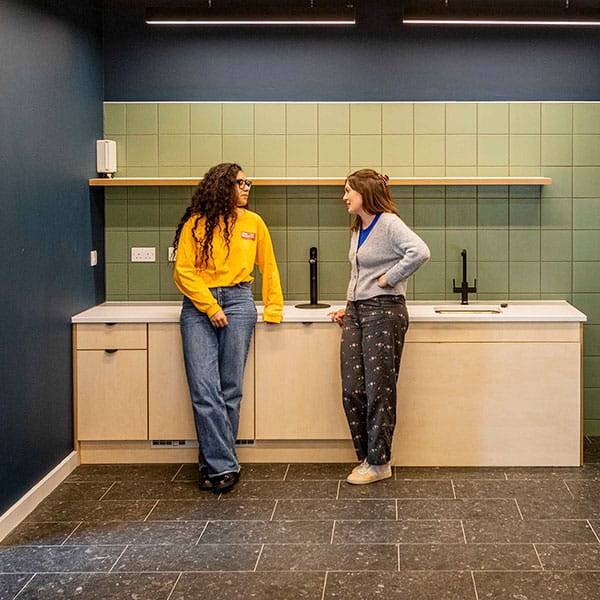
An excellent range of options for all of the Bristol campuses and the city centre.
Bristol
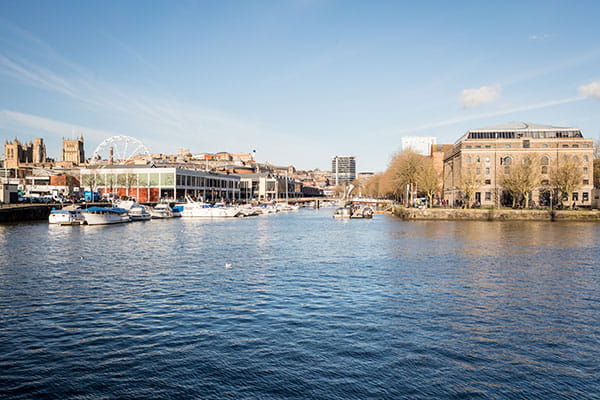
A stunning city for student living with all the qualities to make you want to stay.

Sports, societies and activities
There is more to your experience here than study. Choose to make the most of it and try new things.

Health and Wellbeing
We provide support in the way you need it.
Campus and facilities
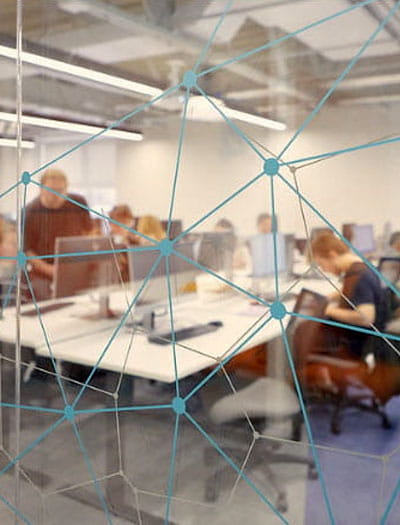
Discover our campuses and the wealth of facilities provided for our students.